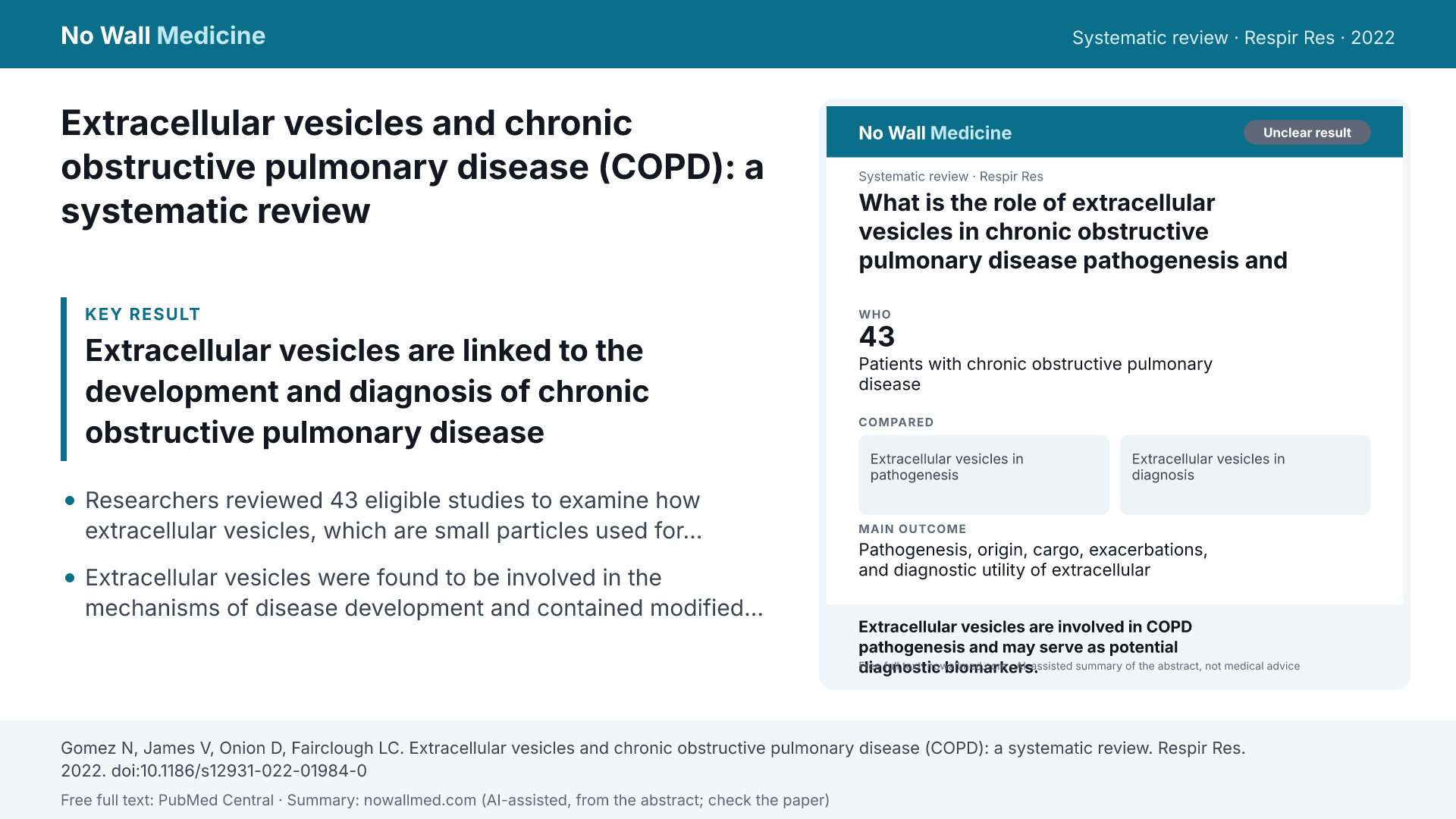
Extracellular vesicles are linked to the development and diagnosis of chronic obstructive pulmonary disease
Extracellular vesicles and chronic obstructive pulmonary disease (COPD): a systematic review
Systematic reviewUnclear result
What is the role of extracellular vesicles in chronic obstructive pulmonary disease pathogenesis and diagnosis?
Who
43
Patients with chronic obstructive pulmonary disease
Compared
Extracellular vesicles in pathogenesis
Extracellular vesicles in diagnosis
Main outcome
Pathogenesis, origin, cargo, exacerbations, and diagnostic utility of extracellular vesicles
Bottom line: Extracellular vesicles are involved in COPD pathogenesis and may serve as potential diagnostic biomarkers.
Limitation: The current findings show limited research, requiring more studies to define functional characteristics.
Respir Res · 2022-04-05 · Save PNG
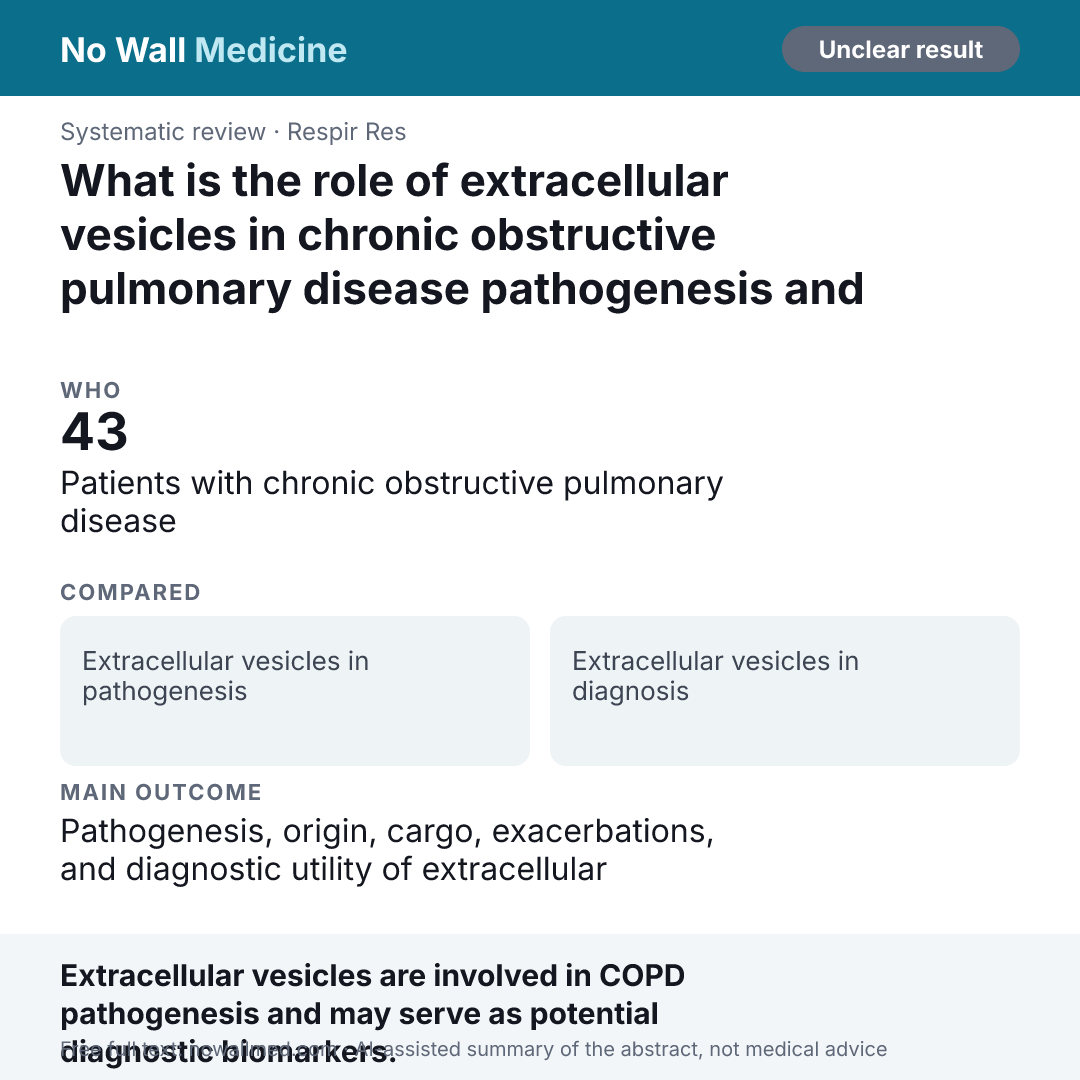
Clinical question: What is the role of extracellular vesicles in chronic obstructive pulmonary disease pathogenesis and diagnosis?
Why it matters: The specific role of extracellular vesicles in the development and diagnosis of chronic obstructive pulmonary disease remains to be fully defined.
Key points
- Researchers reviewed 43 eligible studies to examine how extracellular vesicles, which are small particles used for cell communication, relate to chronic obstructive pulmonary disease.
- Extracellular vesicles were found to be involved in the mechanisms of disease development and contained modified levels of microRNA, a type of molecule that regulates genes.
- The characteristics of these vesicles varied based on the status of the disease, which was associated with potential methods for diagnosis and monitoring disease progress.
Limitation the authors note: The authors note that current research on the role of extracellular vesicles in chronic obstructive pulmonary disease is limited.
Headline and key points written with AI from the paper’s abstract, with every number checked against it. Read the paper before relying on them.
Was this summary helpful?
Subject terms
Headline, design, result, key points, caveat and citation as plain text.
Cite this article
Gomez N, James V, Onion D, Fairclough LC. Extracellular vesicles and chronic obstructive pulmonary disease (COPD): a systematic review. Respir Res. 2022. doi:10.1186/s12931-022-01984-0
Spotted a mistake? Suggest a correction