Extracorporeal cardiopulmonary resuscitation was associated with lower in-hospital mortality compared to conventional CPR
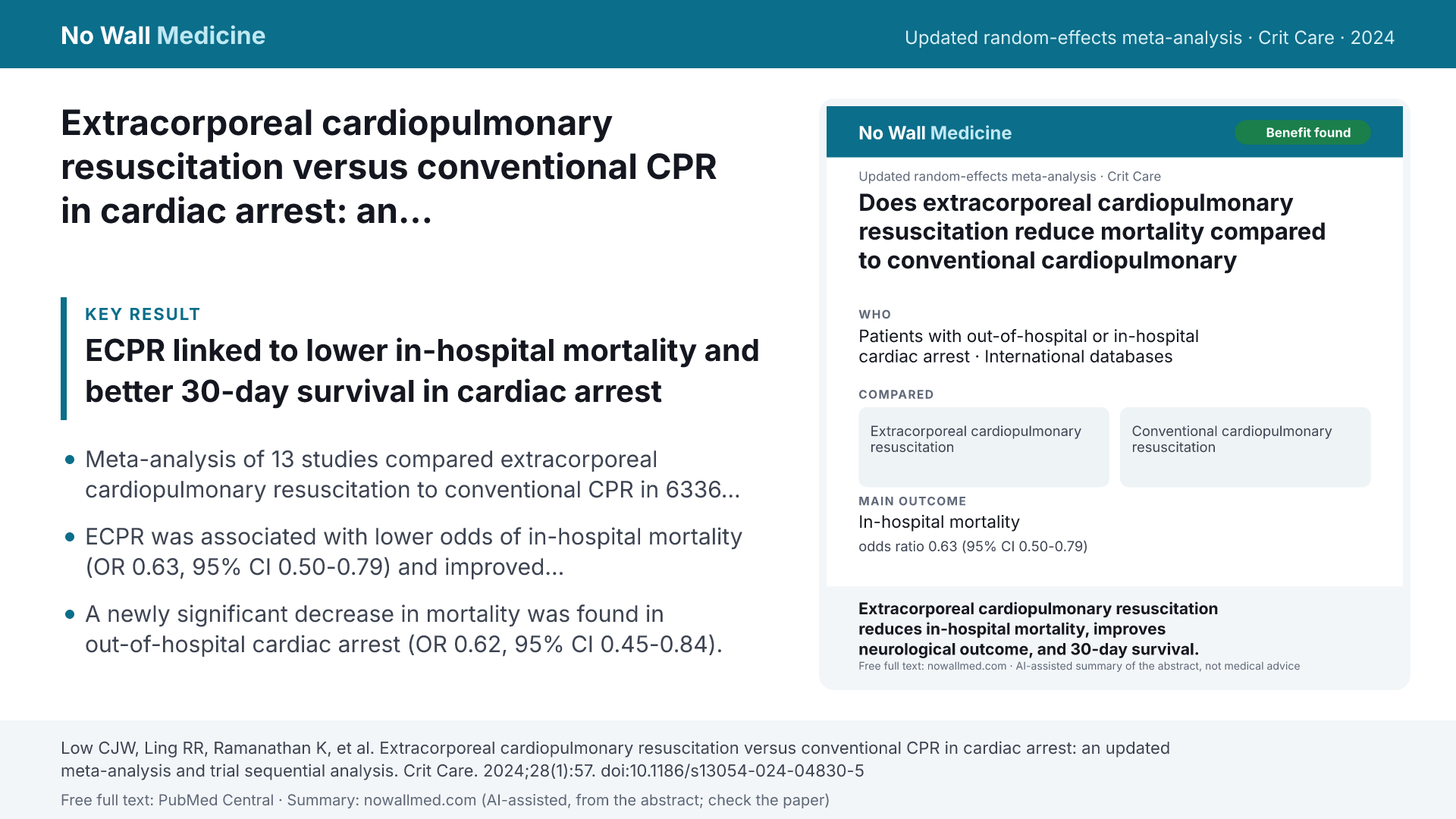
Extracorporeal cardiopulmonary resuscitation versus conventional CPR in cardiac arrest: an updated meta-analysis and trial sequential analysis
Updated random-effects meta-analysisBenefit found
Does extracorporeal cardiopulmonary resuscitation reduce mortality compared to conventional cardiopulmonary resuscitation?
Who
Patients with out-of-hospital or in-hospital cardiac arrest · International databases
Compared
Extracorporeal cardiopulmonary resuscitation
Conventional cardiopulmonary resuscitation
Main outcome
In-hospital mortality
Result: odds ratio 0.63 (95% CI 0.50-0.79)
Bottom line: Extracorporeal cardiopulmonary resuscitation reduces in-hospital mortality, improves neurological outcome, and 30-day survival.
Crit Care · 2024-02-21Download image
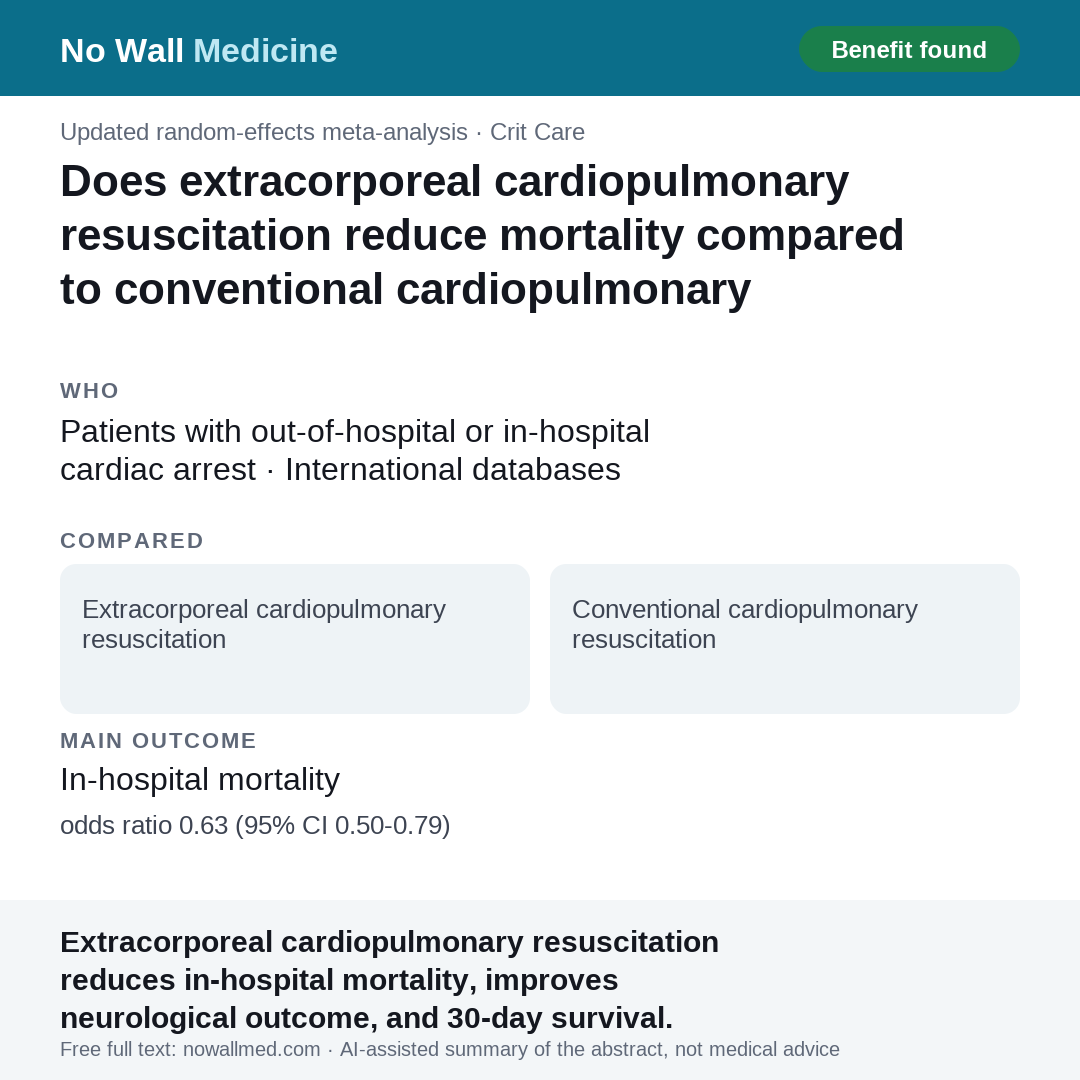
Clinical question: Does extracorporeal cardiopulmonary resuscitation reduce mortality compared to conventional cardiopulmonary resuscitation?
Why it matters: It was unclear if extracorporeal cardiopulmonary resuscitation improves mortality and neurological outcomes in both out-of-hospital and in-hospital cardiac arrest settings.
Key points
- Researchers analyzed 13 studies involving 6336 patients receiving extracorporeal cardiopulmonary resuscitation and 7712 patients receiving conventional cardiopulmonary resuscitation (chest compressions and breaths).
- Extracorporeal cardiopulmonary resuscitation was associated with a lower risk of in-hospital mortality (OR 0.63, 95% CI 0.50-0.79) and a significant decrease in mortality for out-of-hospital cardiac arrest (OR 0.62, 95% CI 0.45-0.84).
- The procedure was also associated with favorable short-term neurological outcomes and survival up to 30 days.
Headline and key points written with AI from the paper’s abstract, with every number checked against it. Read the paper before relying on them.
Was this summary helpful?
Subject terms
Cite this article
Low CJW, Ling RR, Ramanathan K, Chen Y, Rochwerg B, Kitamura T. Extracorporeal cardiopulmonary resuscitation versus conventional CPR in cardiac arrest: an updated meta-analysis and trial sequential analysis. Crit Care. 2024. doi:10.1186/s13054-024-04830-5
Spotted a mistake? Suggest a correction
Top studies every Monday
The week’s key trials and guidelines in your specialties, plus any topics you follow. By email, free.
Get the weekly digest