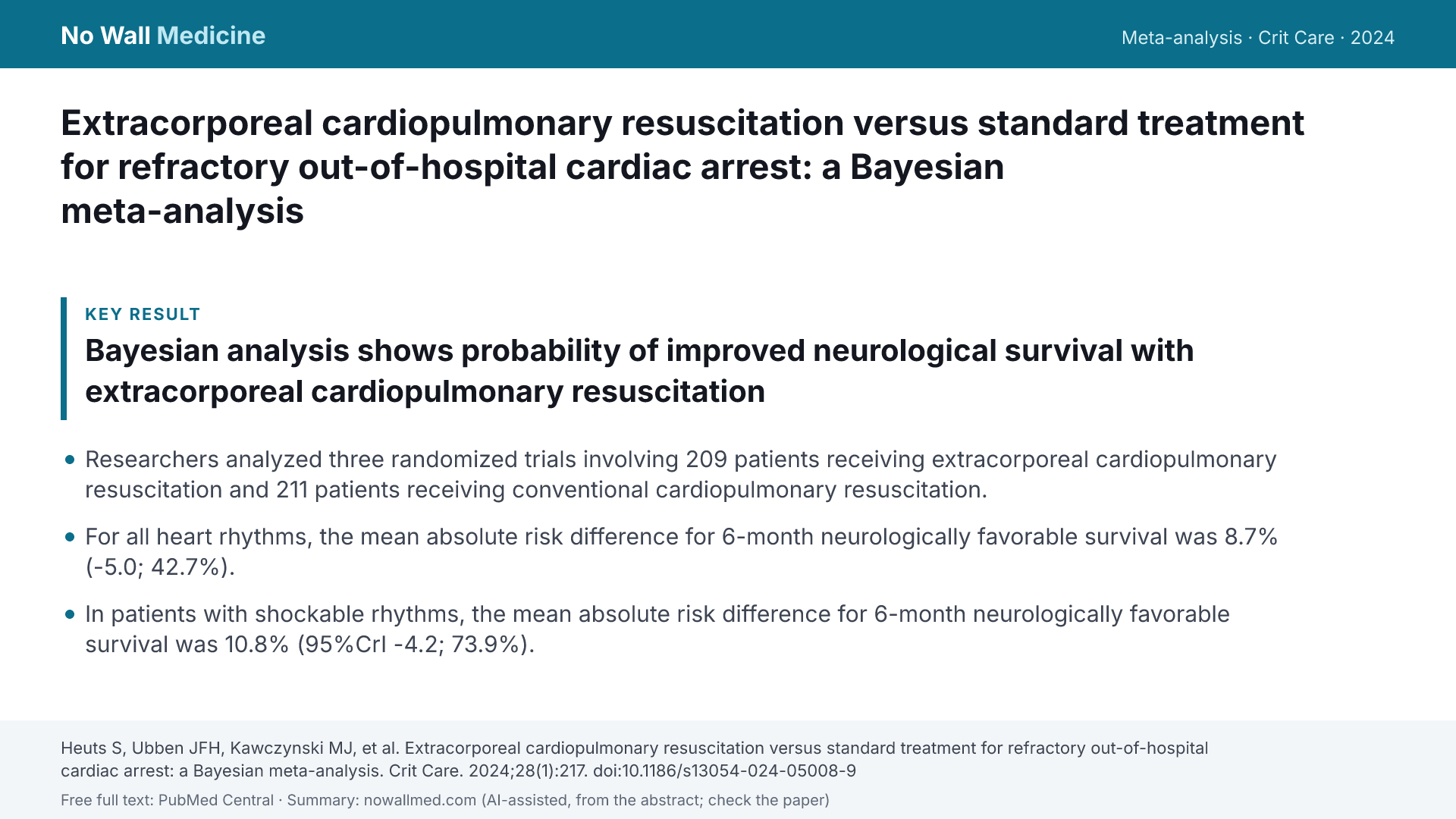
Bayesian analysis shows probability of improved neurological survival with extracorporeal cardiopulmonary resuscitation
Extracorporeal cardiopulmonary resuscitation versus standard treatment for refractory out-of-hospital cardiac arrest: a Bayesian meta-analysis
Why it matters: Frequentist methods used in previous analyses of these trials resulted in dichotomous interpretations based on p-values rather than the probability of clinically relevant treatment effects.
Key points
- Researchers analyzed three randomized trials involving 209 patients receiving extracorporeal cardiopulmonary resuscitation and 211 patients receiving conventional cardiopulmonary resuscitation.
- For all heart rhythms, the mean absolute risk difference for 6-month neurologically favorable survival was 8.7% (-5.0; 42.7%).
- In patients with shockable rhythms, the mean absolute risk difference for 6-month neurologically favorable survival was 10.8% (95%CrI -4.2; 73.9%).
Headline and key points written with AI from the paper’s abstract, with every number checked against it. Read the paper before relying on them.
Was this summary helpful?
Subject terms
Headline, design, result, key points, caveat and citation as plain text.
Cite this article
Heuts S, Ubben JFH, Kawczynski MJ, et al. Extracorporeal cardiopulmonary resuscitation versus standard treatment for refractory out-of-hospital cardiac arrest: a Bayesian meta-analysis. Crit Care. 2024. doi:10.1186/s13054-024-05008-9
Spotted a mistake? Suggest a correction