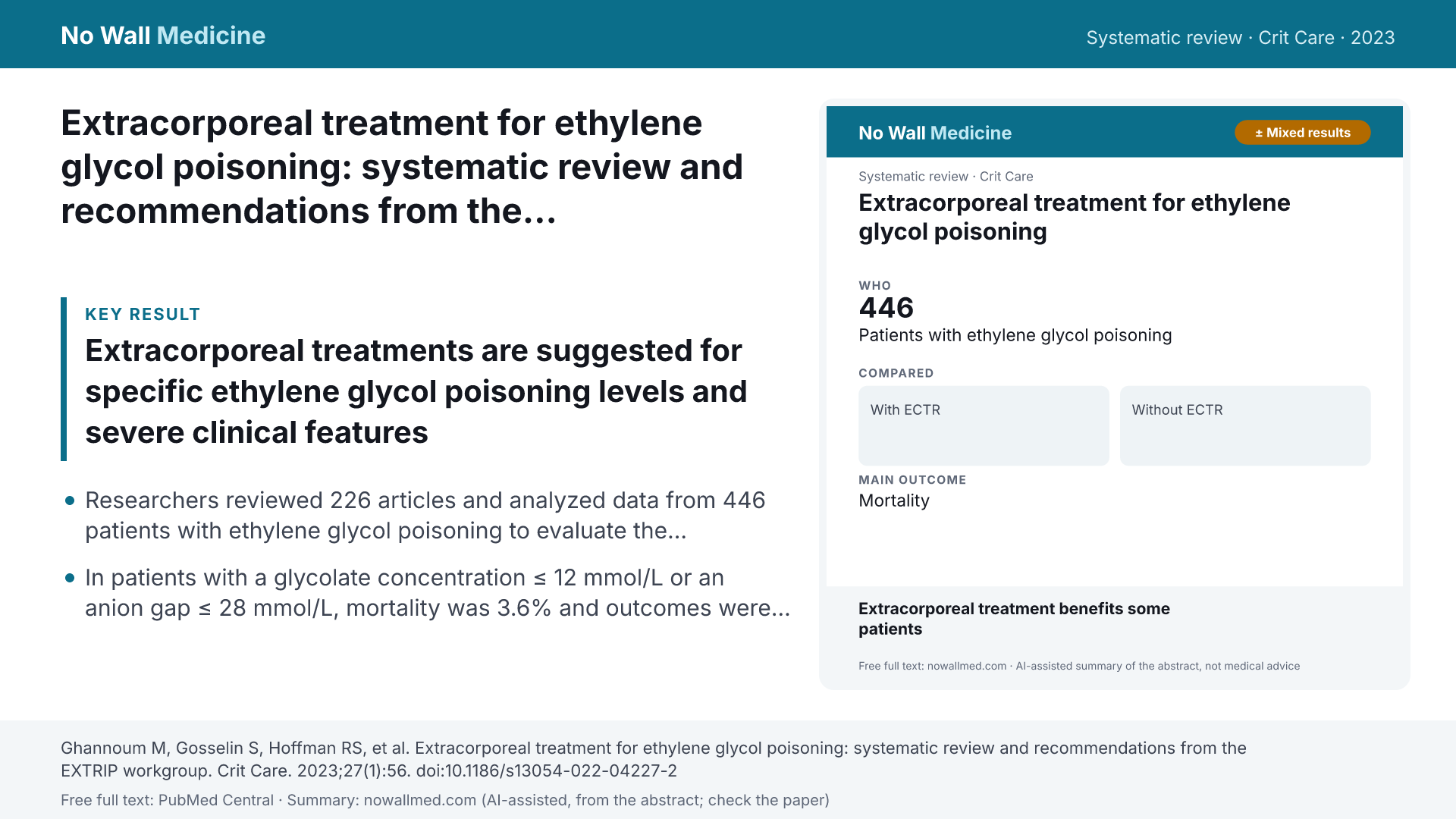
Extracorporeal treatments are suggested for specific ethylene glycol poisoning levels and severe clinical features
Extracorporeal treatment for ethylene glycol poisoning: systematic review and recommendations from the EXTRIP workgroup
Systematic reviewMixed results
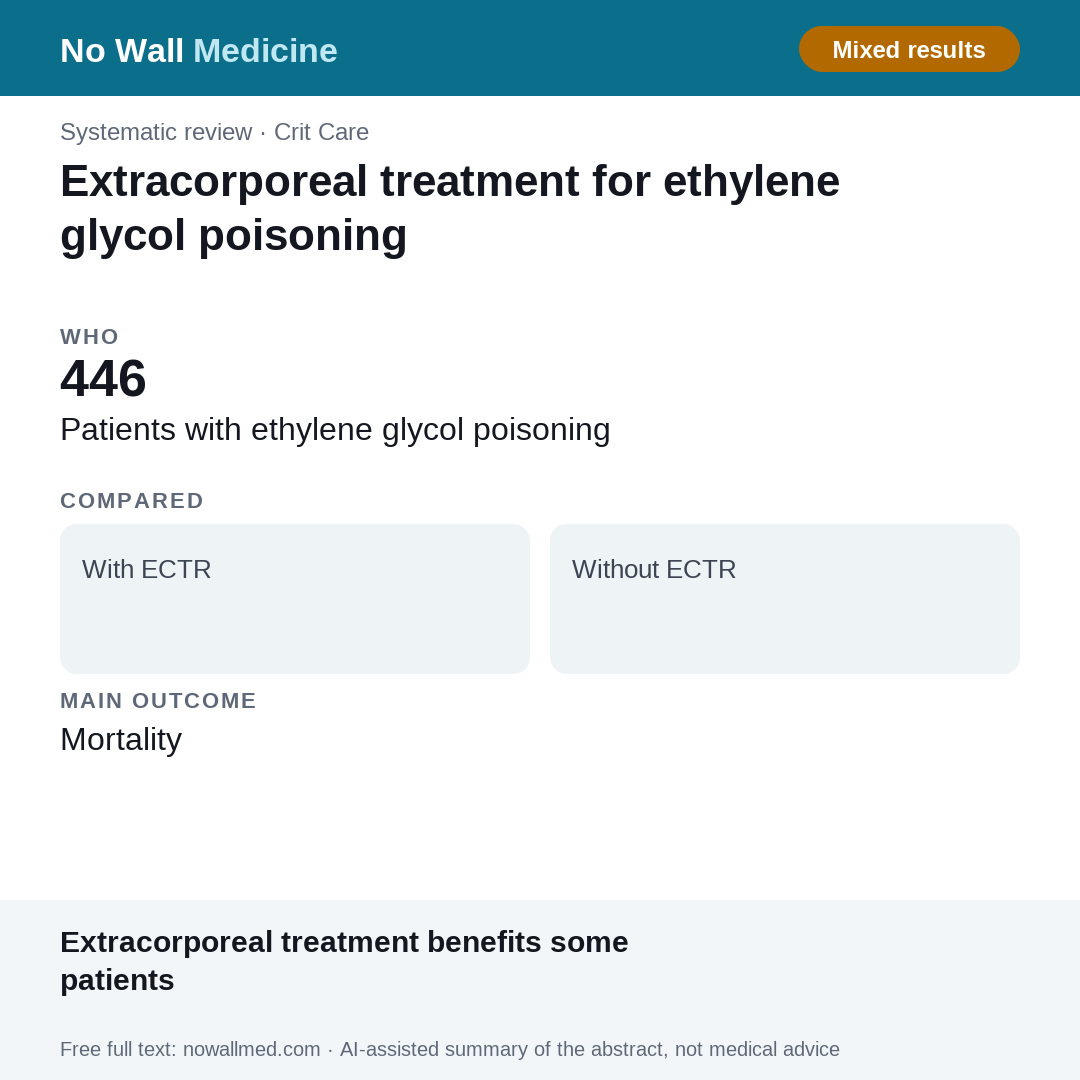
Extracorporeal treatment for ethylene glycol poisoning
Who
446
Patients with ethylene glycol poisoning
Compared
With ECTR
Without ECTR
Main outcome
Mortality
Bottom line: Extracorporeal treatment benefits some patients
Crit Care · 2023-02-10Download image
Why it matters: The indications for using extracorporeal treatments such as hemodialysis in ethylene glycol poisoning are debated due to the wider availability of the antidote fomepizole.
Key points
- Researchers reviewed 226 articles and analyzed data from 446 patients with ethylene glycol poisoning to evaluate the utility of extracorporeal treatments like hemodialysis.
- In patients with a glycolate concentration ≤ 12 mmol/L or an anion gap ≤ 28 mmol/L, mortality was 3.6% and outcomes were not better with extracorporeal treatment.
- The overall mortality for the 446 patients analyzed in the study was 18.7%.
Headline and key points written with AI from the paper’s abstract, with every number checked against it. Read the paper before relying on them.
Was this summary helpful?
Subject terms
Cite this article
Ghannoum M, Gosselin S, Hoffman RS, et al. Extracorporeal treatment for ethylene glycol poisoning: systematic review and recommendations from the EXTRIP workgroup. Crit Care. 2023. doi:10.1186/s13054-022-04227-2
Spotted a mistake? Suggest a correction