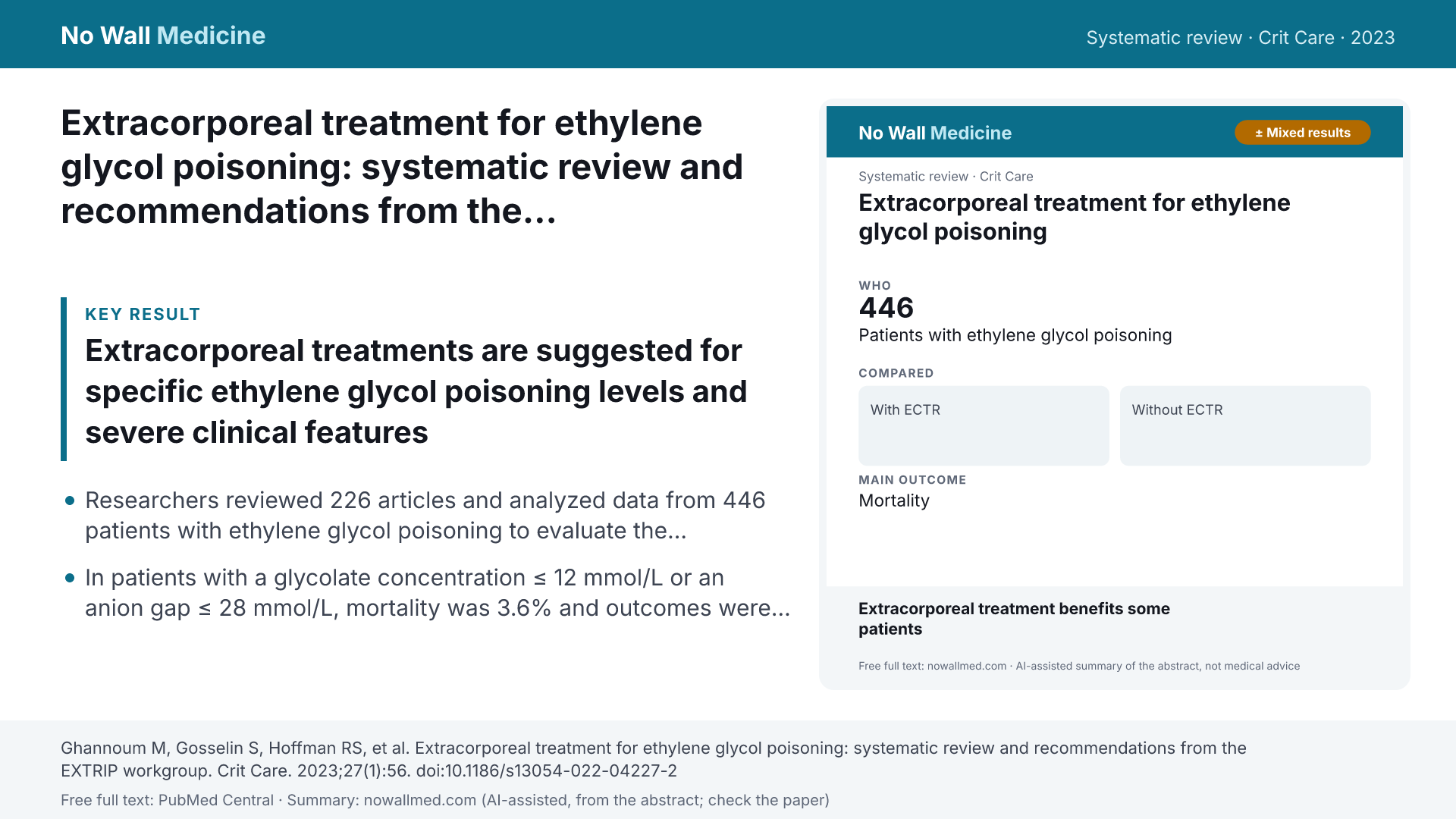
Extracorporeal treatment for ethylene glycol poisoning: systematic review and recommendations from the EXTRIP workgroup
Key result: Extracorporeal treatments are suggested for specific ethylene glycol poisoning levels and severe clinical features
Key points
- Researchers reviewed 226 articles and analyzed data from 446 patients with ethylene glycol poisoning to evaluate the utility of extracorporeal treatments like hemodialysis.
- In patients with a glycolate concentration ≤ 12 mmol/L or an anion gap ≤ 28 mmol/L, mortality was 3.6% and outcomes were not better with extracorporeal treatment.
- The overall mortality for the 446 patients analyzed in the study was 18.7%.
Why it matters: The indications for using extracorporeal treatments such as hemodialysis in ethylene glycol poisoning are debated due to the wider availability of the antidote fomepizole.
Discussion prompts
- Would these patients look like yours? Who was left out?
- Is the main outcome one that matters to patients?
- Is the difference large enough to change what you do?
Cite: Ghannoum M, Gosselin S, Hoffman RS, et al. Extracorporeal treatment for ethylene glycol poisoning: systematic review and recommendations from the EXTRIP workgroup. Crit Care. 2023;27(1):56. doi:10.1186/s13054-022-04227-2
Free full text: PubMed Central · Summary and visual abstract: nowallmed.com/a/extracorporeal-treatment-for-ethylene-glycol-poisoning-systematic-17m83pv/ (AI-assisted from the abstract; check the paper before relying on it).