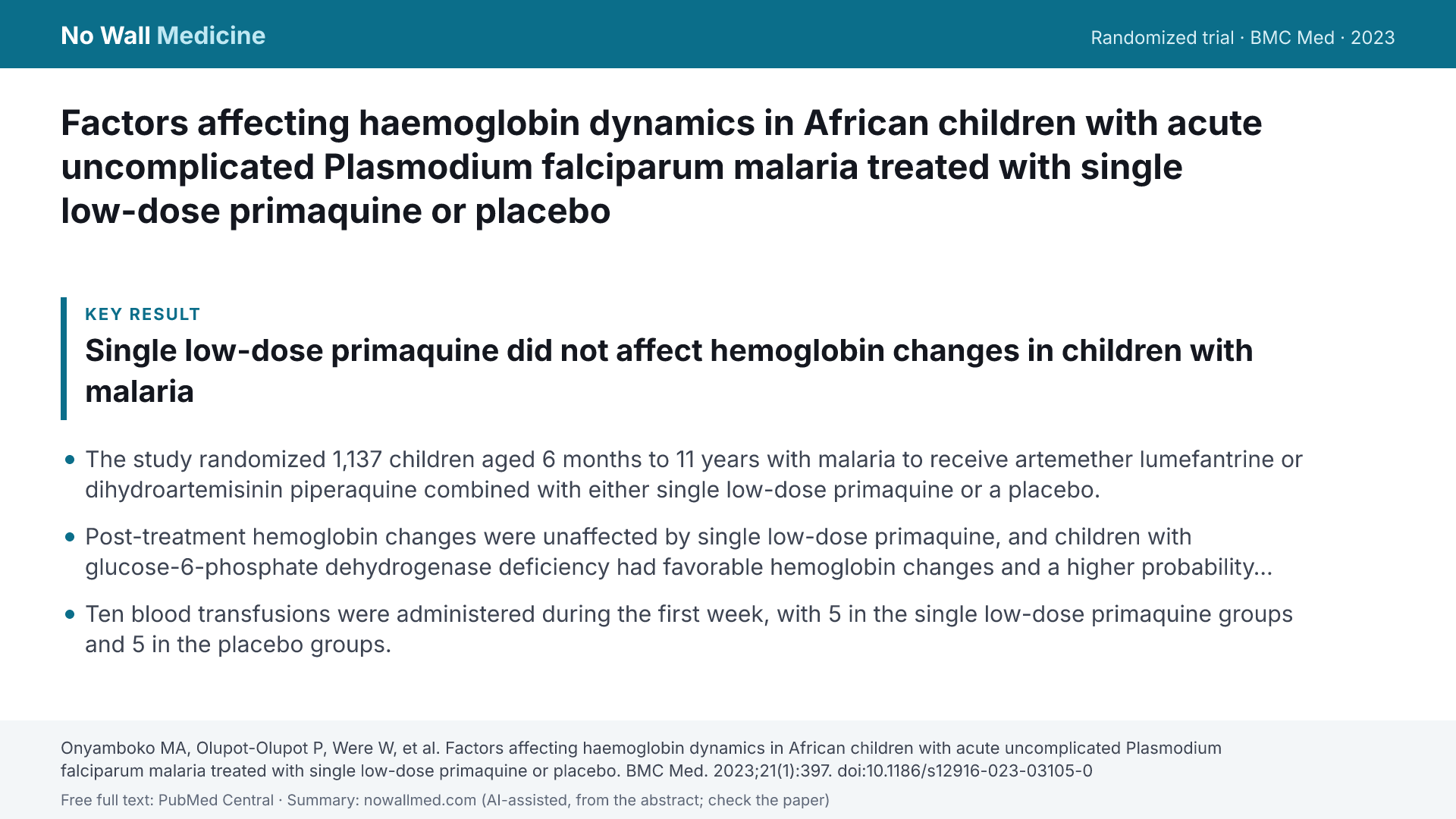
Single low-dose primaquine did not affect hemoglobin changes in children with malaria
Factors affecting haemoglobin dynamics in African children with acute uncomplicated Plasmodium falciparum malaria treated with single low-dose primaquine or placebo
Why it matters: Concerns exist regarding the potential for single low-dose primaquine to cause blood cell breakdown in patients with glucose-6-phosphate dehydrogenase deficiency.
Key points
- The study randomized 1,137 children aged 6 months to 11 years with malaria to receive artemether lumefantrine or dihydroartemisinin piperaquine combined with either single low-dose primaquine or a placebo.
- Post-treatment hemoglobin changes were unaffected by single low-dose primaquine, and children with glucose-6-phosphate dehydrogenase deficiency had favorable hemoglobin changes and a higher probability of hemoglobin recovery.
- Ten blood transfusions were administered during the first week, with 5 in the single low-dose primaquine groups and 5 in the placebo groups.
Headline and key points written with AI from the paper’s abstract, with every number checked against it. Read the paper before relying on them.
Was this summary helpful?
Subject terms
Cite this article
Onyamboko MA, Olupot-Olupot P, Were W, Namayanja C, Onyas P, Titin H. Factors affecting haemoglobin dynamics in African children with acute uncomplicated Plasmodium falciparum malaria treated with single low-dose primaquine or placebo. BMC Med. 2023. doi:10.1186/s12916-023-03105-0
Spotted a mistake? Suggest a correction
Top studies every Monday
The week’s key trials and guidelines in your specialties, plus any topics you follow. By email, free.
Get the weekly digest