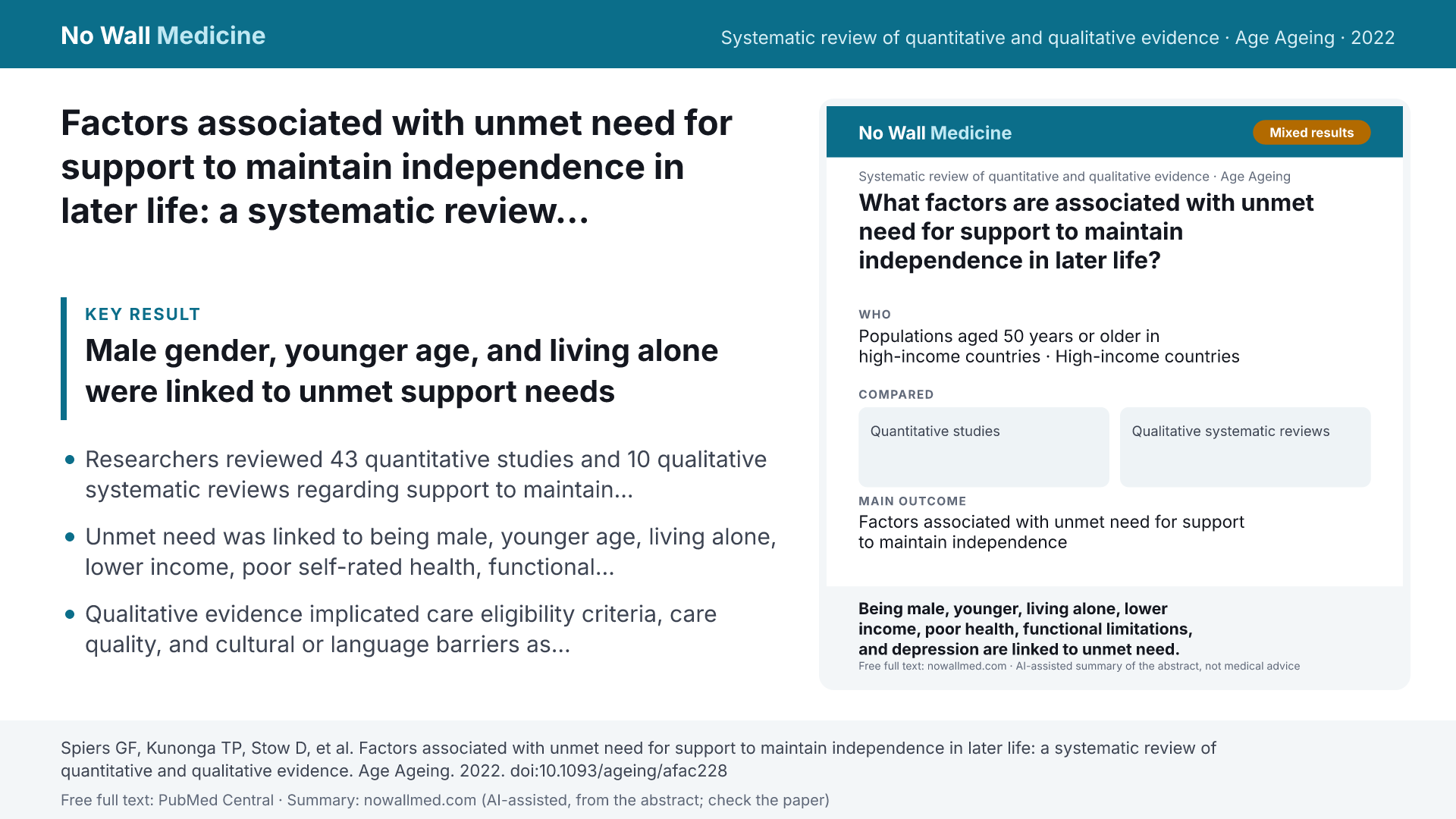
Male gender, younger age, and living alone were linked to unmet support needs
Factors associated with unmet need for support to maintain independence in later life: a systematic review of quantitative and qualitative evidence
Systematic review of quantitative and qualitative evidenceMixed results
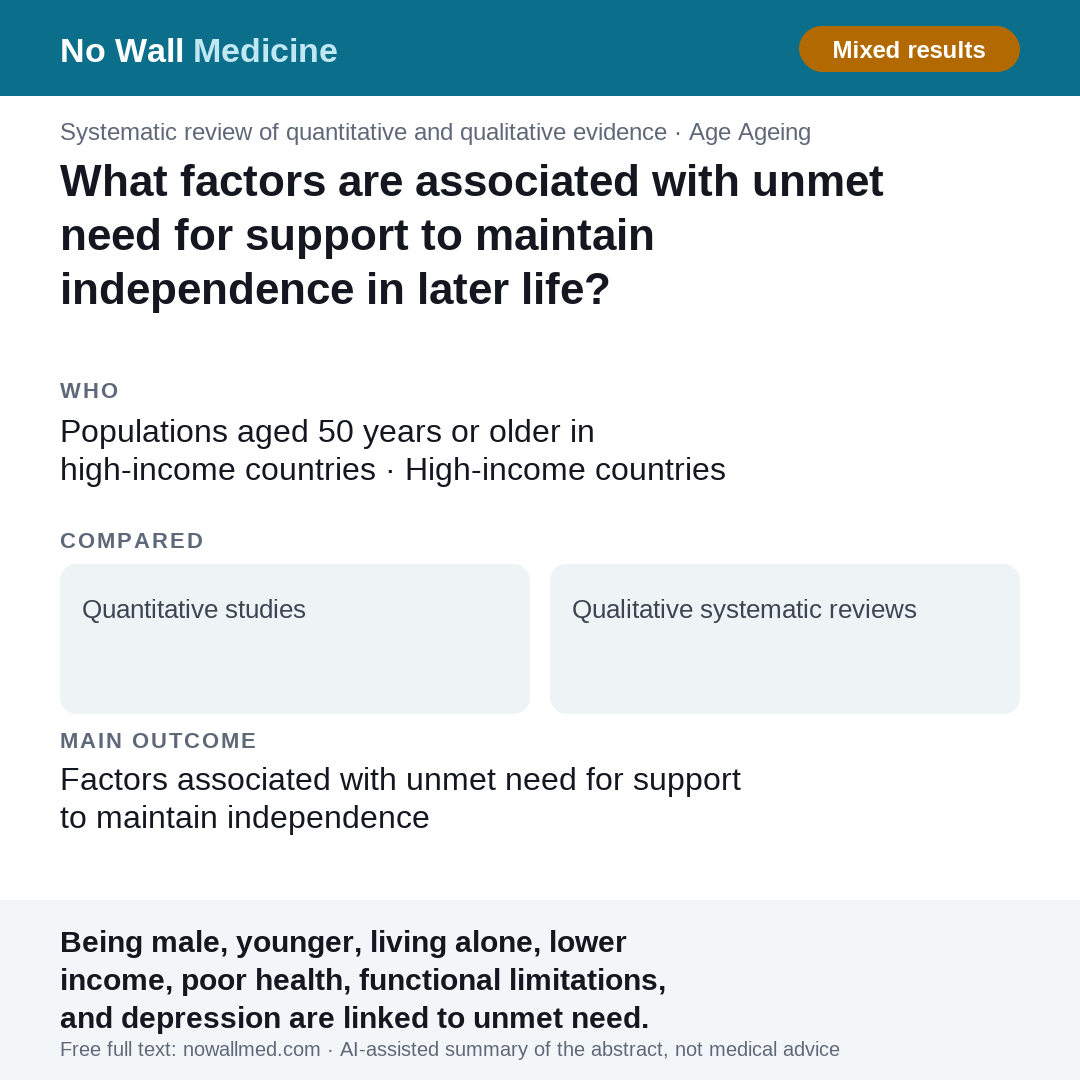
What factors are associated with unmet need for support to maintain independence in later life?
Who
Populations aged 50 years or older in high-income countries · High-income countries
Compared
Quantitative studies
Qualitative systematic reviews
Main outcome
Factors associated with unmet need for support to maintain independence
Bottom line: Being male, younger, living alone, lower income, poor health, functional limitations, and depression are linked to unmet need.
Age Ageing · 2022-10-30Download image
Clinical question: What factors are associated with unmet need for support to maintain independence in later life?
Why it matters: It is unknown which specific demographic and health factors are associated with people not receiving the necessary support to maintain independence in later life.
Key points
- Researchers reviewed 43 quantitative studies and 10 qualitative systematic reviews regarding support to maintain independence in people aged 50+ in high-income countries.
- Unmet need was linked to being male, younger age, living alone, lower income, poor self-rated health, functional limitations, and greater depression severity.
- Qualitative evidence implicated care eligibility criteria, care quality, and cultural or language barriers as factors associated with unmet need.
Headline and key points written with AI from the paper’s abstract, with every number checked against it. Read the paper before relying on them.
Was this summary helpful?
Subject terms
Cite this article
Spiers GF, Kunonga TP, Stow D, Hall A, Kingston A, Williams O. Factors associated with unmet need for support to maintain independence in later life: a systematic review of quantitative and qualitative evidence. Age Ageing. 2022. doi:10.1093/ageing/afac228
Spotted a mistake? Suggest a correction
Top studies every Monday
The week’s key trials and guidelines in your specialties, plus any topics you follow. By email, free.
Get the weekly digest