Factors associated with unmet need for support to maintain independence in later life: a systematic review of quantitative and qualitative evidence
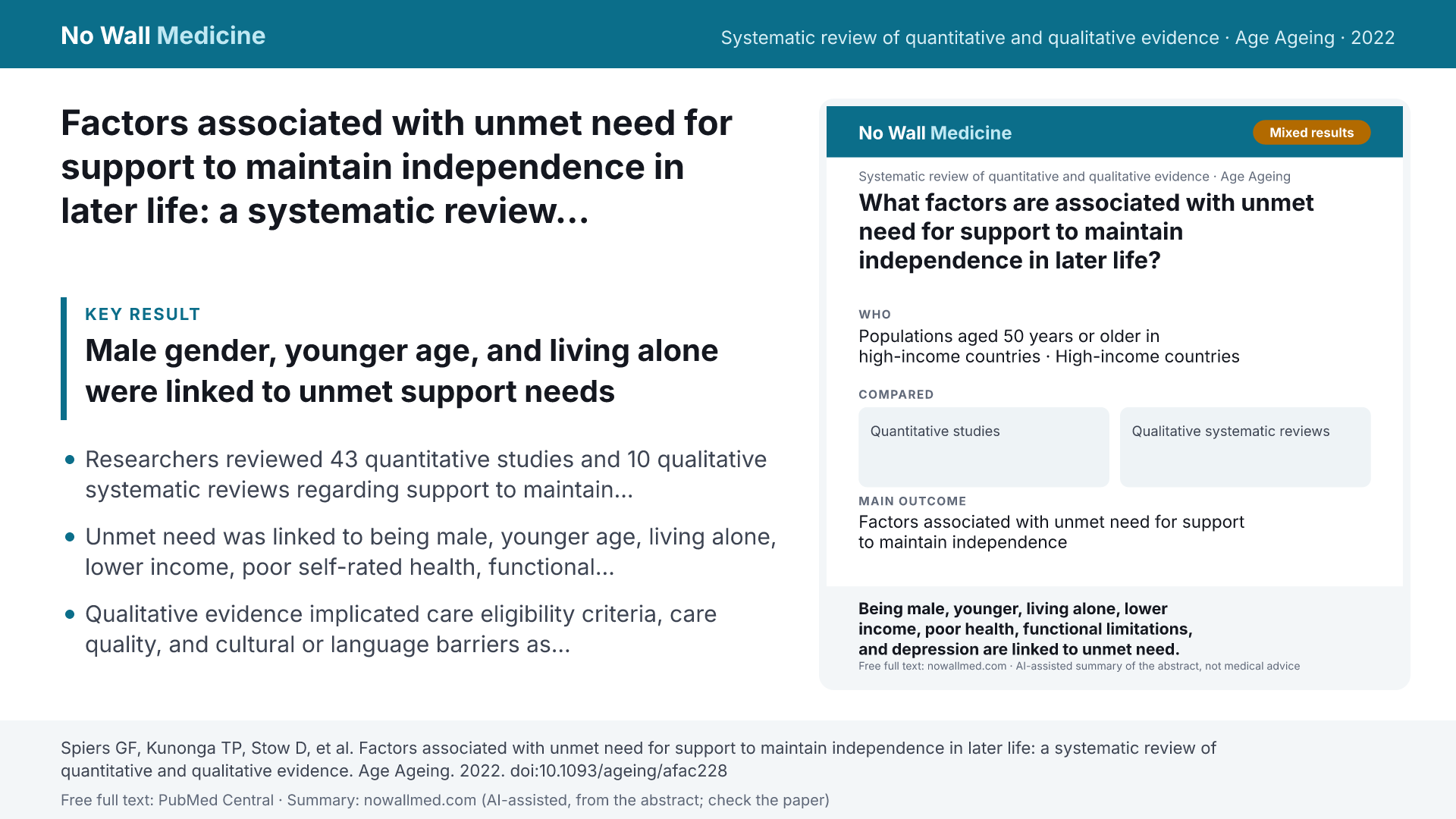
Key result: Male gender, younger age, and living alone were linked to unmet support needs
Systematic review of quantitative and qualitative evidenceMixed results
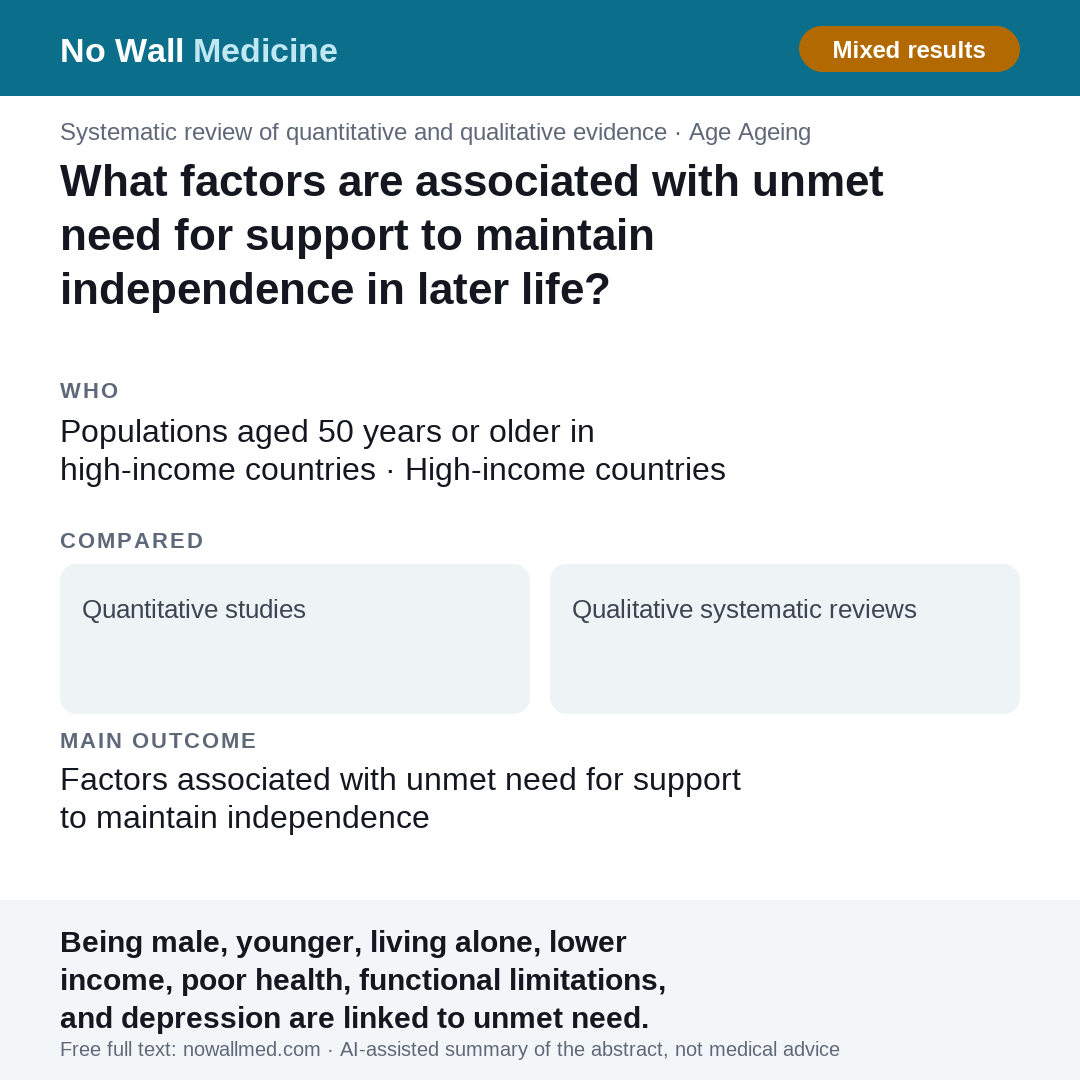
What factors are associated with unmet need for support to maintain independence in later life?
Who
Populations aged 50 years or older in high-income countries · High-income countries
Compared
Quantitative studies
Qualitative systematic reviews
Main outcome
Factors associated with unmet need for support to maintain independence
Bottom line: Being male, younger, living alone, lower income, poor health, functional limitations, and depression are linked to unmet need.
Age Ageing · 2022-10-30Download image
Key points
- Researchers reviewed 43 quantitative studies and 10 qualitative systematic reviews regarding support to maintain independence in people aged 50+ in high-income countries.
- Unmet need was linked to being male, younger age, living alone, lower income, poor self-rated health, functional limitations, and greater depression severity.
- Qualitative evidence implicated care eligibility criteria, care quality, and cultural or language barriers as factors associated with unmet need.
Why it matters: It is unknown which specific demographic and health factors are associated with people not receiving the necessary support to maintain independence in later life.
Discussion prompts
- Would these patients look like yours? Who was left out?
- Is the main outcome one that matters to patients?
- Is the difference large enough to change what you do?
Cite: Spiers GF, Kunonga TP, Stow D, Hall A, Kingston A, Williams O. Factors associated with unmet need for support to maintain independence in later life: a systematic review of quantitative and qualitative evidence. Age Ageing. 2022. doi:10.1093/ageing/afac228
Free full text: PubMed Central · Summary and visual abstract: nowallmed.com/a/factors-associated-with-unmet-need-for-support-to-maintain-c6w07b/ (AI-assisted from the abstract; check the paper before relying on it).