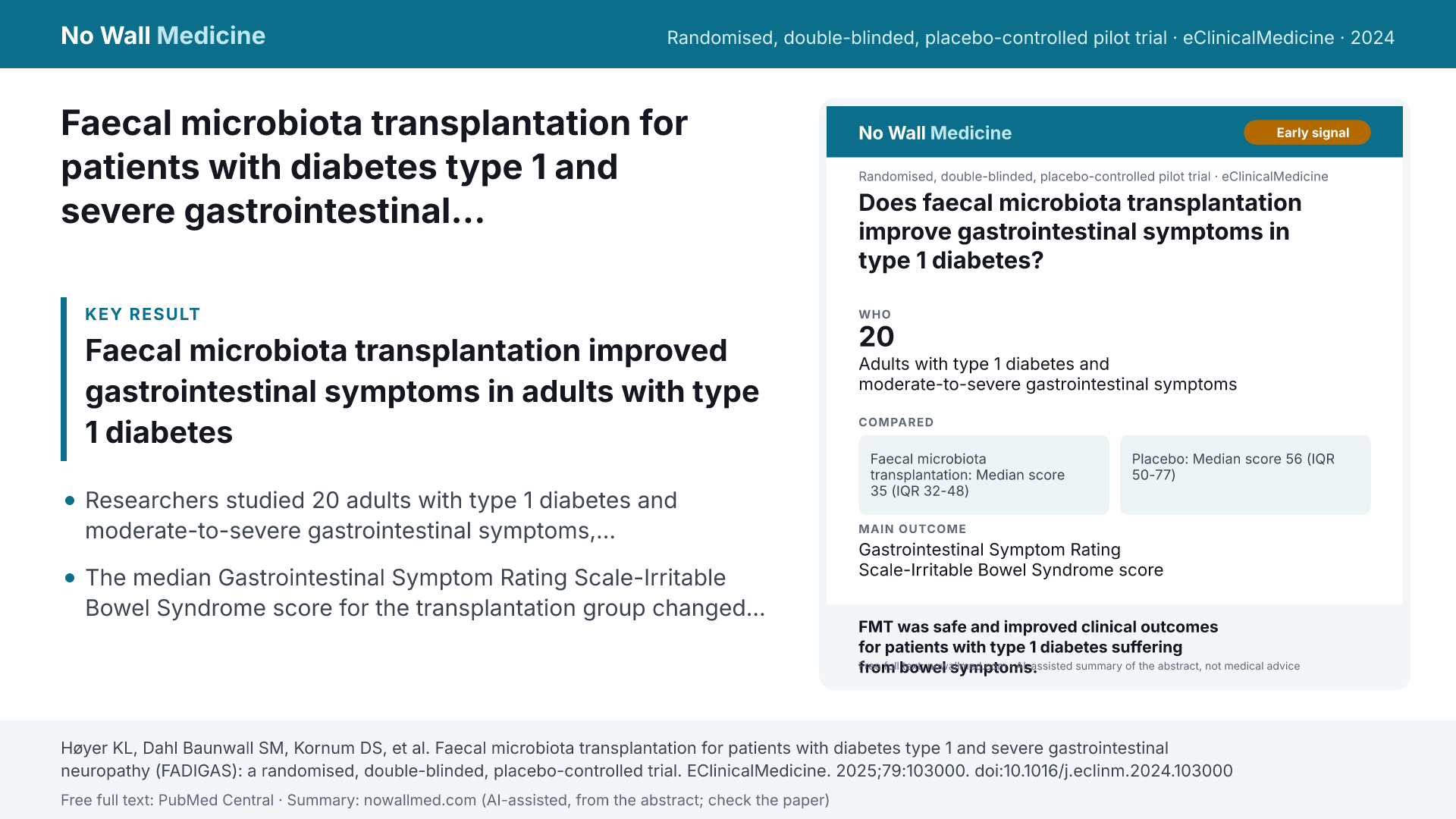
Faecal microbiota transplantation improved gastrointestinal symptoms in adults with type 1 diabetes
Faecal microbiota transplantation for patients with diabetes type 1 and severe gastrointestinal neuropathy (FADIGAS): a randomised, double-blinded, placebo-controlled trial
Why it matters: Current therapies for diabetic gastroenteropathy, which causes symptoms like nausea, vomiting, and bloating, are scarce.
Key points
- Researchers studied 20 adults with type 1 diabetes and moderate-to-severe gastrointestinal symptoms, comparing encapsulated faecal microbiota transplantation (transferring stool to change gut bacteria) to a placebo.
- The median Gastrointestinal Symptom Rating Scale-Irritable Bowel Syndrome score for the transplantation group changed from 58 (IQR 54-65) to 35 (32-48) compared to 64 (55-70) to 56 (50-77) for placebo.
- Four patients in the transplantation group reported seven adverse events of grade 2 or more, while five patients in the placebo group reported 19 such events.
Headline and key points written with AI from the paper’s abstract, with every number checked against it. Read the paper before relying on them.
Was this summary helpful?
Headline, design, result, key points, caveat and citation as plain text.
Cite this article
Høyer KL, Dahl Baunwall SM, Kornum DS, et al. Faecal microbiota transplantation for patients with diabetes type 1 and severe gastrointestinal neuropathy (FADIGAS): a randomised, double-blinded, placebo-controlled trial. EClinicalMedicine. 2025;79:103000. doi:10.1016/j.eclinm.2024.103000
Spotted a mistake? Suggest a correction