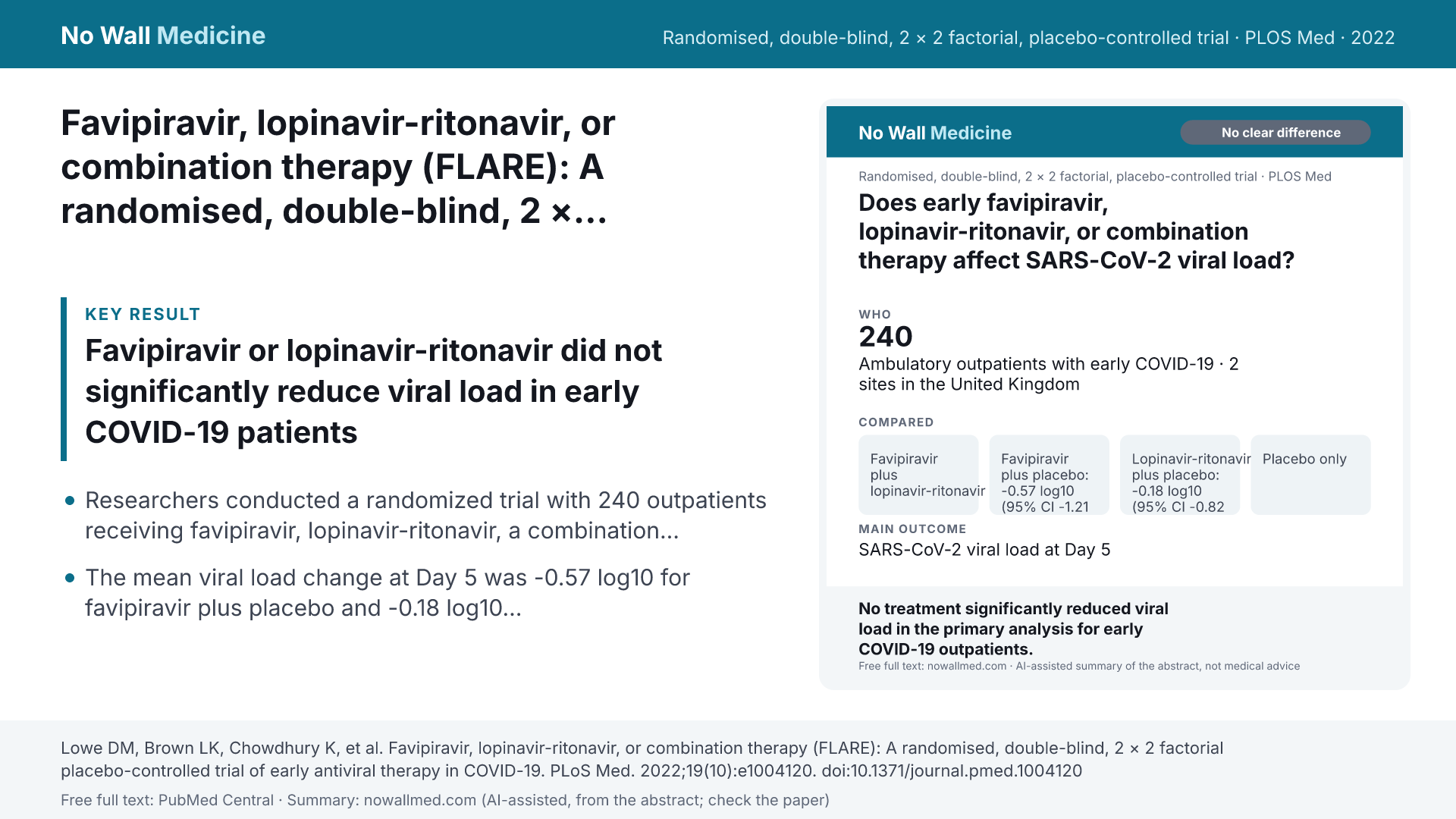
Favipiravir, lopinavir-ritonavir, or combination therapy (FLARE): A randomised, double-blind, 2 × 2 factorial placebo-controlled trial of early antiviral therapy in COVID-19
Key result: Favipiravir or lopinavir-ritonavir did not significantly reduce viral load in early COVID-19 patients
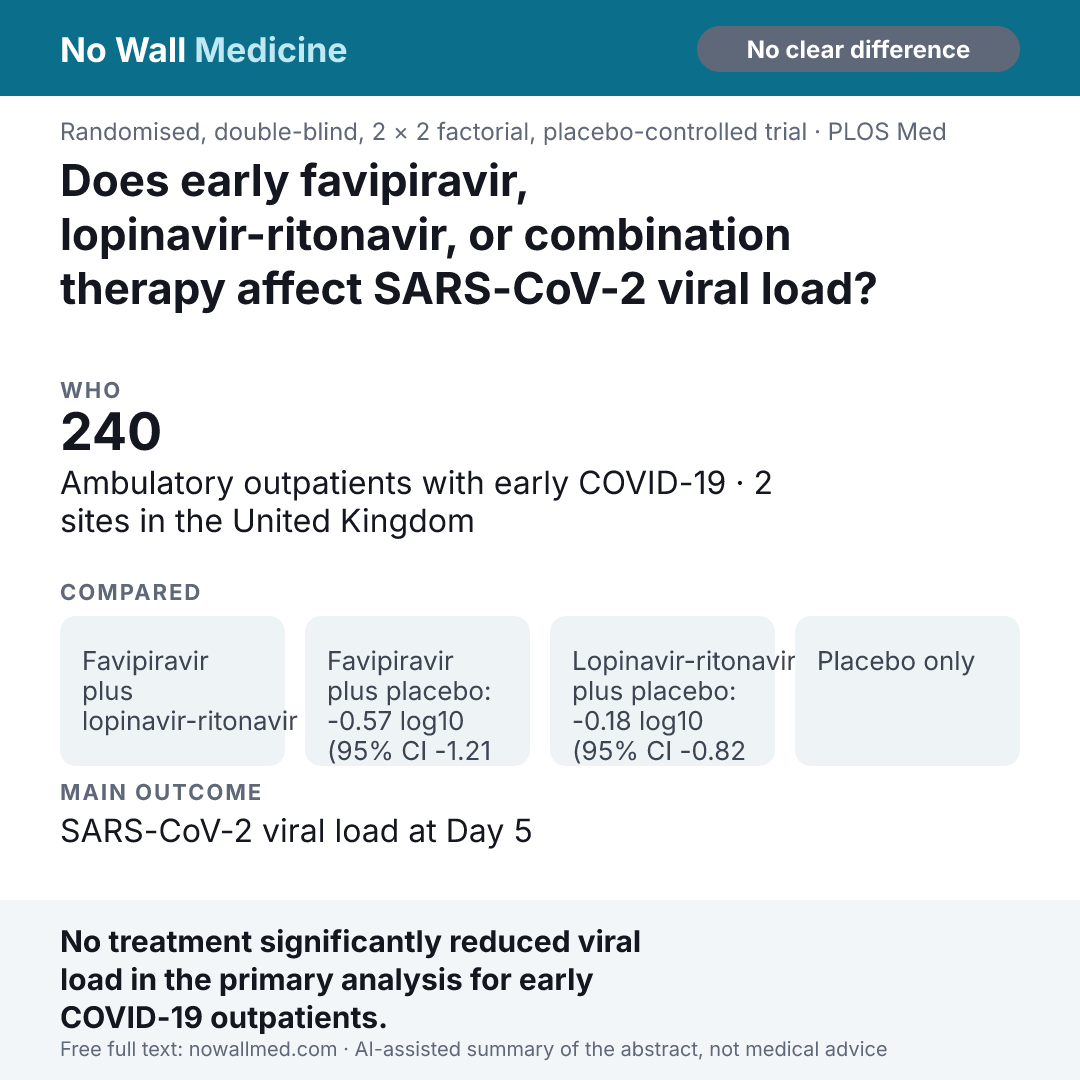
Key points
- Researchers conducted a randomized trial with 240 outpatients receiving favipiravir, lopinavir-ritonavir, a combination of both, or a placebo.
- The mean viral load change at Day 5 was -0.57 log10 for favipiravir plus placebo and -0.18 log10 for lopinavir-ritonavir plus placebo compared to placebo.
- While 46.3% had undetectable virus in the favipiravir plus placebo group versus 26.9% in the placebo group, the primary analysis showed no significant reduction.
Limitation the authors note: The study population was relatively young and healthy compared to those most affected by the COVID-19 pandemic.
Discussion prompts
- Would these patients look like yours? Who was left out?
- Is the main outcome one that matters to patients?
- Is the difference large enough to change what you do?
Cite: Lowe DM, Brown LK, Chowdhury K, et al. Favipiravir, lopinavir-ritonavir, or combination therapy (FLARE): A randomised, double-blind, 2 × 2 factorial placebo-controlled trial of early antiviral therapy in COVID-19. PLoS Med. 2022;19(10):e1004120. doi:10.1371/journal.pmed.1004120
Free full text: PubMed Central · Summary and visual abstract: nowallmed.com/a/favipiravir-lopinavir-ritonavir-or-combination-therapy-flare-a-152e9ji/ (AI-assisted from the abstract; check the paper before relying on it).