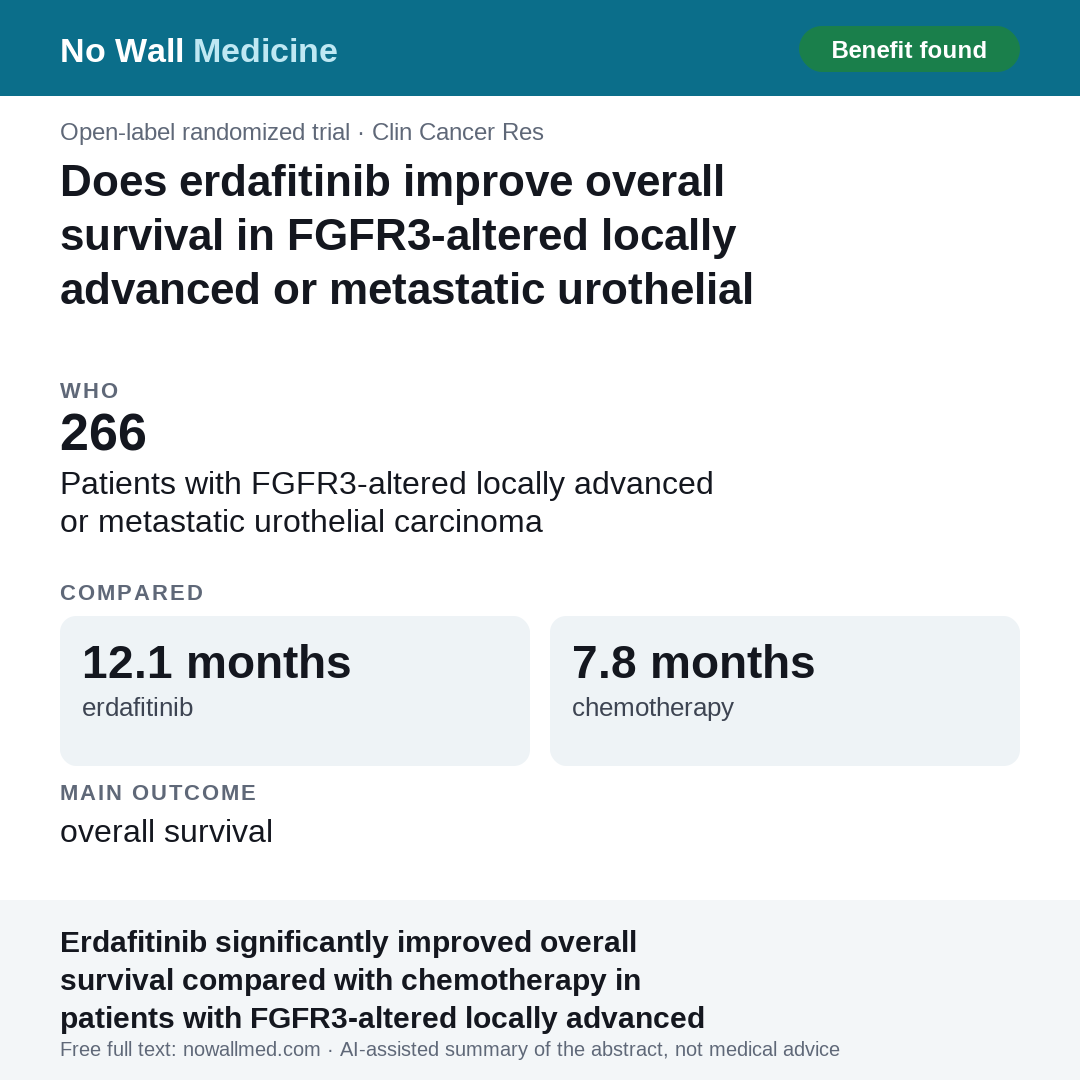
Does erdafitinib improve overall survival in FGFR3-altered locally advanced or metastatic urothelial carcinoma?
Who
266
Patients with FGFR3-altered locally advanced or metastatic urothelial carcinoma
Compared
12.1 monthserdafitinib
7.8 monthschemotherapy
Main outcome
overall survival
Result: hazard ratio 0.64 (95% CI 0.47-0.88)
Bottom line: Erdafitinib significantly improved overall survival compared with chemotherapy in patients with FGFR3-altered locally advanced or metastatic urothelial carcinoma.
Limitation: Not recommended for patients eligible for and not receiving prior PD-(L)1 inhibitor therapy.
Clinical question: Does erdafitinib improve overall survival in FGFR3-altered locally advanced or metastatic urothelial carcinoma?
Why it matters: Patients with FGFR3-altered bladder cancer who have progressed on prior systemic therapy need effective treatment options.
Key points
Researchers studied 266 patients with locally advanced or metastatic urothelial carcinoma (bladder cancer) having FGFR3 genetic alterations in the BLC3001 trial.
Erdafitinib increased median overall survival to 12.1 months compared to 7.8 months for patients receiving chemotherapy.
The drug also showed statistically significant improvements in progression-free survival and objective response rate compared to chemotherapy.
Limitation the authors note: Erdafitinib showed no overall survival benefit when compared to pembrolizumab in the BLC3001 Cohort 2 results.
Headline and key points written with AI from the paper’s abstract, with every number checked against it. Read the paper before relying on them.
Humans; United States Food and Drug Administration; United States; Drug Approval; Receptor, Fibroblast Growth Factor, Type 3; Pyrazoles; Female; Quinoxalines; Male; Aged; Middle Aged; Aged, 80 and over
Prostate and pelvic nodal stereotactic body radiotherapy (SBRT) versus prostate-only SBRT for high-risk, localised prostate cancer (PACE-NODES): early adverse event results from an international, open-label, phase 3, randomised controlled trial