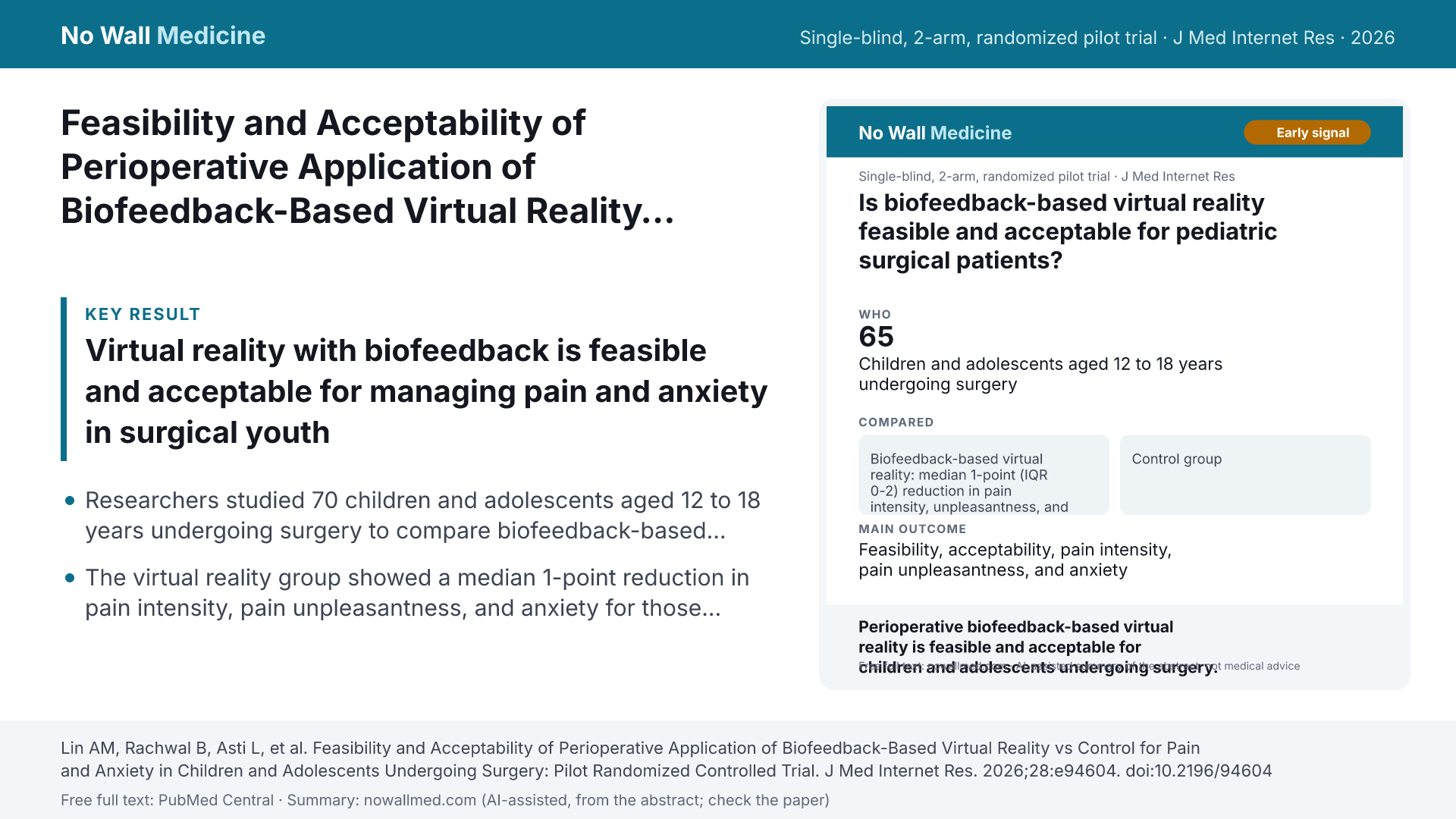
Virtual reality with biofeedback is feasible and acceptable for managing pain and anxiety in surgical youth
Feasibility and Acceptability of Perioperative Application of Biofeedback-Based Virtual Reality vs Control for Pain and Anxiety in Children and Adolescents Undergoing Surgery: Pilot Randomized Controlled Trial
Single-blind, 2-arm, randomized pilot trialEarly signal
Is biofeedback-based virtual reality feasible and acceptable for pediatric surgical patients?
Who
65
Children and adolescents aged 12 to 18 years undergoing surgery
Compared
Biofeedback-based virtual reality: median 1-point (IQR 0-2) reduction in pain intensity, unpleasantness, and anxiety
Control group
Main outcome
Feasibility, acceptability, pain intensity, pain unpleasantness, and anxiety
Bottom line: Perioperative biofeedback-based virtual reality is feasible and acceptable for children and adolescents undergoing surgery.
J Med Internet Res · 2026-09-16 · Save PNG
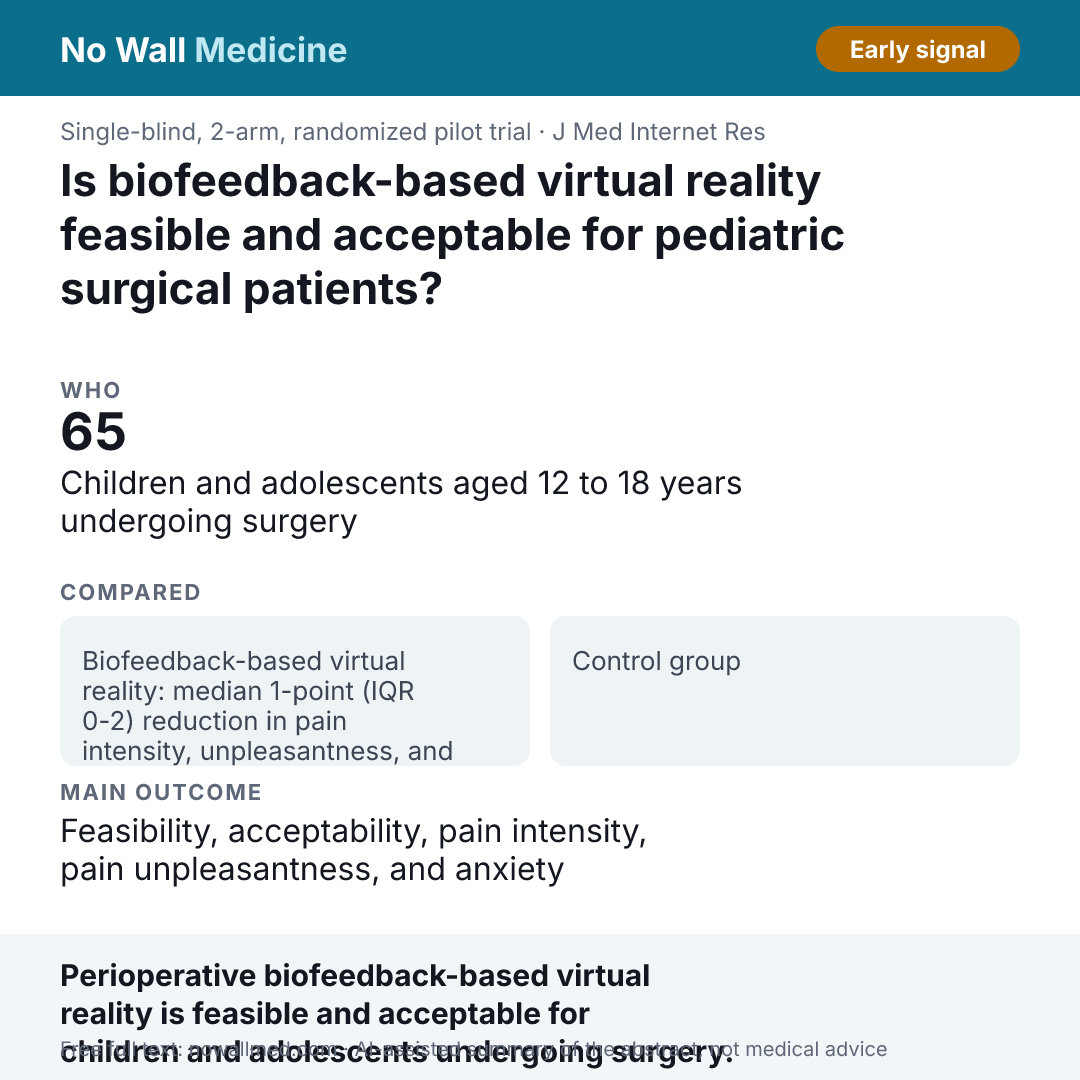
Clinical question: Is biofeedback-based virtual reality feasible and acceptable for pediatric surgical patients?
Why it matters: The impact of biofeedback-based virtual reality on pain and anxiety in pediatric surgical patients remains unexplored.
Key points
- Researchers studied 70 children and adolescents aged 12 to 18 years undergoing surgery to compare biofeedback-based virtual reality with a pain management app.
- The virtual reality group showed a median 1-point reduction in pain intensity, pain unpleasantness, and anxiety for those with baseline scores of 2 or higher.
- The study found high acceptability with 92.9% of the 65 participants completing the trial and only 6.7% stating they would not use the technology again.
Headline and key points written with AI from the paper’s abstract, with every number checked against it. Read the paper before relying on them.
Was this summary helpful?
Subject terms
Headline, design, result, key points, caveat and citation as plain text.
Cite this article
Lin AM, Rachwal B, Asti L, et al. Feasibility and Acceptability of Perioperative Application of Biofeedback-Based Virtual Reality vs Control for Pain and Anxiety in Children and Adolescents Undergoing Surgery: Pilot Randomized Controlled Trial. J Med Internet Res. 2026;28:e94604. doi:10.2196/94604
Spotted a mistake? Suggest a correction