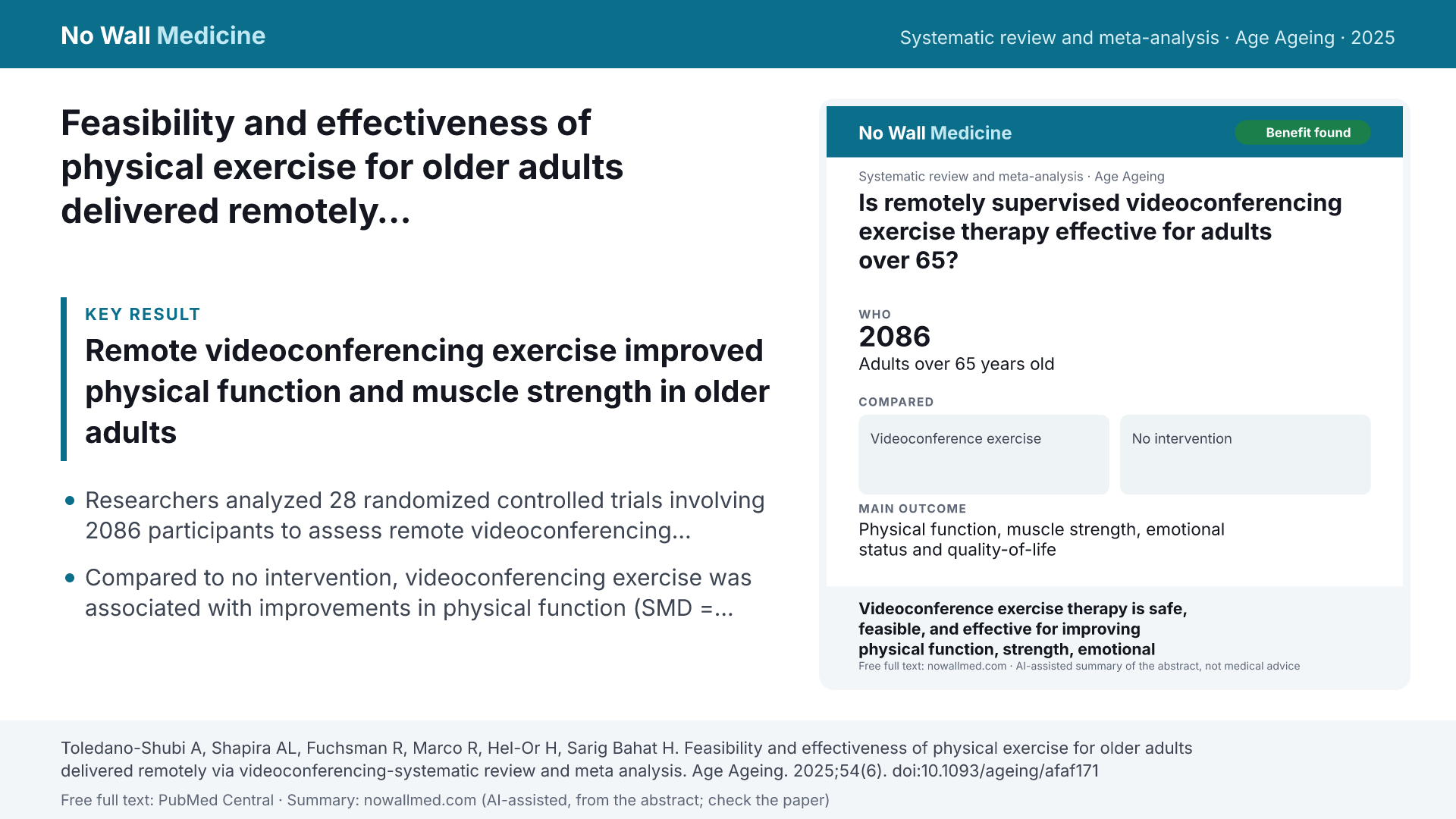
Feasibility and effectiveness of physical exercise for older adults delivered remotely via videoconferencing-systematic review and meta analysis
Key result: Remote videoconferencing exercise improved physical function and muscle strength in older adults
Key points
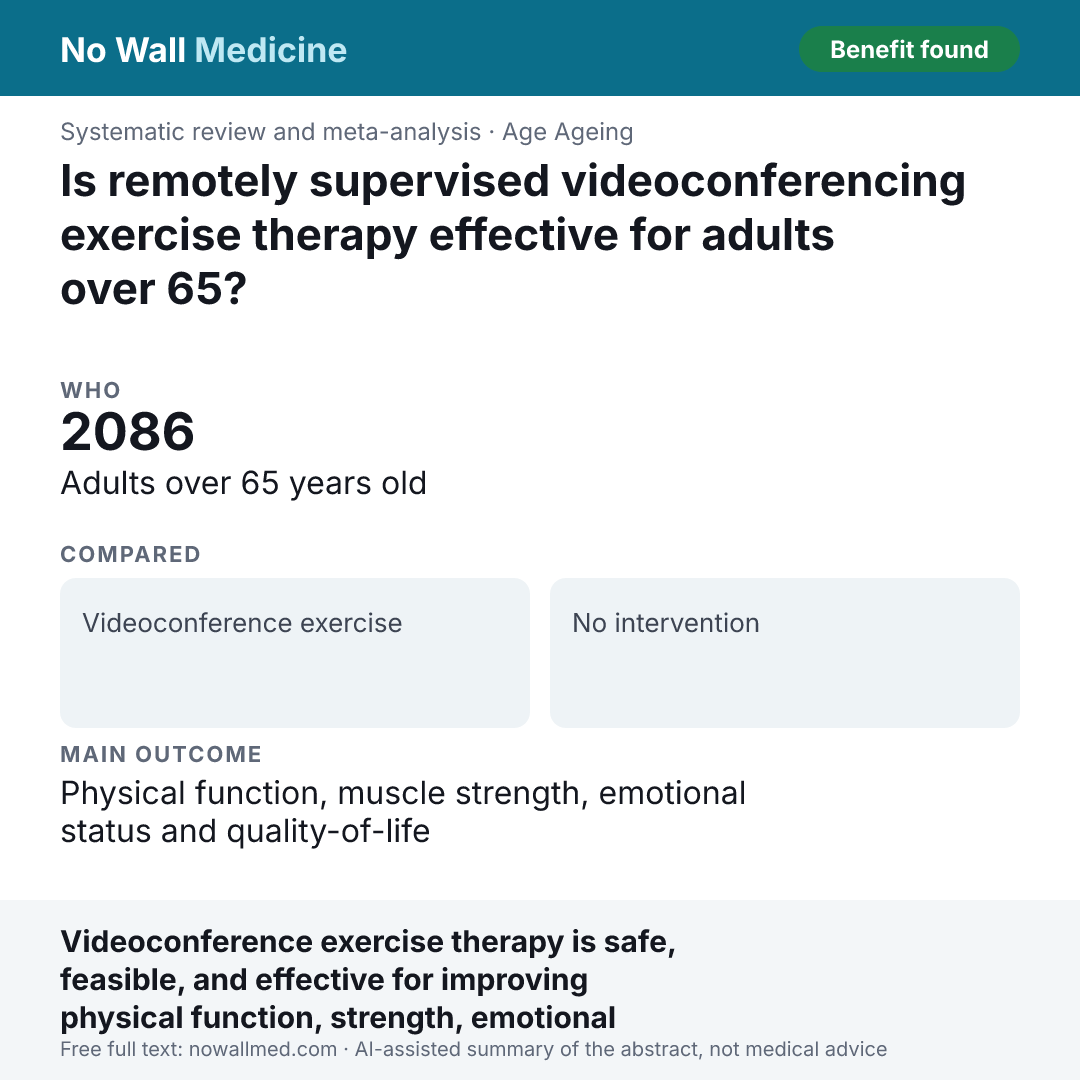
- Researchers analyzed 28 randomized controlled trials involving 2086 participants to assess remote videoconferencing exercise for adults over 65.
- Compared to no intervention, videoconferencing exercise was associated with improvements in physical function (SMD = 0.82), muscle strength (SMD = 0.86), emotional status (SMD = 0.72), and quality-of-life (SMD = 0.61).
- The average attendance rate was 79.7% and the completion rate was 92.8%, with adverse events being comparable to control groups.
Limitation the authors note: Only 25% of studies met the highest methodological standards, and high heterogeneity in outcome measures and small sample sizes may affect generalizability.
Discussion prompts
- Would these patients look like yours? Who was left out?
- Is the main outcome one that matters to patients?
- Is the difference large enough to change what you do?
Cite: Toledano-Shubi A, Shapira AL, Fuchsman R, Marco R, Hel-Or H, Sarig Bahat H. Feasibility and effectiveness of physical exercise for older adults delivered remotely via videoconferencing-systematic review and meta analysis. Age Ageing. 2025;54(6). doi:10.1093/ageing/afaf171
Free full text: PubMed Central · Summary and visual abstract: nowallmed.com/a/feasibility-and-effectiveness-of-physical-exercise-for-older-adults-1m3tv85/ (AI-assisted from the abstract; check the paper before relying on it).