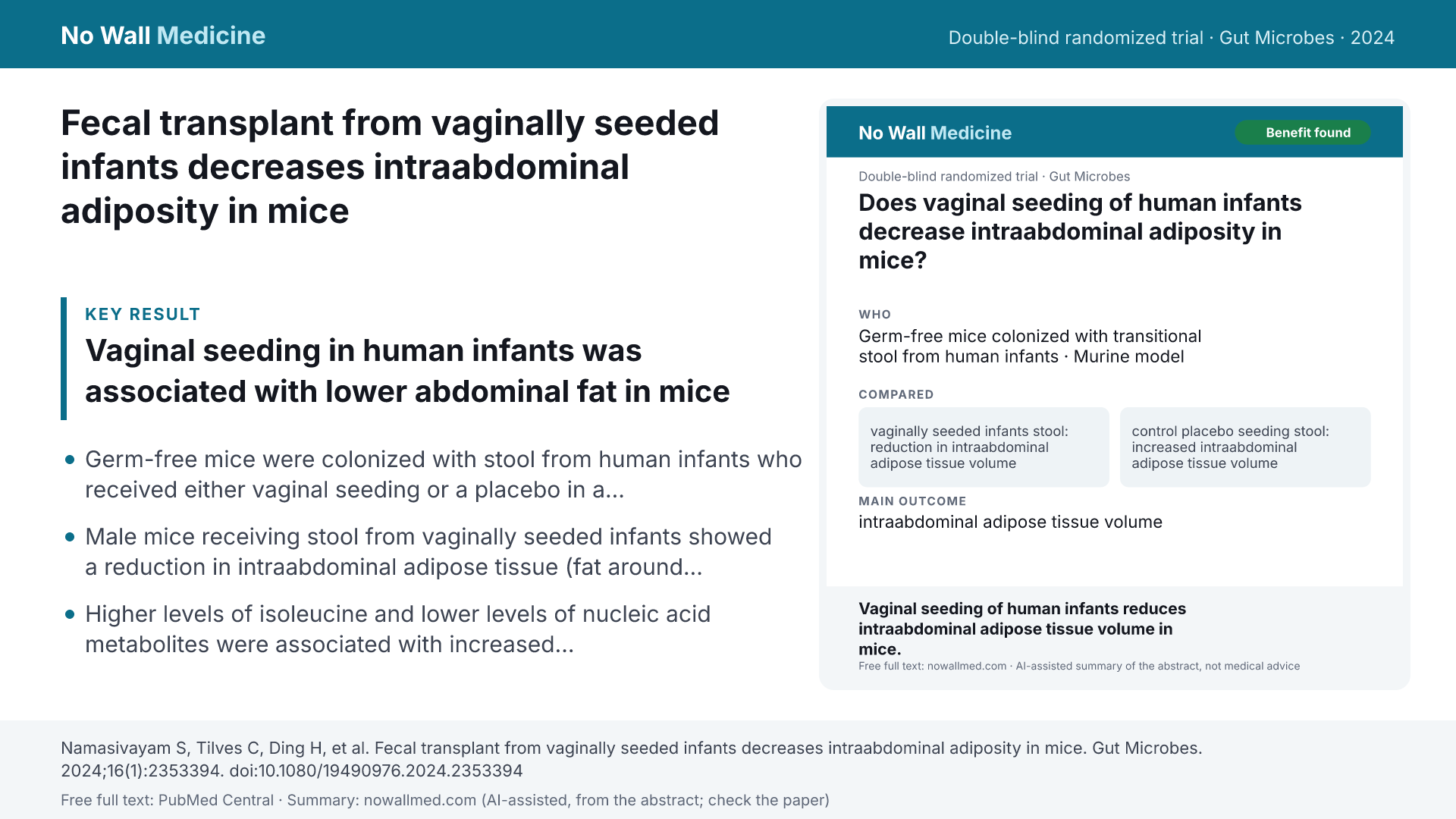
Vaginal seeding in human infants was associated with lower abdominal fat in mice
Fecal transplant from vaginally seeded infants decreases intraabdominal adiposity in mice
Double-blind randomized trialBenefit found
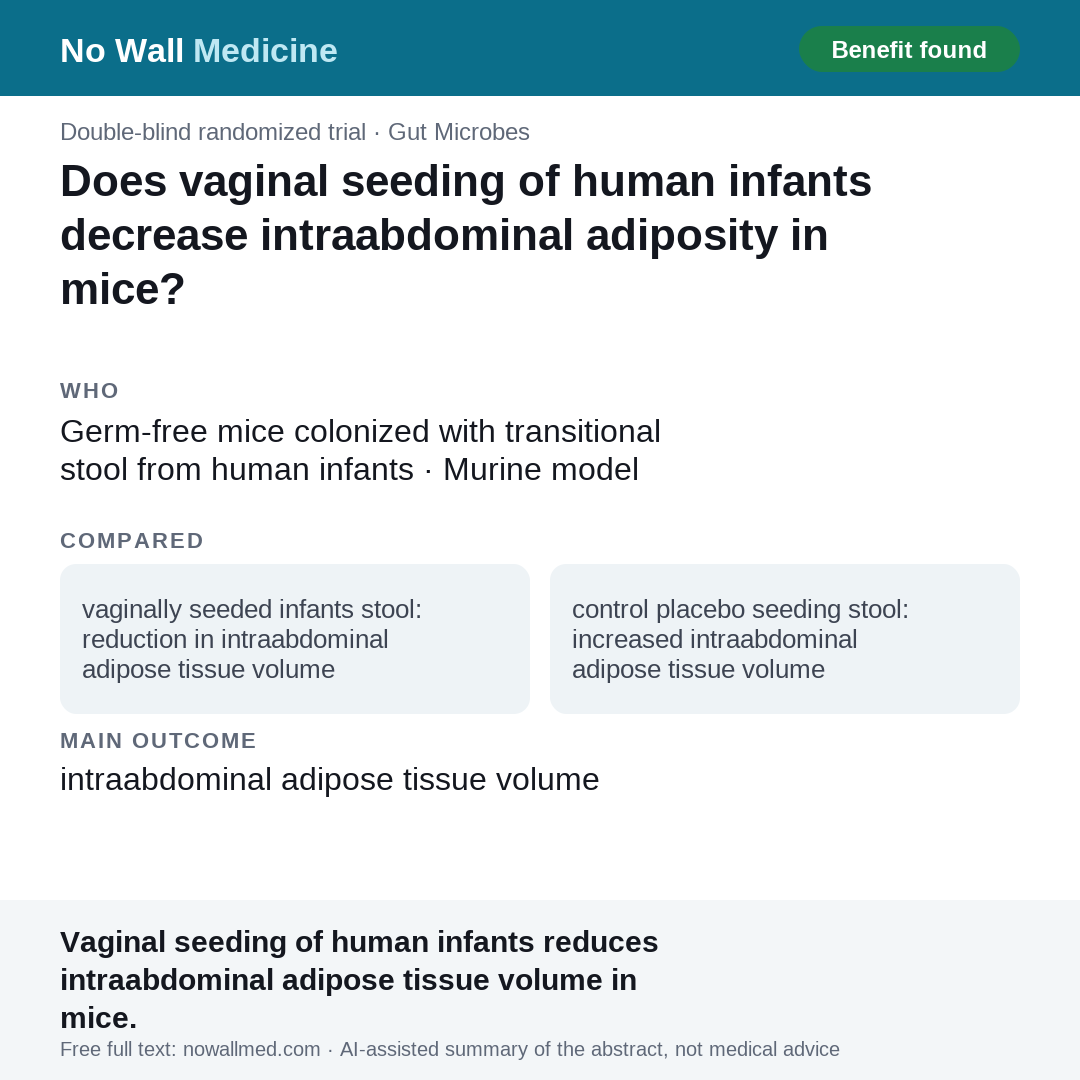
Does vaginal seeding of human infants decrease intraabdominal adiposity in mice?
Who
Germ-free mice colonized with transitional stool from human infants · Murine model
Compared
vaginally seeded infants stool: reduction in intraabdominal adipose tissue volume
control placebo seeding stool: increased intraabdominal adipose tissue volume
Main outcome
intraabdominal adipose tissue volume
Bottom line: Vaginal seeding of human infants reduces intraabdominal adipose tissue volume in mice.
Gut Microbes · 2024-05-14Download image
Clinical question: Does vaginal seeding of human infants decrease intraabdominal adiposity in mice?
Why it matters: It is unknown whether vaginal seeding in human infants decreases the risk of metabolic disease.
Key points
- Germ-free mice were colonized with stool from human infants who received either vaginal seeding or a placebo in a double-blind randomized trial.
- Male mice receiving stool from vaginally seeded infants showed a reduction in intraabdominal adipose tissue (fat around the organs) volume compared to the control group.
- Higher levels of isoleucine and lower levels of nucleic acid metabolites were associated with increased intraabdominal adipose tissue volume in the control group.
Headline and key points written with AI from the paper’s abstract, with every number checked against it. Read the paper before relying on them.
Was this summary helpful?
Subject terms
Cite this article
Namasivayam S, Tilves C, Ding H, Wu S, Domingue JC, Ruiz-Bedoya C. Fecal transplant from vaginally seeded infants decreases intraabdominal adiposity in mice. Gut Microbes. 2024. doi:10.1080/19490976.2024.2353394
Spotted a mistake? Suggest a correction