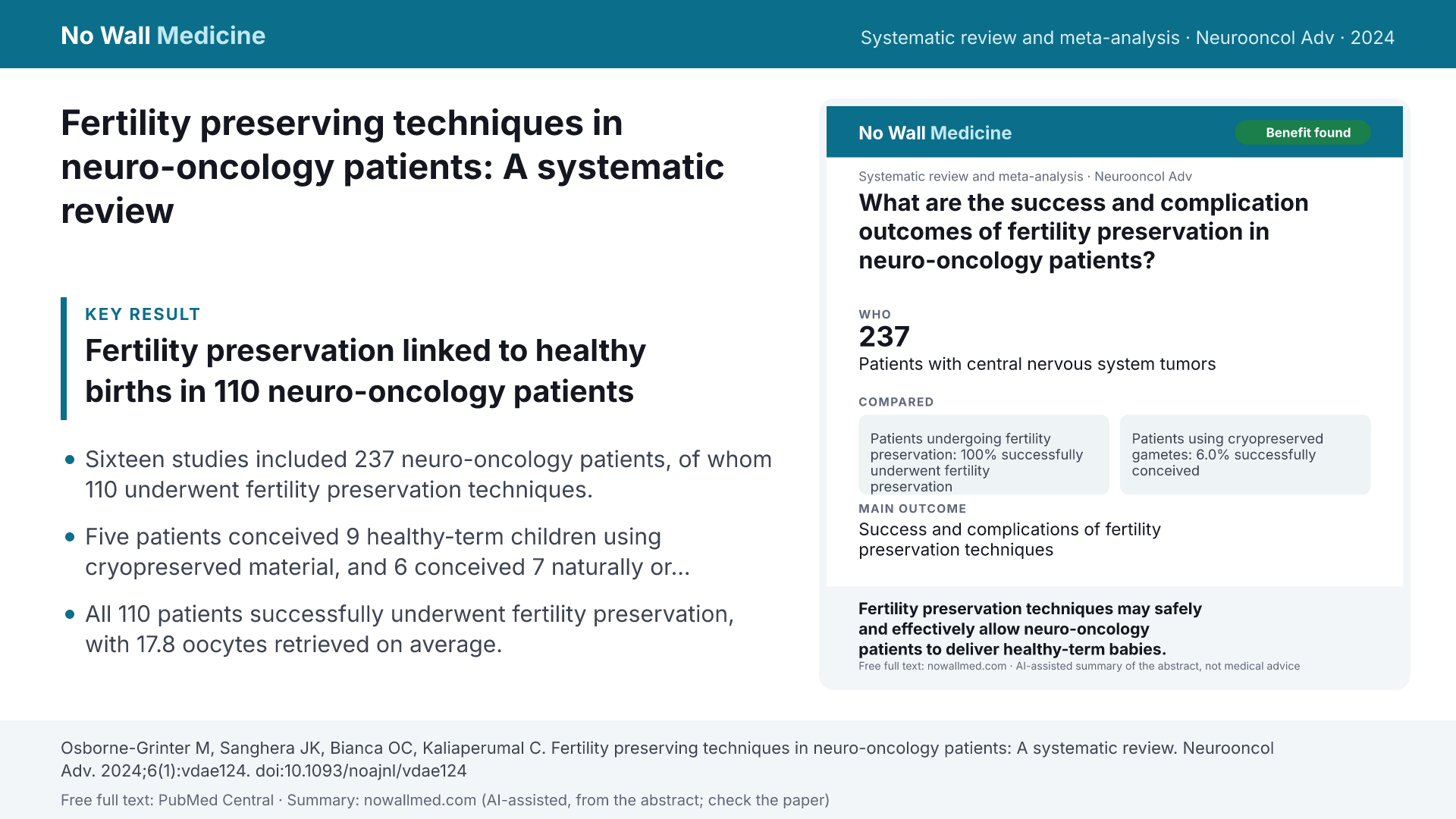
Fertility preserving techniques in neuro-oncology patients: A systematic review
Systematic review and meta-analysisBenefit found
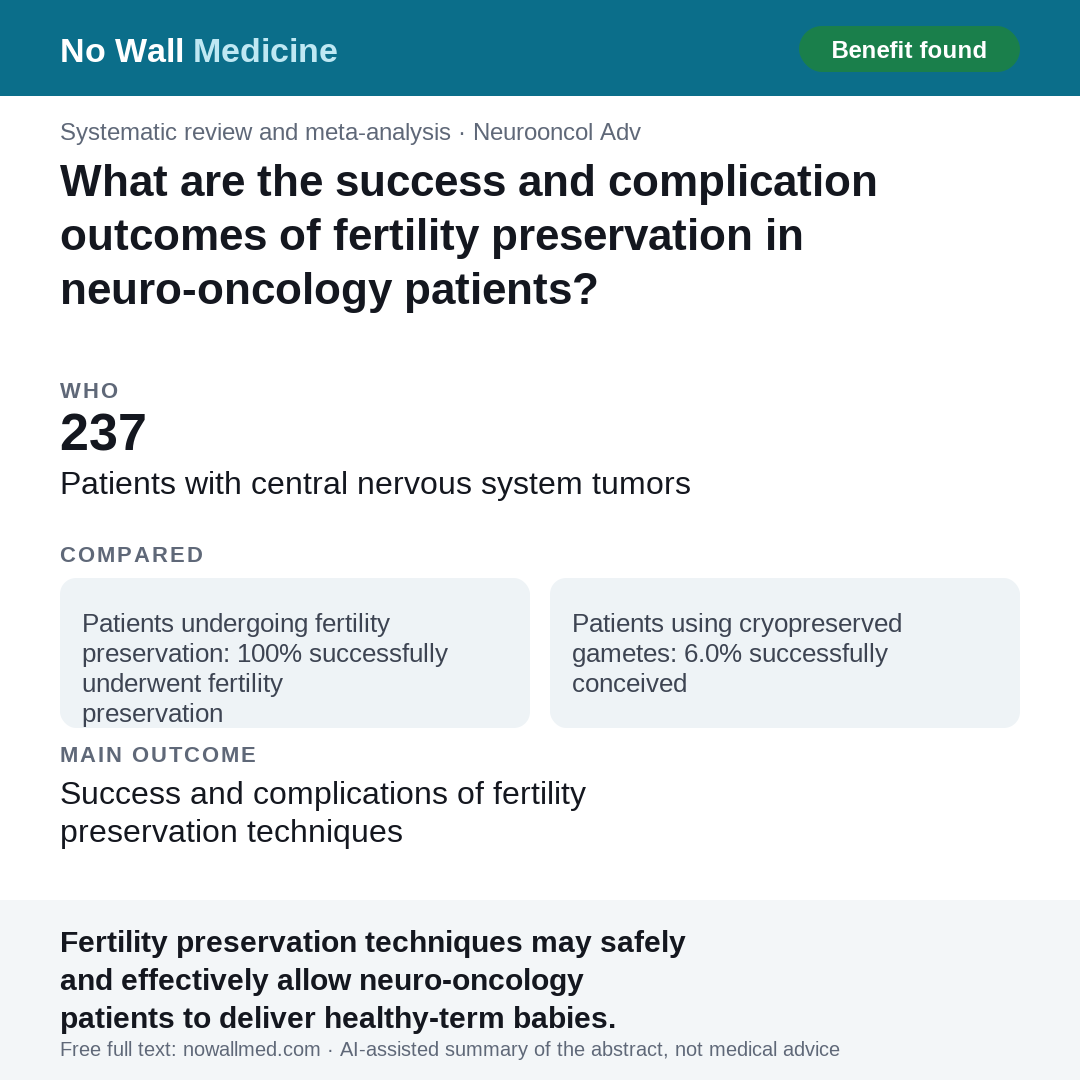
What are the success and complication outcomes of fertility preservation in neuro-oncology patients?
Who
237
Patients with central nervous system tumors
Compared
Patients undergoing fertility preservation: 100% successfully underwent fertility preservation
Patients using cryopreserved gametes: 6.0% successfully conceived
Main outcome
Success and complications of fertility preservation techniques
Bottom line: Fertility preservation techniques may safely and effectively allow neuro-oncology patients to deliver healthy-term babies.
Limitation: Further studies concerning risks, long-term pregnancy outcomes, and cost-effectiveness are needed.
Neurooncol Adv · 2024-07-25Download image
Clinical question: What are the success and complication outcomes of fertility preservation in neuro-oncology patients?
Abstract
Background
Advancements in cancer treatments have enhanced survival rates and quality of life for patients with central nervous system (CNS) tumors. There is growing recognition of the significance of fertility preservation methods. Currently, techniques, including oocyte cryopreservation and sperm cryopreservation are established. Nevertheless, oncologists may exhibit reluctance when referring patients to reproductive specialists. This review aimed to assess the best evidence for fertility preservation techniques used in patients with CNS cancers and evaluate outcomes relating to their success and complications. Methods
Two reviewers performed a search of Pubmed, Embase, Medline, Cochrane, and Google Scholar. Papers were included if they reported at least 1 fertility preservation technique in a neuro-oncology patient. Non-English studies, editorials, animal studies, and guidelines were excluded. Meta-analysis was performed using the random effects model. Results
Sixteen studies containing data from 237 participants (78.8% female) were included in the systematic review and meta-analysis, of whom 110 (46.4%) underwent fertility preservation techniques. All patients (100%) successfully underwent fertility preservation with 1 participant (2.9%) returning to rewarm their oocytes, embryos or sperm. On average, 17.8 oocytes were retrieved with 78%, ultimately being cryopreserved. Five (6.0%) patients successfully conceived 9 healthy-term children after utilizing their cryopreserved sperm, embryos, or oocytes. Moreover, 6 patients successfully conceived naturally or using intrauterine insemination, resulting in 7 healthy-term children. Conclusions
Fertility preservation techniques could offer a safe and effective way for neuro-oncology patients to deliver healthy-term babies following treatment. However, further studies concerning risks, long-term pregnancy outcomes, and cost-effectiveness are needed.
Cite this article
Osborne-Grinter M, Sanghera JK, Bianca OC, Kaliaperumal C. Fertility preserving techniques in neuro-oncology patients: A systematic review. Neurooncol Adv. 2024. doi:10.1093/noajnl/vdae124
Spotted a mistake? Suggest a correction