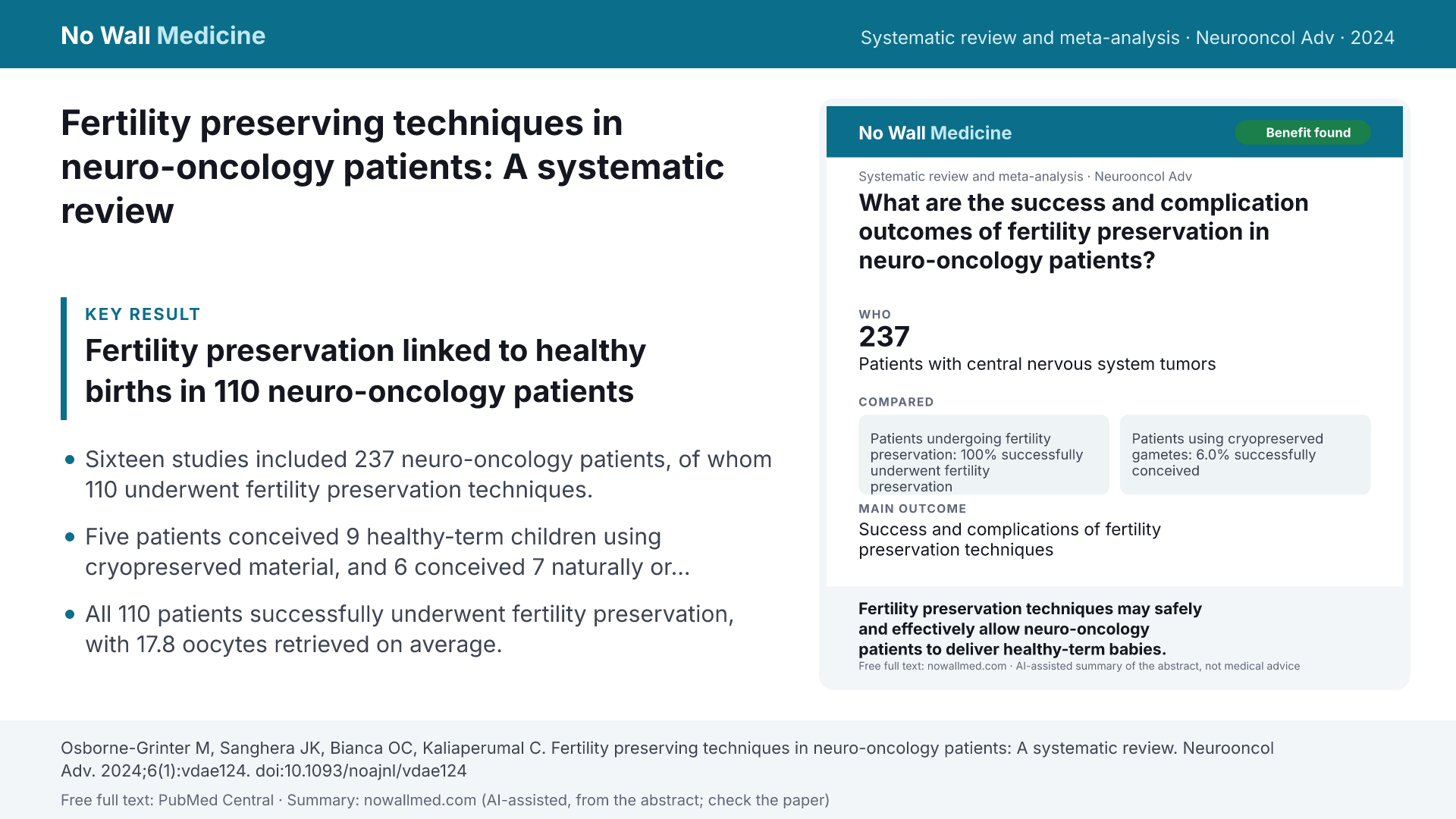
Fertility preserving techniques in neuro-oncology patients: A systematic review
Key result: Fertility preservation linked to healthy births in 110 neuro-oncology patients
Systematic review and meta-analysisBenefit found
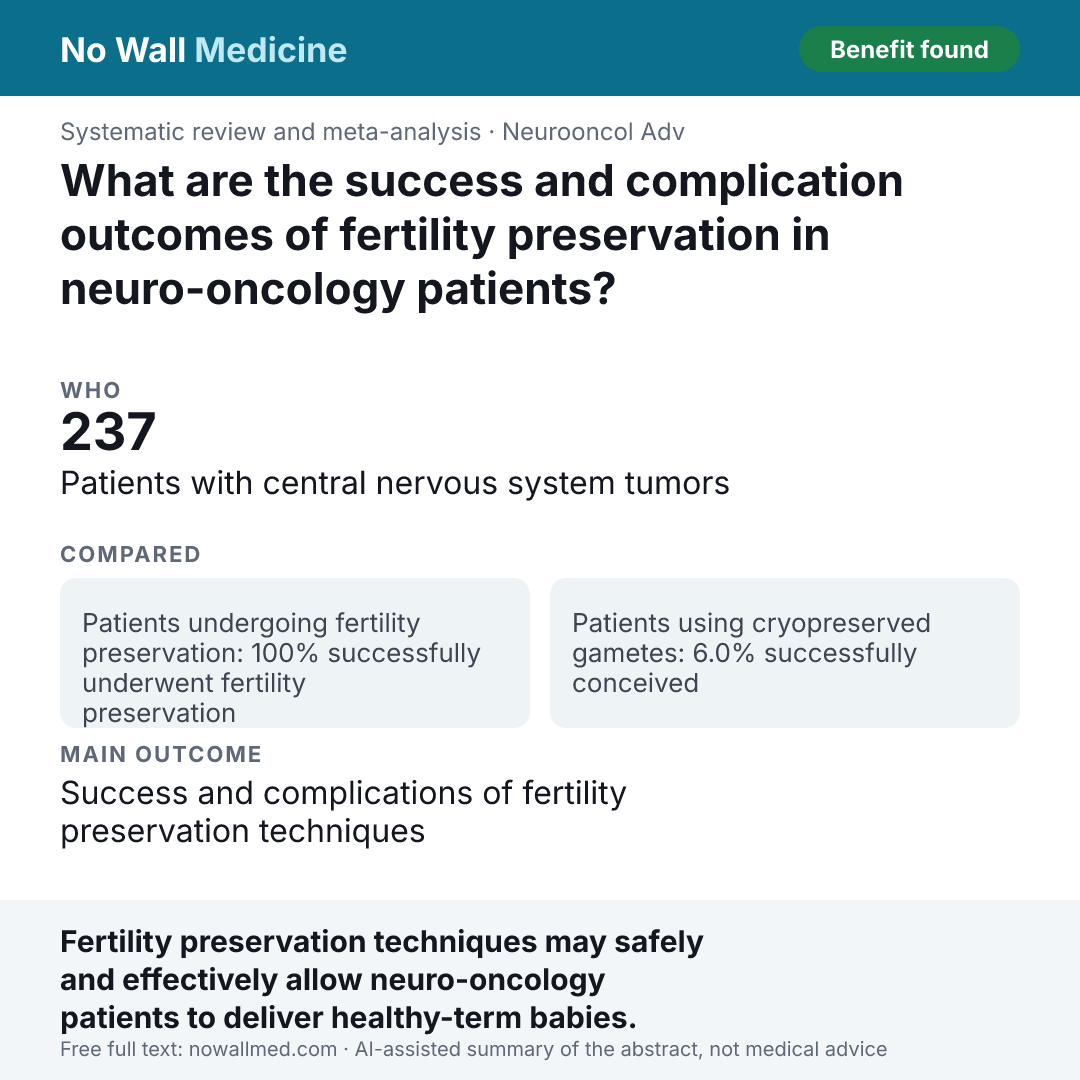
What are the success and complication outcomes of fertility preservation in neuro-oncology patients?
Who
237
Patients with central nervous system tumors
Compared
Patients undergoing fertility preservation: 100% successfully underwent fertility preservation
Patients using cryopreserved gametes: 6.0% successfully conceived
Main outcome
Success and complications of fertility preservation techniques
Bottom line: Fertility preservation techniques may safely and effectively allow neuro-oncology patients to deliver healthy-term babies.
Limitation: Further studies concerning risks, long-term pregnancy outcomes, and cost-effectiveness are needed.
Neurooncol Adv · 2024-07-25 · Save PNG
Key points
- Sixteen studies included 237 neuro-oncology patients, of whom 110 underwent fertility preservation techniques.
- Five patients conceived 9 healthy-term children using cryopreserved material, and 6 conceived 7 naturally or via insemination.
- All 110 patients successfully underwent fertility preservation, with 17.8 oocytes retrieved on average.
Why it matters: Oncologists may hesitate to refer patients to reproductive specialists, so evidence on success and complications was needed.
Discussion prompts
- Would these patients look like yours? Who was left out?
- Is the main outcome one that matters to patients?
- Is the difference large enough to change what you do?
Cite: Osborne-Grinter M, Sanghera JK, Bianca OC, Kaliaperumal C. Fertility preserving techniques in neuro-oncology patients: A systematic review. Neurooncol Adv. 2024;6(1):vdae124. doi:10.1093/noajnl/vdae124
Free full text: PubMed Central · Summary and visual abstract: nowallmed.com/a/fertility-preserving-techniques-in-neuro-oncology-patients-a-gkistg/ (AI-assisted from the abstract; check the paper before relying on it).