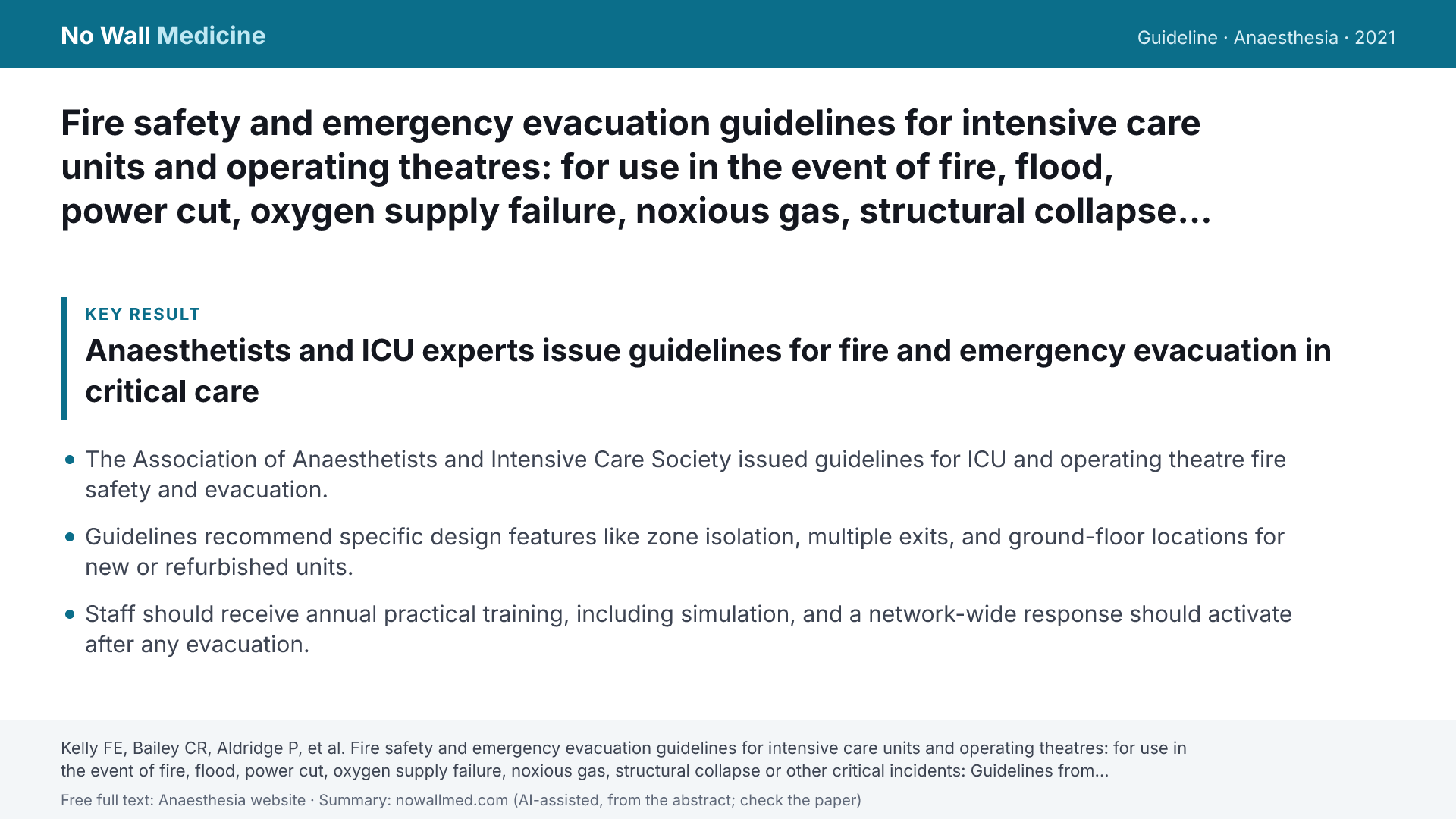
Guidelines recommend specific design features and training for intensive care and operating theatre evacuations
Fire safety and emergency evacuation guidelines for intensive care units and operating theatres: for use in the event of fire, flood, power cut, oxygen supply failure, noxious gas, structural collapse or other critical incidents: Guidelines from the Association of Anaesthetists and the Intensive Care Society
Why it matters: Evacuating intensive care units or operating theatres during emergencies is a rare but difficult event that poses risks to both patients and staff.
Key points
- The guidelines provide recommendations for managing emergencies like fire, flood, or power cuts in intensive care units and operating theatres.
- Recommended safety features include well-marked manual fire call points, oxygen shut off valves, multiple exit routes, and ground floor locations for intensive care units.
- Staff should receive practical evacuation training during induction and annually, including simulation training and learning to operate oxygen shut off valves.
Headline and key points written with AI from the paper’s abstract, with every number checked against it. Read the paper before relying on them.
Was this summary helpful?
Subject terms
Cite this article
Kelly FE, Bailey CR, Aldridge P, Brennan PA, Hardy RP, Henrys P. Fire safety and emergency evacuation guidelines for intensive care units and operating theatres: for use in the event of fire, flood, power cut, oxygen supply failure, noxious gas, structural collapse or other critical incidents: Guidelines from the Association of Anaesthetists and the Intensive Care Society. Anaesthesia. 2021. doi:10.1111/anae.15511
Spotted a mistake? Suggest a correction
Top studies every Monday
The week’s key trials and guidelines in your specialties, plus any topics you follow. By email, free.
Get the weekly digest