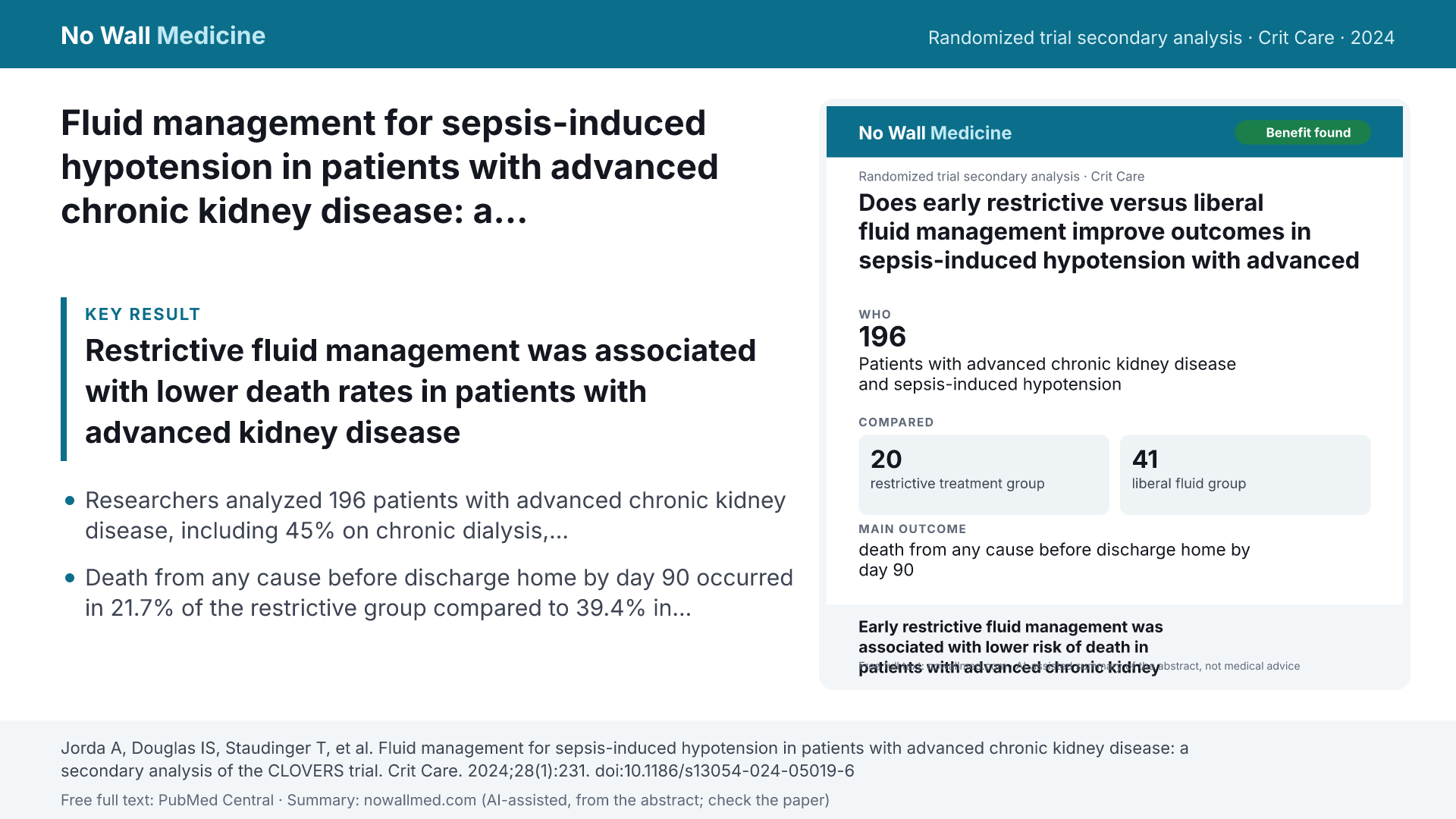
Restrictive fluid management was associated with lower death rates in patients with advanced kidney disease
Fluid management for sepsis-induced hypotension in patients with advanced chronic kidney disease: a secondary analysis of the CLOVERS trial
Randomized trial secondary analysisBenefit found
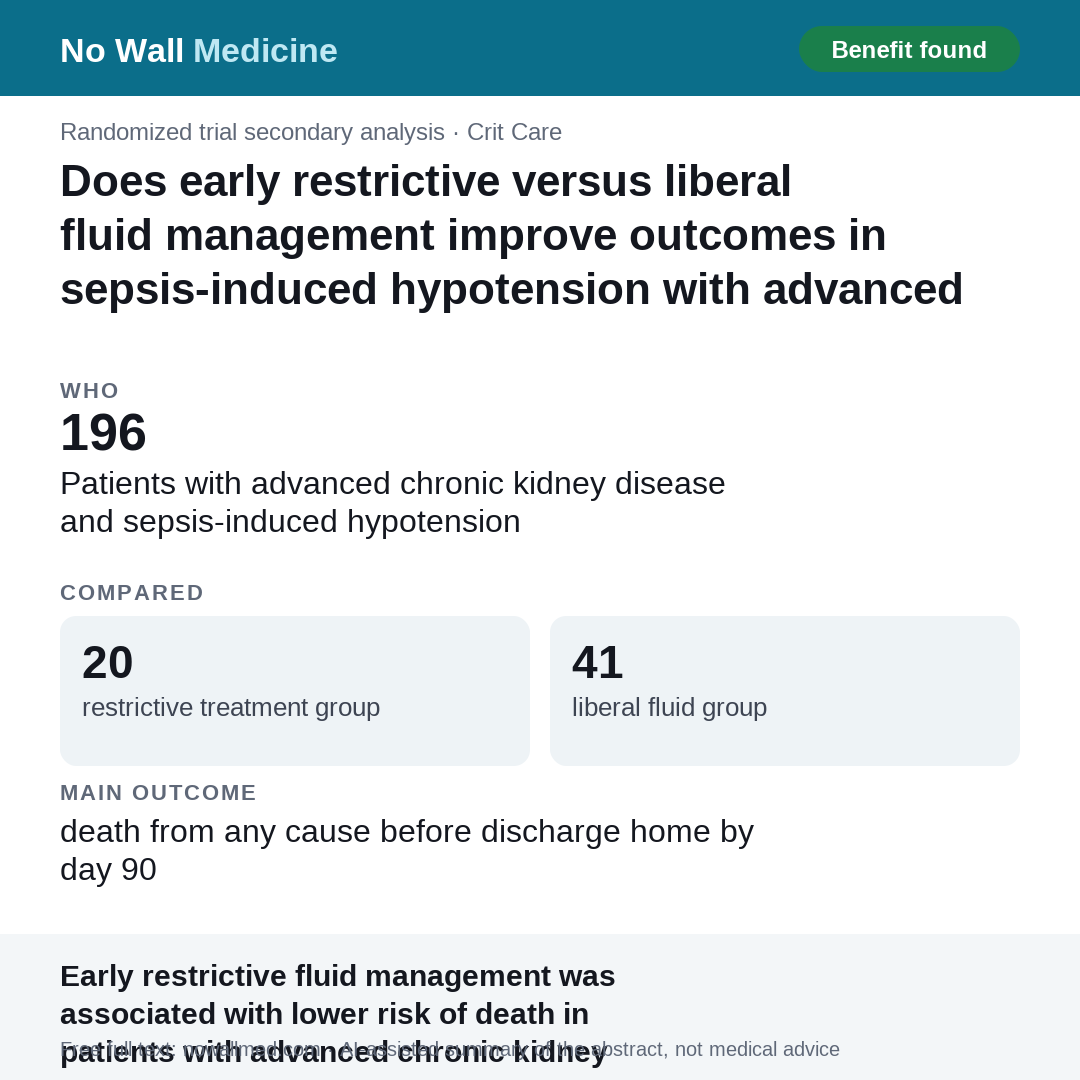
Does early restrictive versus liberal fluid management improve outcomes in sepsis-induced hypotension with advanced chronic kidney disease?
Who
196
Patients with advanced chronic kidney disease and sepsis-induced hypotension
Compared
20restrictive treatment group (21.7%)
41liberal fluid group (39.4%)
Main outcome
death from any cause before discharge home by day 90
Result: hazard ratio 0.5 (95% CI 0.29-0.85)
Bottom line: Early restrictive fluid management was associated with lower risk of death in patients with advanced chronic kidney disease.
Limitation: This was a post-hoc analysis of the CLOVERS trial.
Crit Care · 2024-07-11Download image
Same trial (NCT03434028)
Papers we list that report this registered trial, oldest first. Read a secondary analysis alongside the main results.
- Related analysis No clear difference
Restrictive fluid strategy did not lower 90-day mortality in sepsis patients NEJM 2023-01 - Secondary analysis Benefit found
This paper Crit Care 2024-07 - Main results No clear difference
Restrictive or liberal fluid strategies showed similar long-term outcomes for sepsis patients AJRCCM 2026-05
Clinical question: Does early restrictive versus liberal fluid management improve outcomes in sepsis-induced hypotension with advanced chronic kidney disease?
Why it matters: Treatment recommendations for managing low blood pressure caused by sepsis in patients with advanced chronic kidney disease are limited by a lack of evidence.
Key points
- Researchers analyzed 196 patients with advanced chronic kidney disease, including 45% on chronic dialysis, comparing restrictive fluid management to liberal fluid management.
- Death from any cause before discharge home by day 90 occurred in 21.7% of the restrictive group compared to 39.4% in the liberal group.
- The restrictive fluid group had more vasopressor-free days and more ventilator-free days by day 28 than the liberal group.
Headline and key points written with AI from the paper’s abstract, with every number checked against it. Read the paper before relying on them.
Was this summary helpful?
Subject terms
Headline, design, result, key points, caveat and citation as plain text.
Cite this article
Jorda A, Douglas IS, Staudinger T, et al. Fluid management for sepsis-induced hypotension in patients with advanced chronic kidney disease: a secondary analysis of the CLOVERS trial. Crit Care. 2024. doi:10.1186/s13054-024-05019-6
Spotted a mistake? Suggest a correction