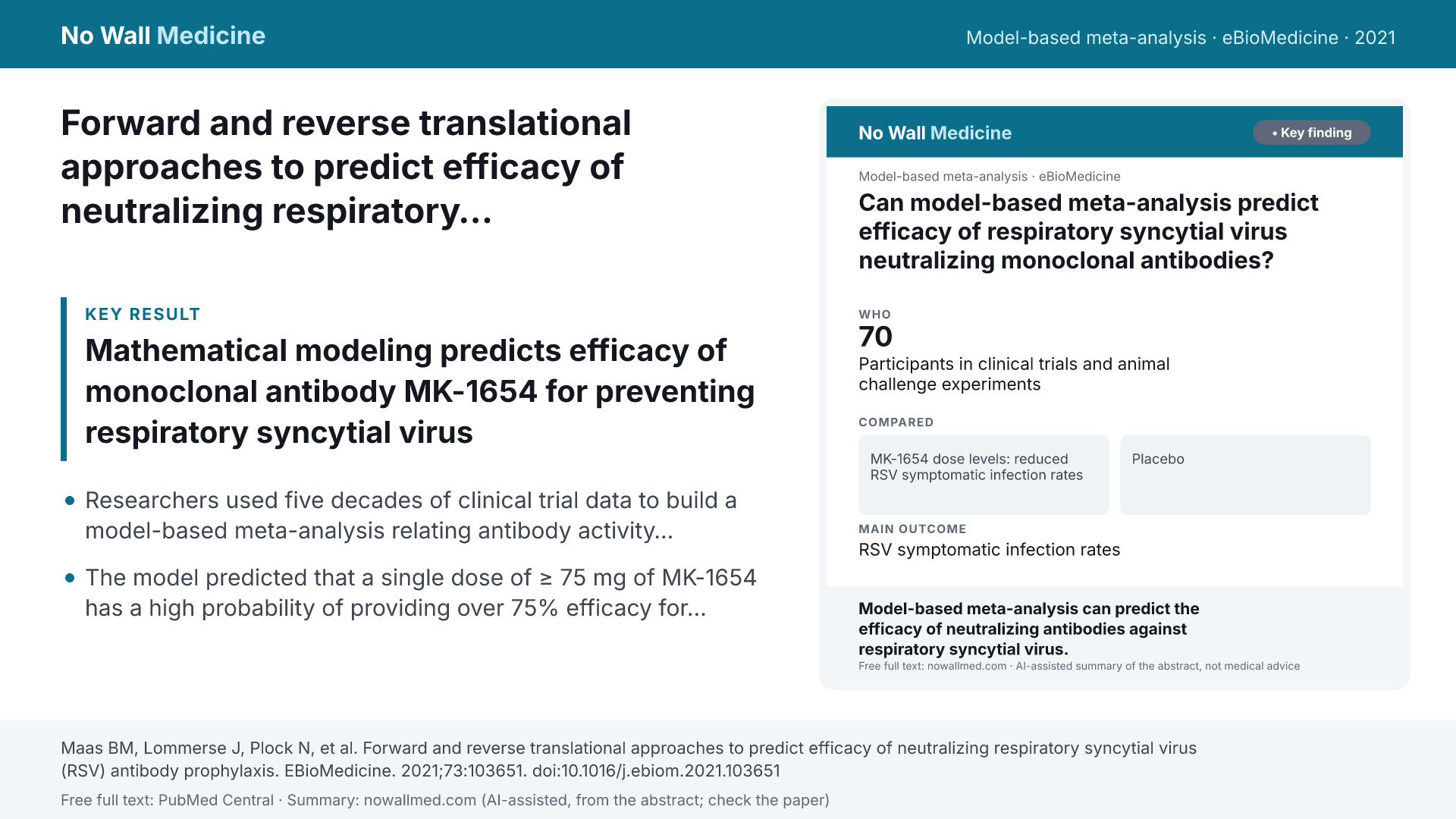
Forward and reverse translational approaches to predict efficacy of neutralizing respiratory syncytial virus (RSV) antibody prophylaxis
Key result: Mathematical modeling predicts efficacy of monoclonal antibody MK-1654 for preventing respiratory syncytial virus
Key points
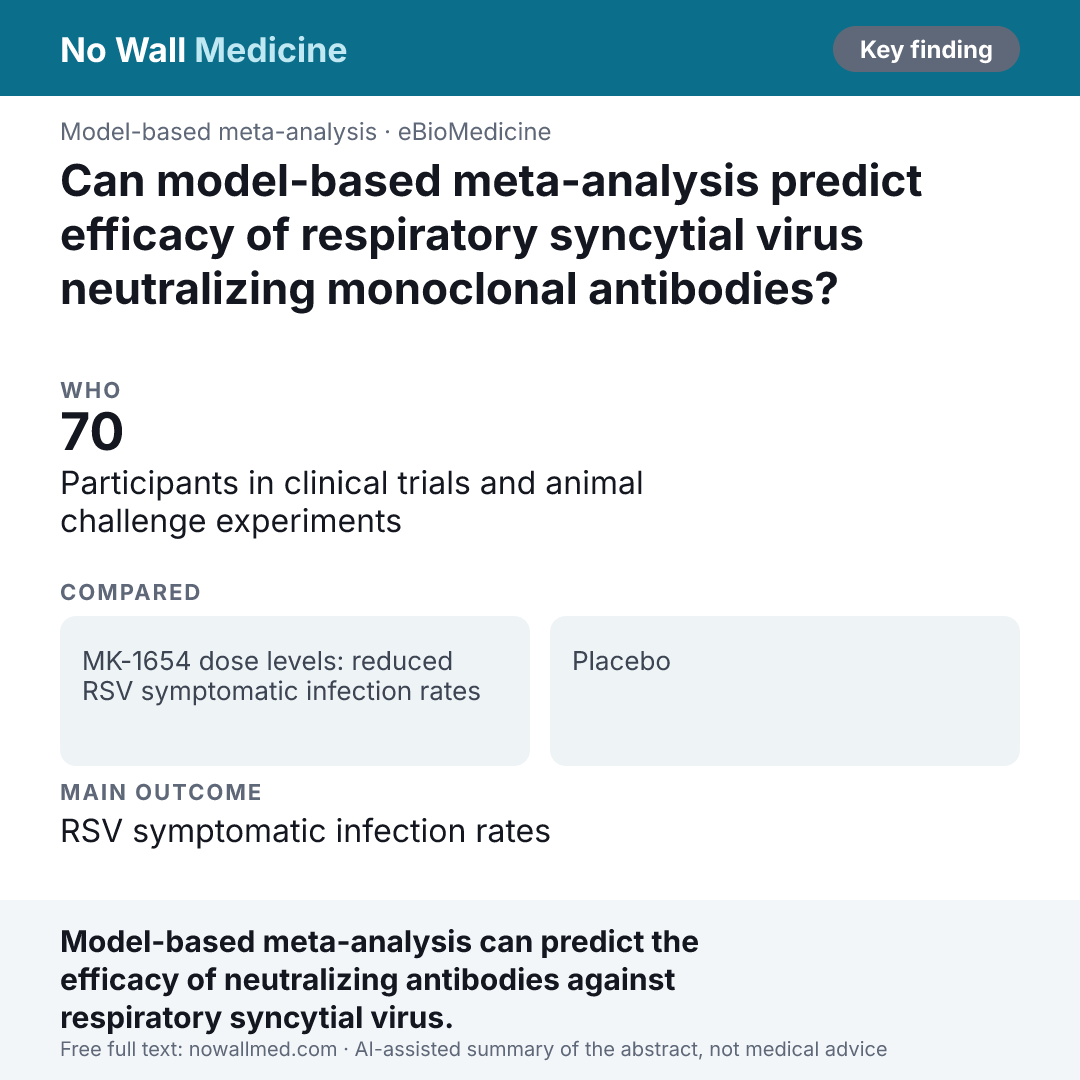
- Researchers used five decades of clinical trial data to build a model-based meta-analysis relating antibody activity to clinical outcomes.
- The model predicted that a single dose of ≥ 75 mg of MK-1654 has a high probability of providing over 75% efficacy for 5 months in infants.
- The model's predictions were consistent with animal challenge experiments and a human trial involving 70 participants.
Why it matters: It is necessary to develop methods to predict the effective doses of neutralizing antibodies across different populations exposed to seasonal variations in infection.
Discussion prompts
- Would these patients look like yours? Who was left out?
- Is the main outcome one that matters to patients?
- Is the difference large enough to change what you do?
Cite: Maas BM, Lommerse J, Plock N, et al. Forward and reverse translational approaches to predict efficacy of neutralizing respiratory syncytial virus (RSV) antibody prophylaxis. EBioMedicine. 2021;73:103651. doi:10.1016/j.ebiom.2021.103651
Free full text: PubMed Central · Summary and visual abstract: nowallmed.com/a/forward-and-reverse-translational-approaches-to-predict-efficacy-of-1qh0spq/ (AI-assisted from the abstract; check the paper before relying on it).