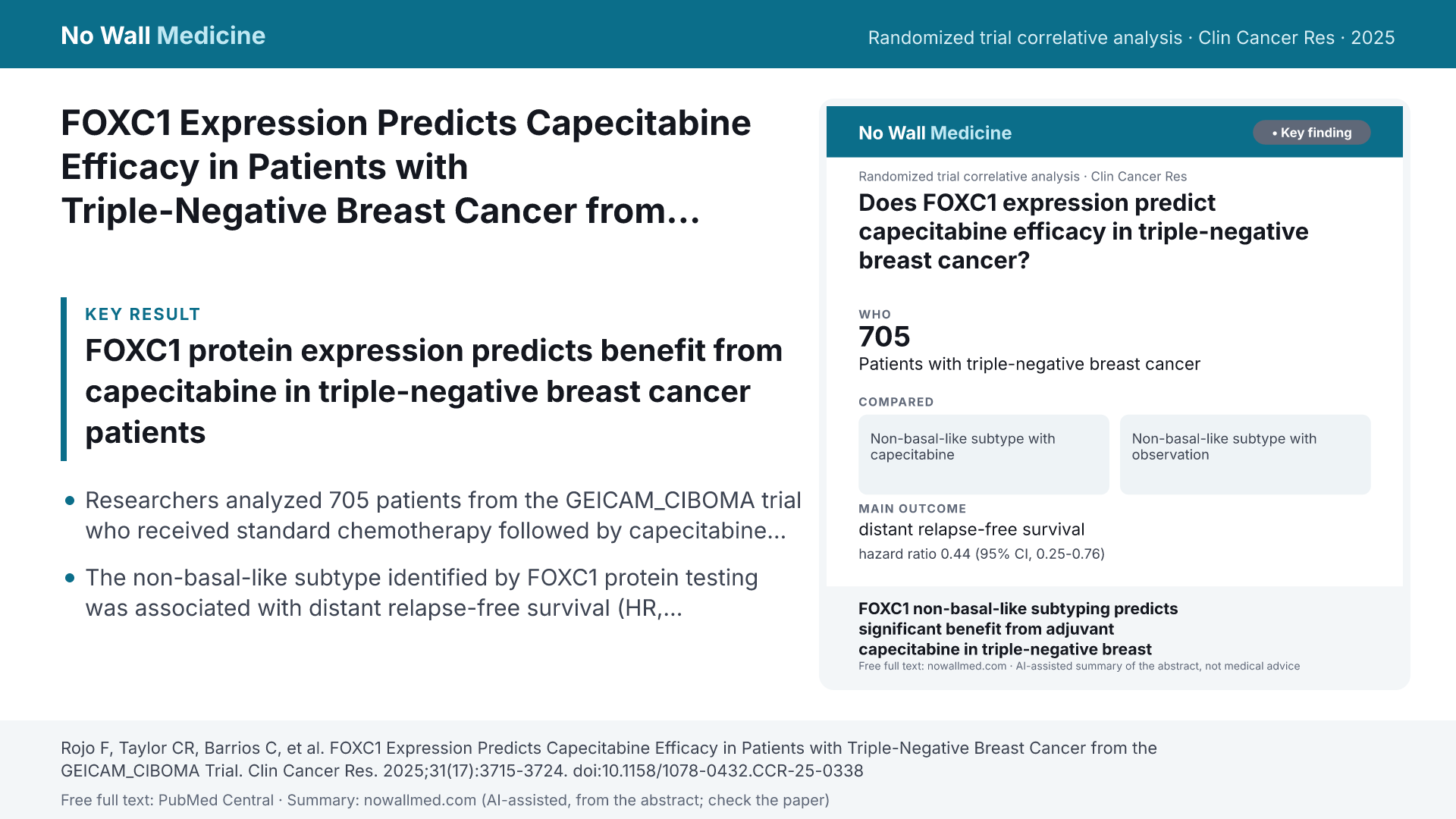
FOXC1 protein expression predicts benefit from capecitabine in triple-negative breast cancer patients
FOXC1 Expression Predicts Capecitabine Efficacy in Patients with Triple-Negative Breast Cancer from the GEICAM_CIBOMA Trial
Randomized trial correlative analysisBenefit found
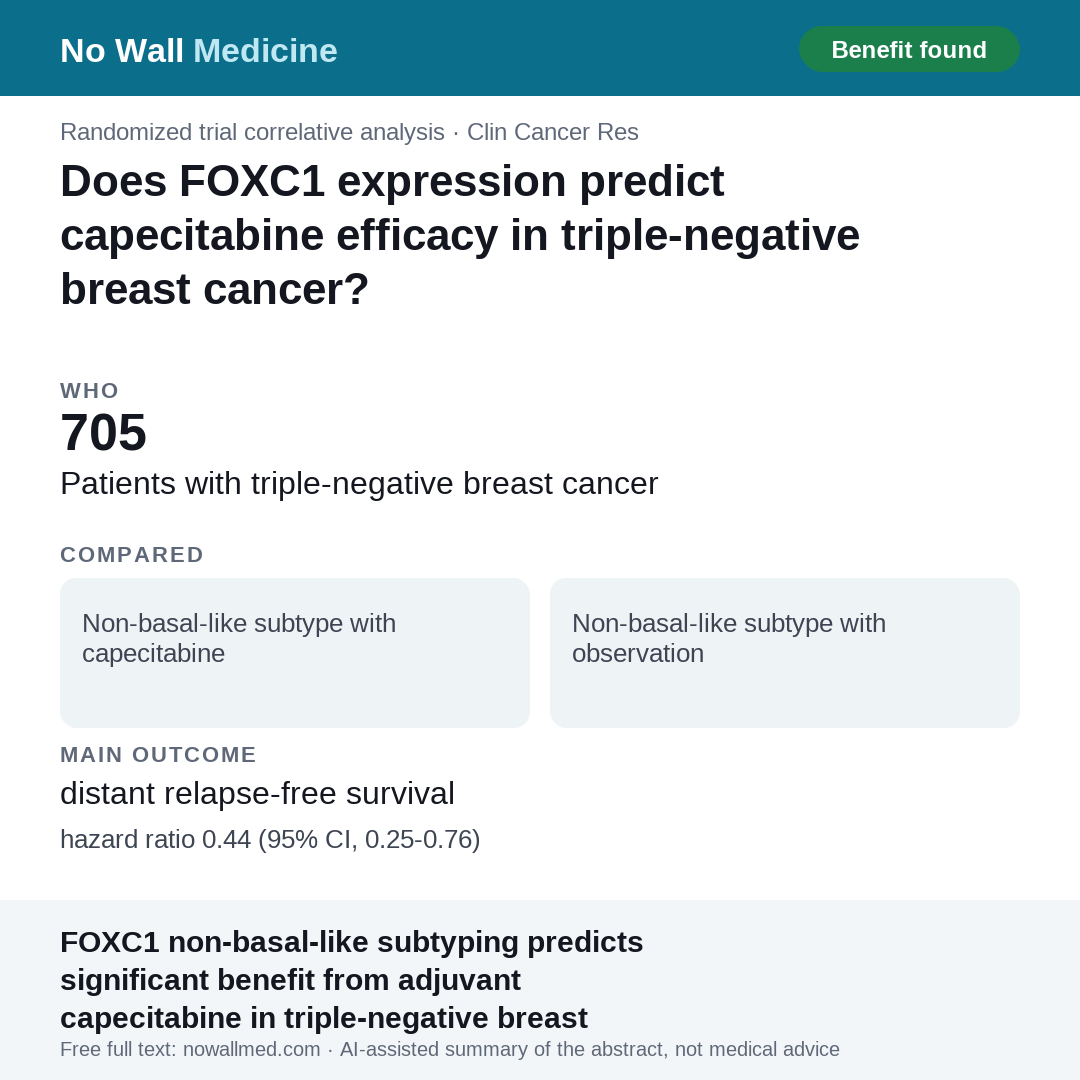
Does FOXC1 expression predict capecitabine efficacy in triple-negative breast cancer?
Who
705
Patients with triple-negative breast cancer
Compared
Non-basal-like subtype with capecitabine
Non-basal-like subtype with observation
Main outcome
distant relapse-free survival
Result: hazard ratio 0.44 (95% CI, 0.25-0.76)
Bottom line: FOXC1 non-basal-like subtyping predicts significant benefit from adjuvant capecitabine in triple-negative breast cancer patients.
Clin Cancer Res · 2025-06-26Download image
Clinical question: Does FOXC1 expression predict capecitabine efficacy in triple-negative breast cancer?
Why it matters: It is unclear which triple-negative breast cancer patients are most likely to benefit from adjuvant capecitabine treatment.
Key points
- Researchers analyzed 705 patients from the GEICAM_CIBOMA trial who received standard chemotherapy followed by capecitabine or observation.
- The non-basal-like subtype identified by FOXC1 protein testing was associated with distant relapse-free survival (HR, 0.44; 95% CI, 0.25-0.76; P = 0.003).
- This protein-based subtyping also showed associations with disease-free survival, overall survival, and recurrence-free survival.
Headline and key points written with AI from the paper’s abstract, with every number checked against it. Read the paper before relying on them.
Was this summary helpful?
Subject terms
Cite this article
Rojo F, Taylor CR, Barrios C, Torrecillas L, Ruiz-Borrego M, Perez-Buira S. FOXC1 Expression Predicts Capecitabine Efficacy in Patients with Triple-Negative Breast Cancer from the GEICAM_CIBOMA Trial. Clin Cancer Res. 2025. doi:10.1158/1078-0432.CCR-25-0338
Spotted a mistake? Suggest a correction
Top studies every Monday
The week’s key trials and guidelines in your specialties, plus any topics you follow. By email, free.
Get the weekly digest