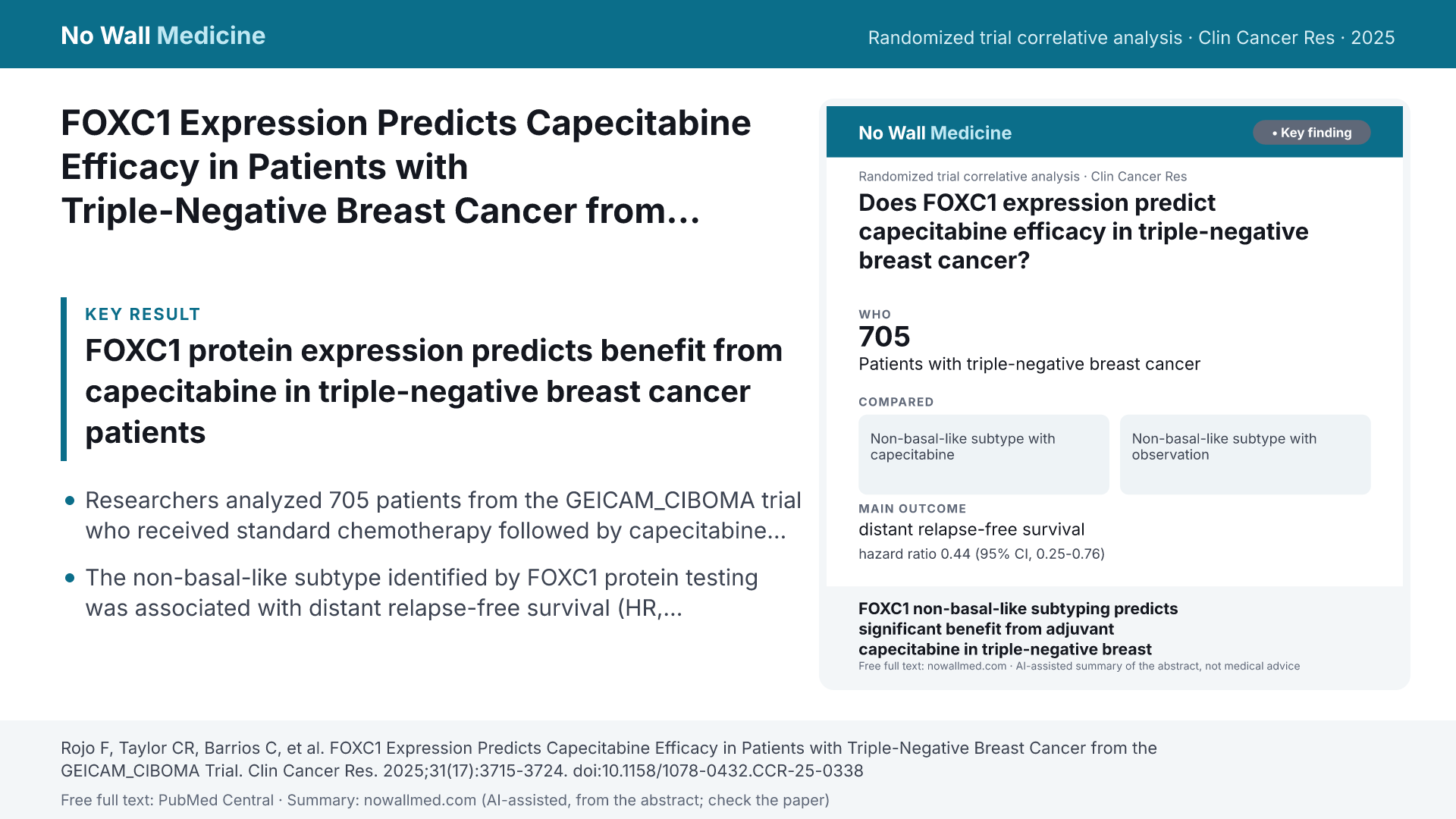
FOXC1 Expression Predicts Capecitabine Efficacy in Patients with Triple-Negative Breast Cancer from the GEICAM_CIBOMA Trial
Key result: FOXC1 protein expression predicts benefit from capecitabine in triple-negative breast cancer patients
Randomized trial correlative analysisKey finding
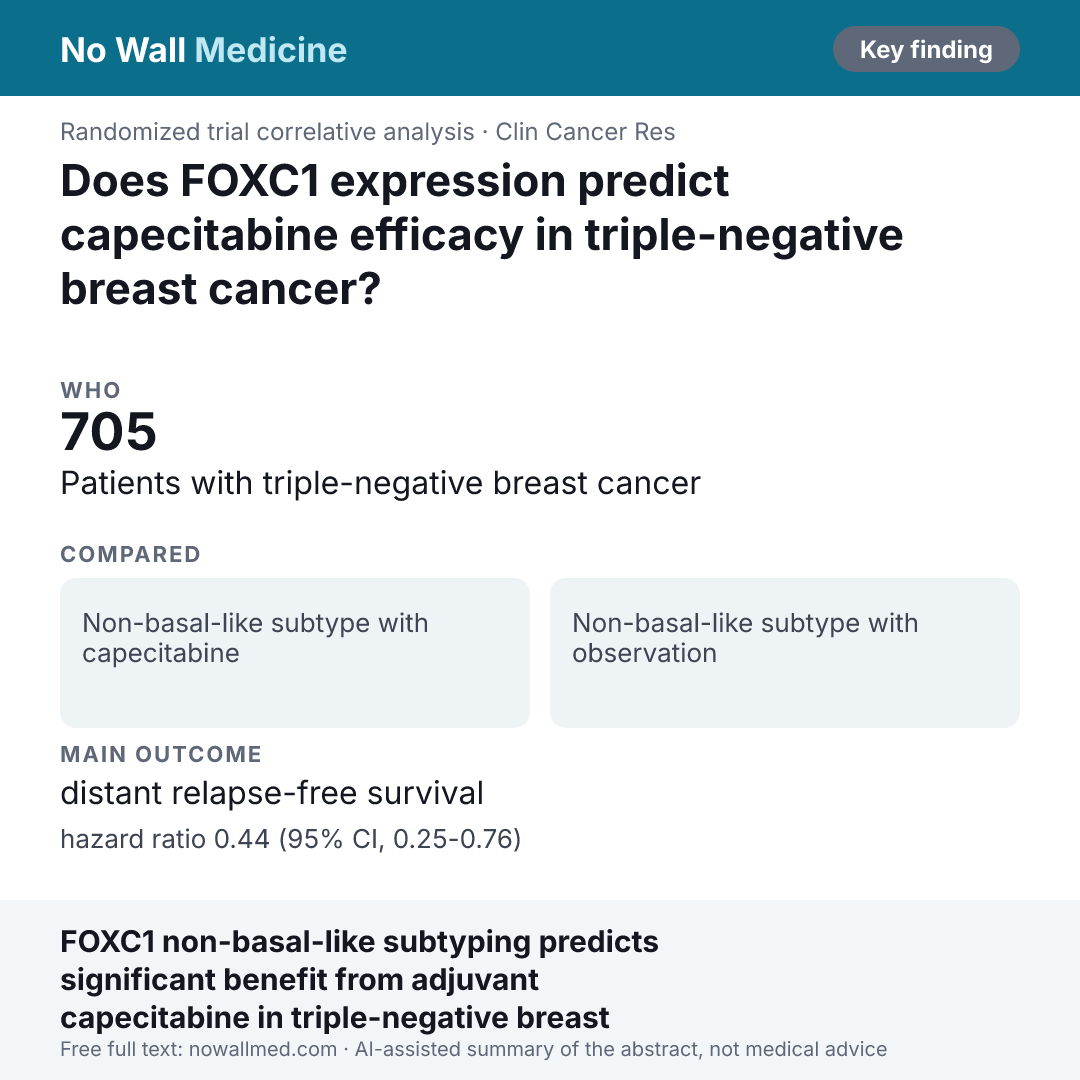
Does FOXC1 expression predict capecitabine efficacy in triple-negative breast cancer?
Who
705
Patients with triple-negative breast cancer
Compared
Non-basal-like subtype with capecitabine
Non-basal-like subtype with observation
Main outcome
distant relapse-free survival
Result: hazard ratio 0.44 (95% CI, 0.25-0.76)
Bottom line: FOXC1 non-basal-like subtyping predicts significant benefit from adjuvant capecitabine in triple-negative breast cancer patients.
Clin Cancer Res · 2025-06-26 · Save PNG
Key points
- Researchers analyzed 705 patients from the GEICAM_CIBOMA trial who received standard chemotherapy followed by capecitabine or observation.
- The non-basal-like subtype identified by FOXC1 protein testing was associated with distant relapse-free survival (HR, 0.44; 95% CI, 0.25-0.76; P = 0.003).
- This protein-based subtyping also showed associations with disease-free survival, overall survival, and recurrence-free survival.
Discussion prompts
- Would these patients look like yours? Who was left out?
- Is the main outcome one that matters to patients?
- Is the difference large enough to change what you do?
Cite: Rojo F, Taylor CR, Barrios C, et al. FOXC1 Expression Predicts Capecitabine Efficacy in Patients with Triple-Negative Breast Cancer from the GEICAM_CIBOMA Trial. Clin Cancer Res. 2025;31(17):3715-3724. doi:10.1158/1078-0432.CCR-25-0338
Free full text: PubMed Central · Summary and visual abstract: nowallmed.com/a/foxc1-expression-predicts-capecitabine-efficacy-in-patients-with-1yh1lwj/ (AI-assisted from the abstract; check the paper before relying on it).