Fracture-related hospitalisations in newly diagnosed high-risk localised or metastatic hormone-sensitive prostate cancer: secondary analysis of the STAMPEDE phase III trials of docetaxel and zoledronic acid using healthcare systems data
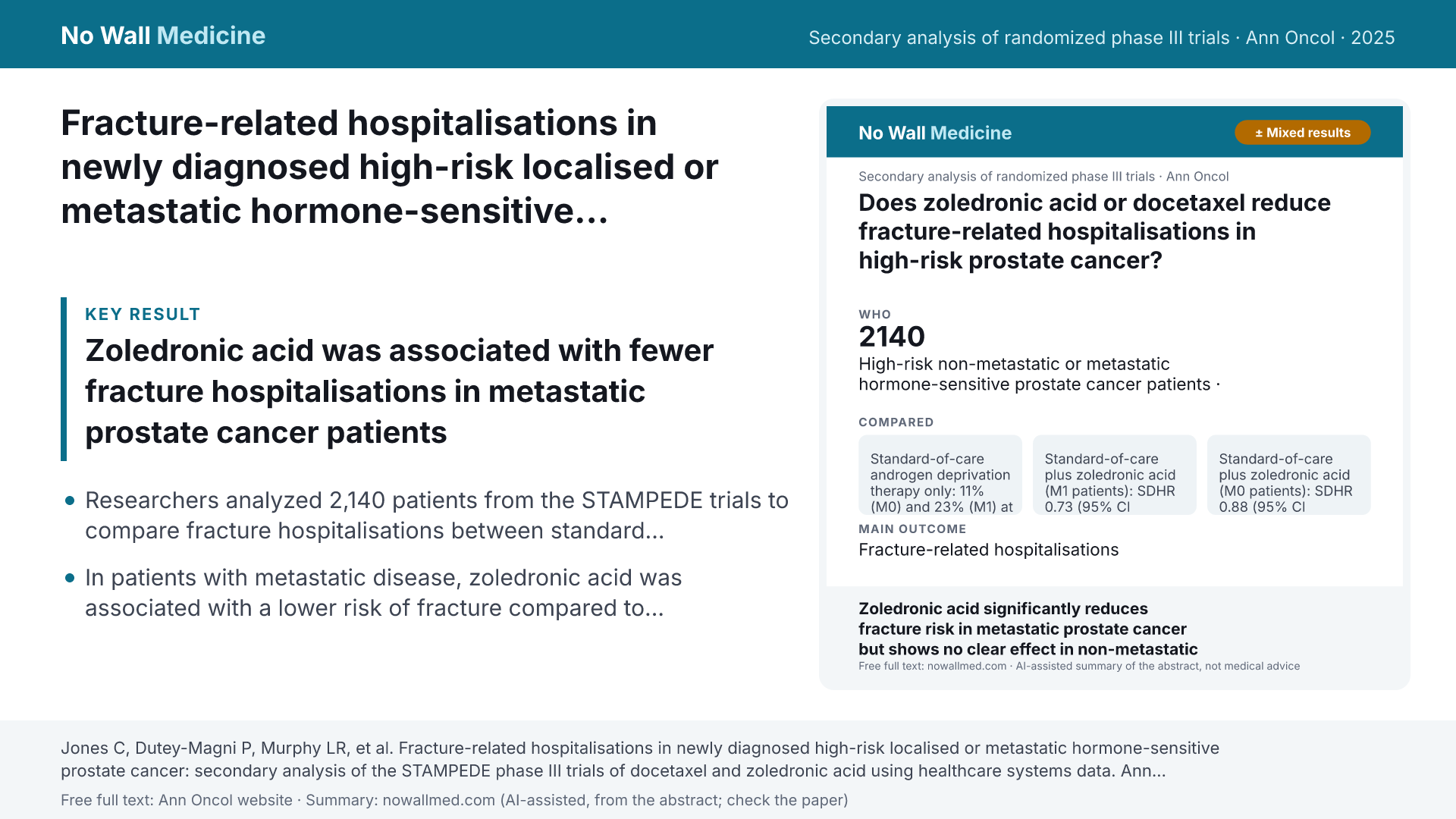
Key result: Zoledronic acid was associated with fewer fracture hospitalisations in metastatic prostate cancer patients
Key points
- Researchers analyzed 2,140 patients from the STAMPEDE trials to compare fracture hospitalisations between standard androgen deprivation therapy and therapy combined with zoledronic acid or docetaxel.
- In patients with metastatic disease, zoledronic acid was associated with a lower risk of fracture compared to standard care (SDHR 0.73, 95% CI 0.55-0.97; P = 0.015).
- Zoledronic acid was not associated with a different fracture risk in non-metastatic patients, and docetaxel had no clear effect on fracture risk in either group.
Why it matters: The long-term incidence of fractures remains uncertain for patients receiving androgen deprivation therapy for high-risk prostate cancer.
Discussion prompts
- Would these patients look like yours? Who was left out?
- Is the main outcome one that matters to patients?
- Is the difference large enough to change what you do?
Cite: Jones C, Dutey-Magni P, Murphy LR, et al. Fracture-related hospitalisations in newly diagnosed high-risk localised or metastatic hormone-sensitive prostate cancer: secondary analysis of the STAMPEDE phase III trials of docetaxel and zoledronic acid using healthcare systems data. Ann Oncol. 2025;36(11):1331-1341. doi:10.1016/j.annonc.2025.07.005
Free full text: Ann Oncol website · Summary and visual abstract: nowallmed.com/a/fracture-related-hospitalisations-in-newly-diagnosed-high-risk-geywmb/ (AI-assisted from the abstract; check the paper before relying on it).