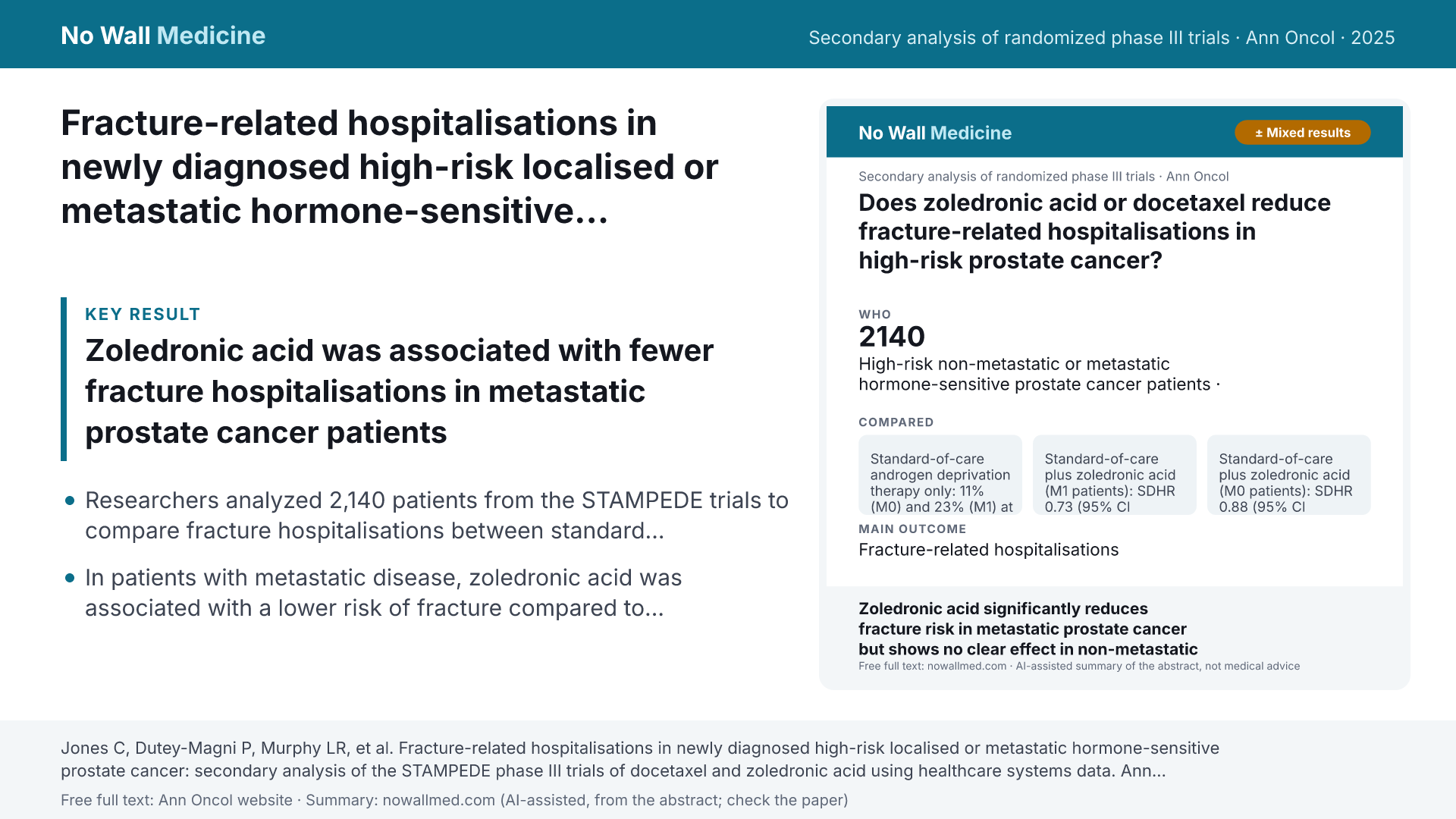
Zoledronic acid was associated with fewer fracture hospitalisations in metastatic prostate cancer patients
Fracture-related hospitalisations in newly diagnosed high-risk localised or metastatic hormone-sensitive prostate cancer: secondary analysis of the STAMPEDE phase III trials of docetaxel and zoledronic acid using healthcare systems data
Secondary analysis of randomized phase III trialsMixed results
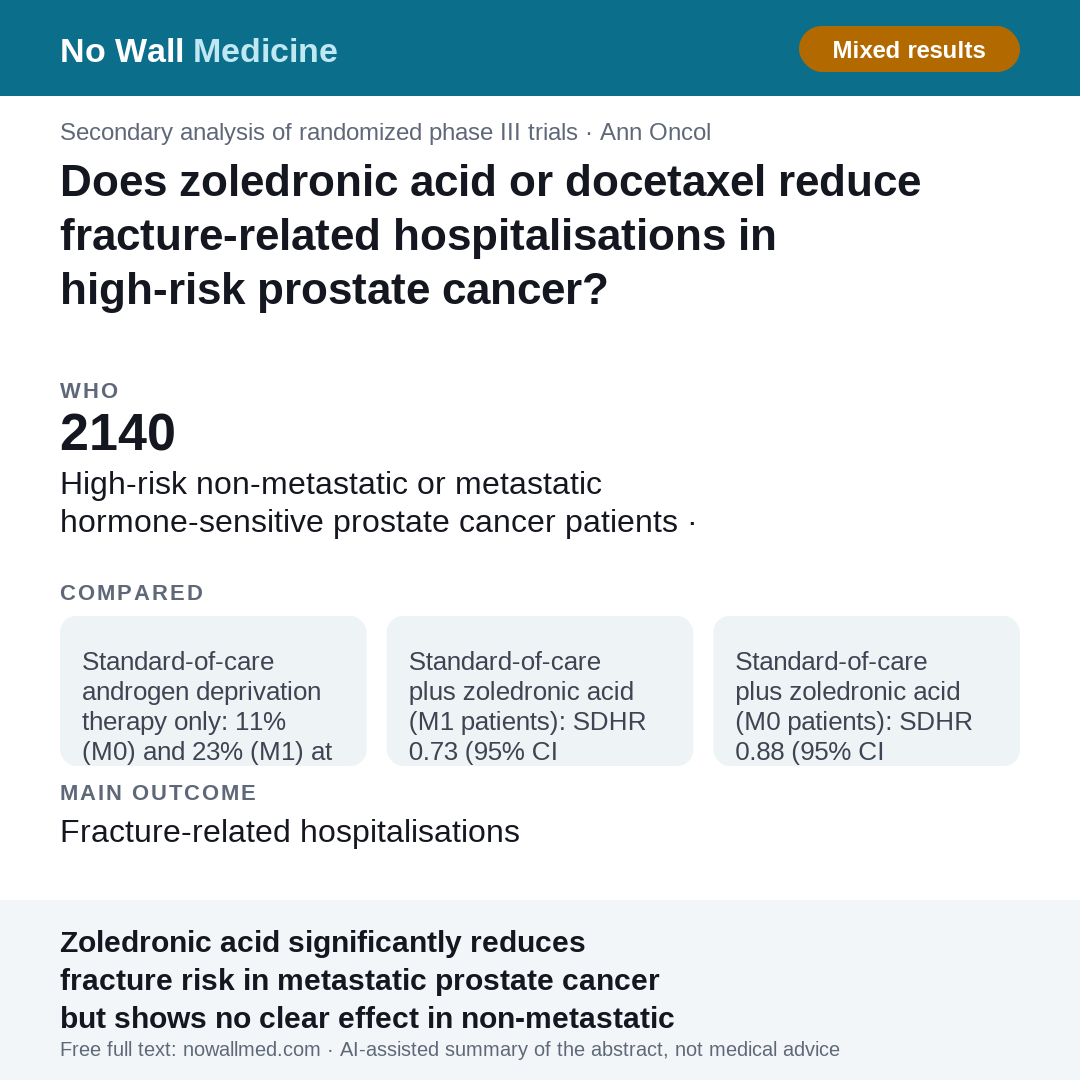
Does zoledronic acid or docetaxel reduce fracture-related hospitalisations in high-risk prostate cancer?
Who
2140
High-risk non-metastatic or metastatic hormone-sensitive prostate cancer patients · England
Compared
Standard-of-care androgen deprivation therapy only: 11% (M0) and 23% (M1) at 5 years
Standard-of-care plus zoledronic acid (M1 patients): SDHR 0.73 (95% CI 0.55-0.97)
Standard-of-care plus zoledronic acid (M0 patients): SDHR 0.88 (95% CI 0.59-1.32)
Main outcome
Fracture-related hospitalisations
Result: SDHR 0.73 (95% CI 0.55-0.97) for zoledronic acid in M1 patients
Bottom line: Zoledronic acid significantly reduces fracture risk in metastatic prostate cancer but shows no clear effect in non-metastatic disease.
Limitation: Linked data were available for 96% of eligible patients
Ann Oncol · 2025-07-16Download image
Clinical question: Does zoledronic acid or docetaxel reduce fracture-related hospitalisations in high-risk prostate cancer?
Why it matters: The long-term incidence of fractures remains uncertain for patients receiving androgen deprivation therapy for high-risk prostate cancer.
Key points
- Researchers analyzed 2,140 patients from the STAMPEDE trials to compare fracture hospitalisations between standard androgen deprivation therapy and therapy combined with zoledronic acid or docetaxel.
- In patients with metastatic disease, zoledronic acid was associated with a lower risk of fracture compared to standard care (SDHR 0.73, 95% CI 0.55-0.97; P = 0.015).
- Zoledronic acid was not associated with a different fracture risk in non-metastatic patients, and docetaxel had no clear effect on fracture risk in either group.
Headline and key points written with AI from the paper’s abstract, with every number checked against it. Read the paper before relying on them.
Was this summary helpful?
Subject terms
Headline, design, result, key points, caveat and citation as plain text.
Cite this article
Jones C, Dutey-Magni P, Murphy LR, et al. Fracture-related hospitalisations in newly diagnosed high-risk localised or metastatic hormone-sensitive prostate cancer: secondary analysis of the STAMPEDE phase III trials of docetaxel and zoledronic acid using healthcare systems data. Ann Oncol. 2025. doi:10.1016/j.annonc.2025.07.005
Spotted a mistake? Suggest a correction