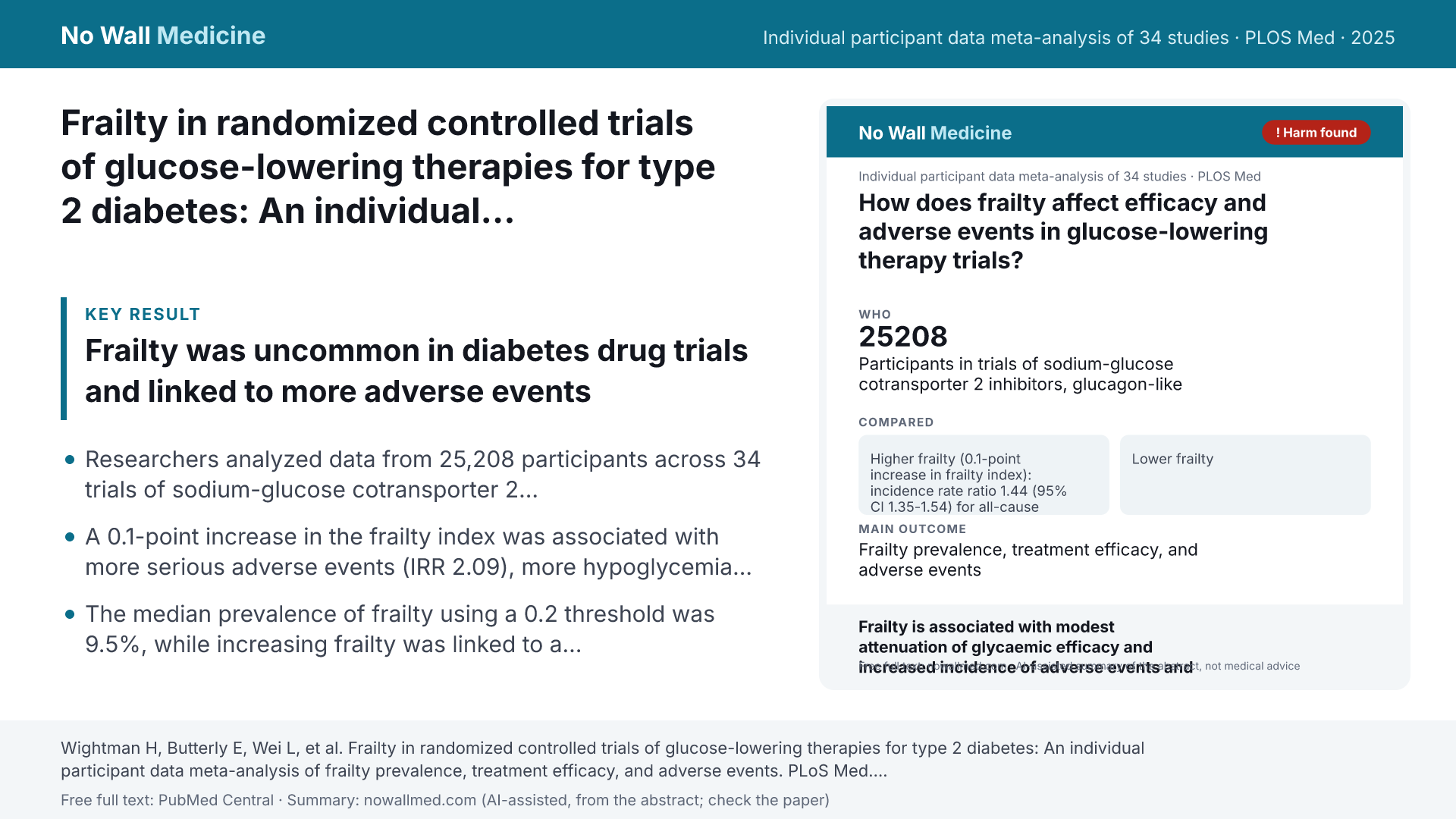
Frailty in randomized controlled trials of glucose-lowering therapies for type 2 diabetes: An individual participant data meta-analysis of frailty prevalence, treatment efficacy, and adverse events
Key result: Frailty was uncommon in diabetes drug trials and linked to more adverse events
Key points
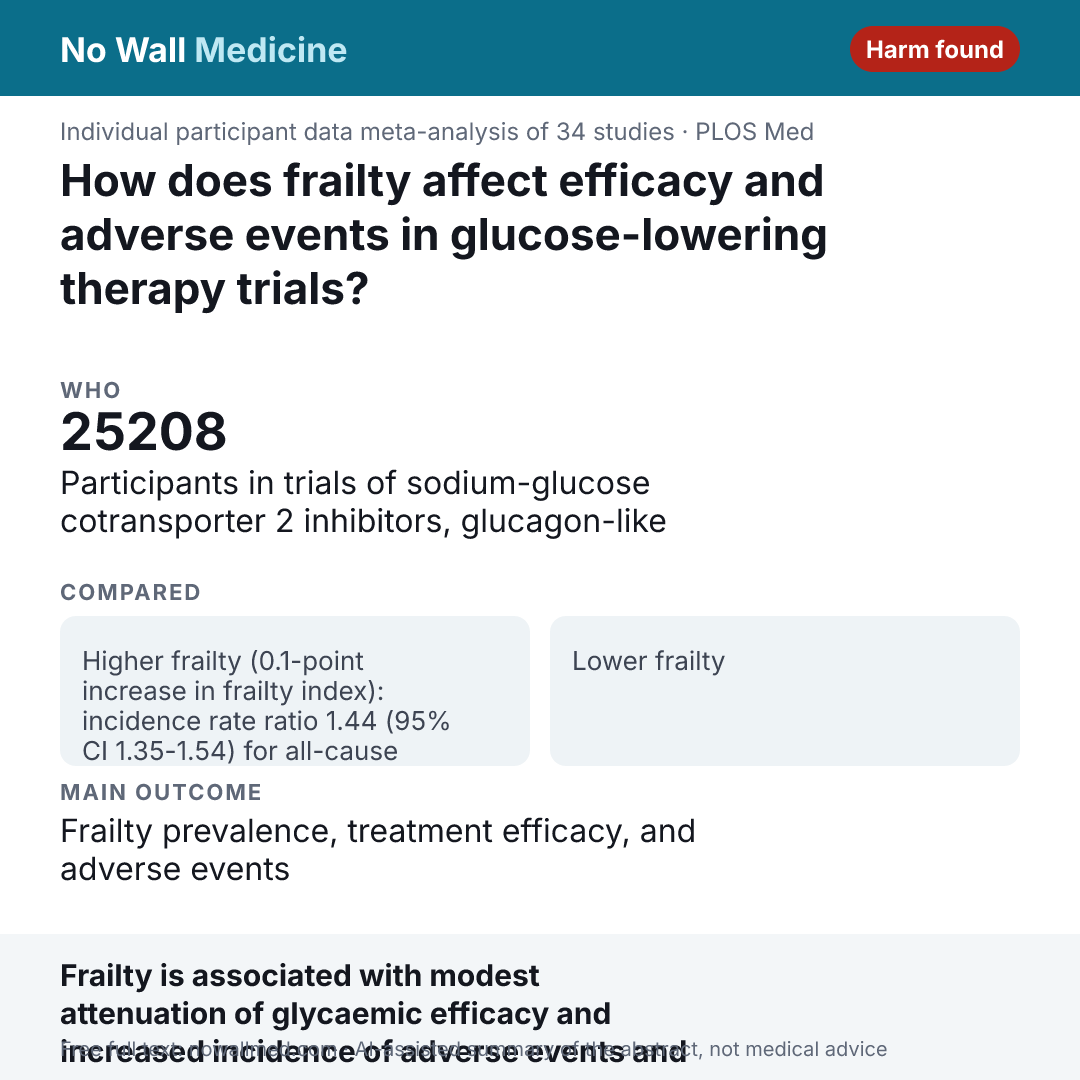
- Researchers analyzed data from 25,208 participants across 34 trials of sodium-glucose cotransporter 2 inhibitors, glucagon-like peptide-1 receptor agonists, and dipeptidyl peptidase 4 inhibitors.
- A 0.1-point increase in the frailty index was associated with more serious adverse events (IRR 2.09), more hypoglycemia (IRR 1.21), and a higher baseline risk of major adverse cardiovascular events (HR 3.01).
- The median prevalence of frailty using a 0.2 threshold was 9.5%, while increasing frailty was linked to a small attenuation in blood sugar lowering efficacy that was below clinical significance.
Limitation the authors note: Large cardiovascular outcome trials did not include data on functional status, so the researchers were unable to assess frailty in those specific trials.
Discussion prompts
- Would these patients look like yours? Who was left out?
- Is the main outcome one that matters to patients?
- Is the difference large enough to change what you do?
Cite: Wightman H, Butterly E, Wei L, et al. Frailty in randomized controlled trials of glucose-lowering therapies for type 2 diabetes: An individual participant data meta-analysis of frailty prevalence, treatment efficacy, and adverse events. PLoS Med. 2025;22(4):e1004553. doi:10.1371/journal.pmed.1004553
Free full text: PubMed Central · Summary and visual abstract: nowallmed.com/a/frailty-in-randomized-controlled-trials-of-glucose-lowering-therapies-1s7ouro/ (AI-assisted from the abstract; check the paper before relying on it).