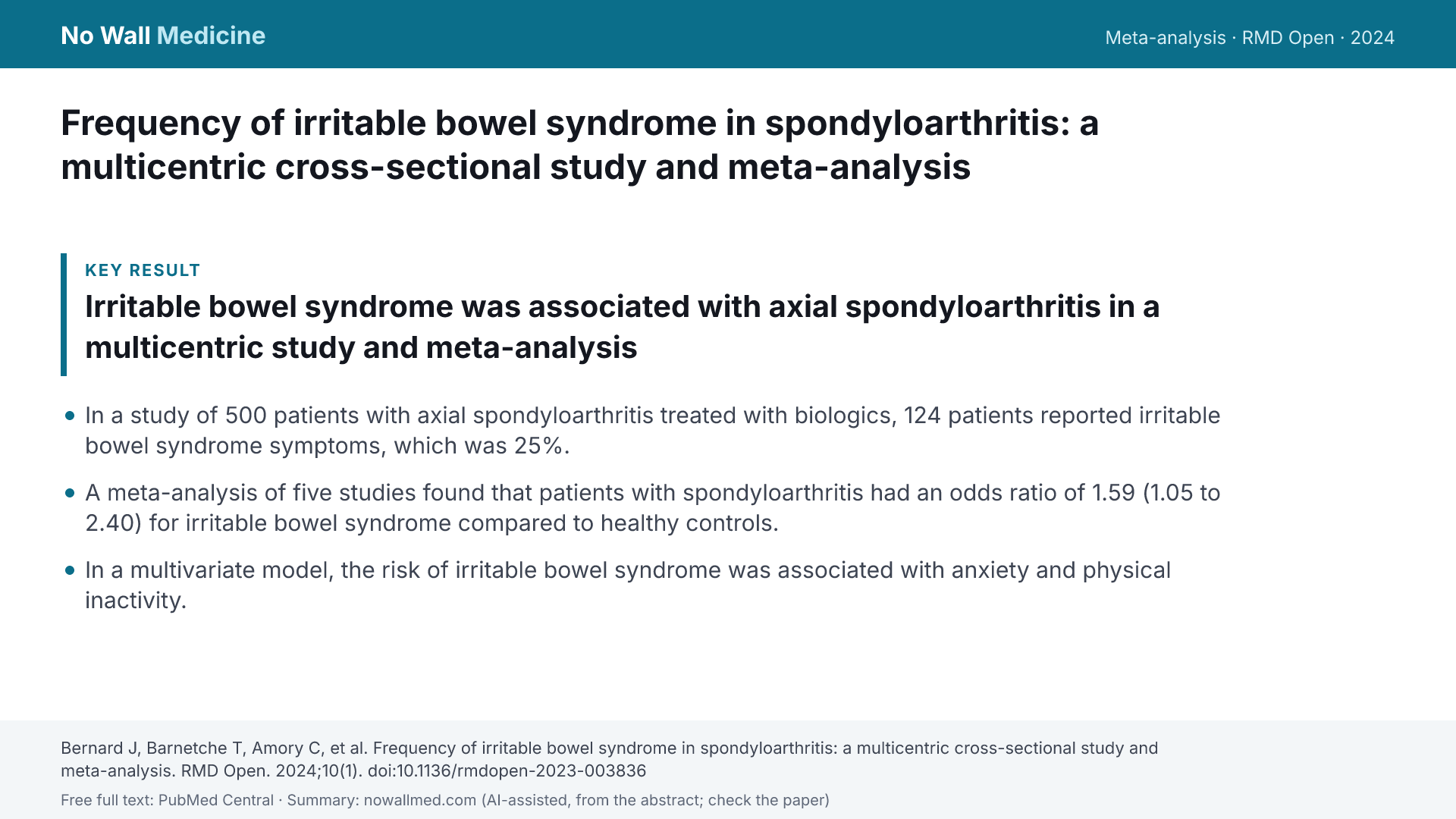
Irritable bowel syndrome was associated with axial spondyloarthritis in a multicentric study and meta-analysis
Frequency of irritable bowel syndrome in spondyloarthritis: a multicentric cross-sectional study and meta-analysis
Key points
- In a study of 500 patients with axial spondyloarthritis treated with biologics, 124 patients reported irritable bowel syndrome symptoms, which was 25%.
- A meta-analysis of five studies found that patients with spondyloarthritis had an odds ratio of 1.59 (1.05 to 2.40) for irritable bowel syndrome compared to healthy controls.
- In a multivariate model, the risk of irritable bowel syndrome was associated with anxiety and physical inactivity.
Headline and key points written with AI from the paper’s abstract, with every number checked against it. Read the paper before relying on them.
Was this summary helpful?
Abstract
Objective
To evaluate the prevalence of symptoms and factors associated with irritable bowel syndrome (IBS) in axial spondyloarthritis (ax-SpA). Methods
In a cross-sectional multicentric study, consecutive patients with ax-SpA treated with biologics in five rheumatology departments were asked for IBS Rome IV criteria. Demographic data, lifestyle behaviours and disease characteristics were recorded. Second, a systematic literature review and meta-analysis were performed following Preferred Reporting Items for Systematic Reviews and Meta-Analyses guidelines. Results
Of the 500 patients with ax-SpA included, 124 reported IBS symptoms (25%). Female gender, unemployment, higher Bath Ankylosing Spondylitis Disease Activity Index (BASDAI) and worse Bath Ankylosing Spondylitis Functional Index scores, multiple lines of biologics, fibromyalgia, anxiety, depression and lower physical activity were associated with IBS symptoms. In multivariate model, the risk of IBS was associated with anxiety and physical inactivity. From the literature review, the prevalence of IBS in patients with SpA was 15.4% (8.8% to 23.3%). Meta-analysis of the five studies comparing the presence of IBS in patients with SpA (323/7292) and healthy controls (484/35587) showed a significant increase of IBS in patients with SpA (OR=1.59 (1.05 to 2.40)). Conclusion
The prevalence of IBS symptoms was high in the ax-SpA population and should therefore be considered in the presence of gastrointestinal disorders. The presence of IBS symptoms was associated with anxiety and low physical activity in multivariate analysis. Patients with IBS symptoms tended to have more difficult to manage disease characterised by higher activity, worse functional score and multiple lines of treatment in univariate analysis.
Abstract reproduced under the article’s CC BY NC licence.
Subject terms
Headline, design, result, key points, caveat and citation as plain text.
Cite this article
Bernard J, Barnetche T, Amory C, et al. Frequency of irritable bowel syndrome in spondyloarthritis: a multicentric cross-sectional study and meta-analysis. RMD Open. 2024;10(1). doi:10.1136/rmdopen-2023-003836
Spotted a mistake? Suggest a correction