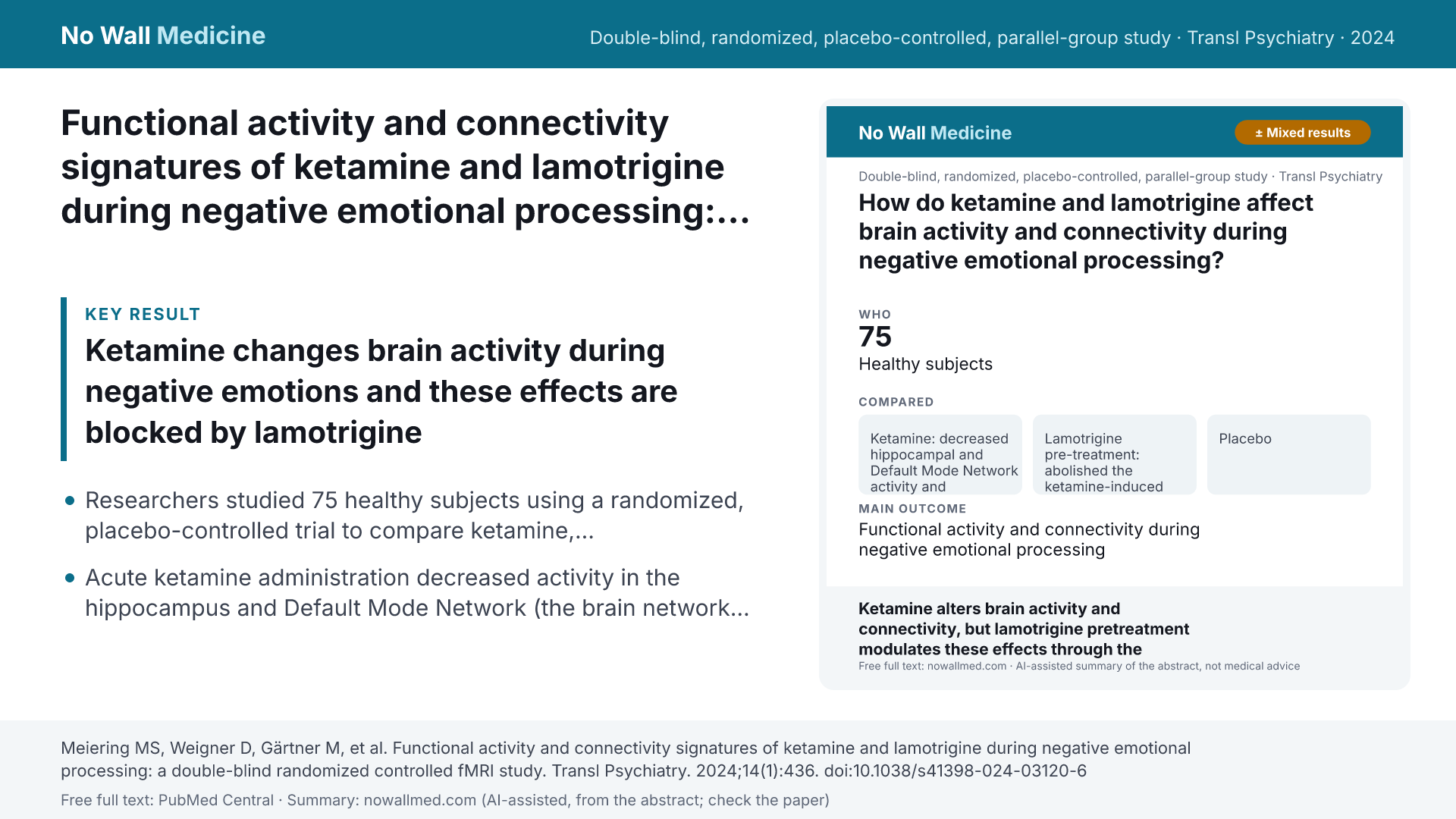
Ketamine changes brain activity during negative emotions and these effects are blocked by lamotrigine
Functional activity and connectivity signatures of ketamine and lamotrigine during negative emotional processing: a double-blind randomized controlled fMRI study
Double-blind, randomized, placebo-controlled, parallel-group studyMixed results
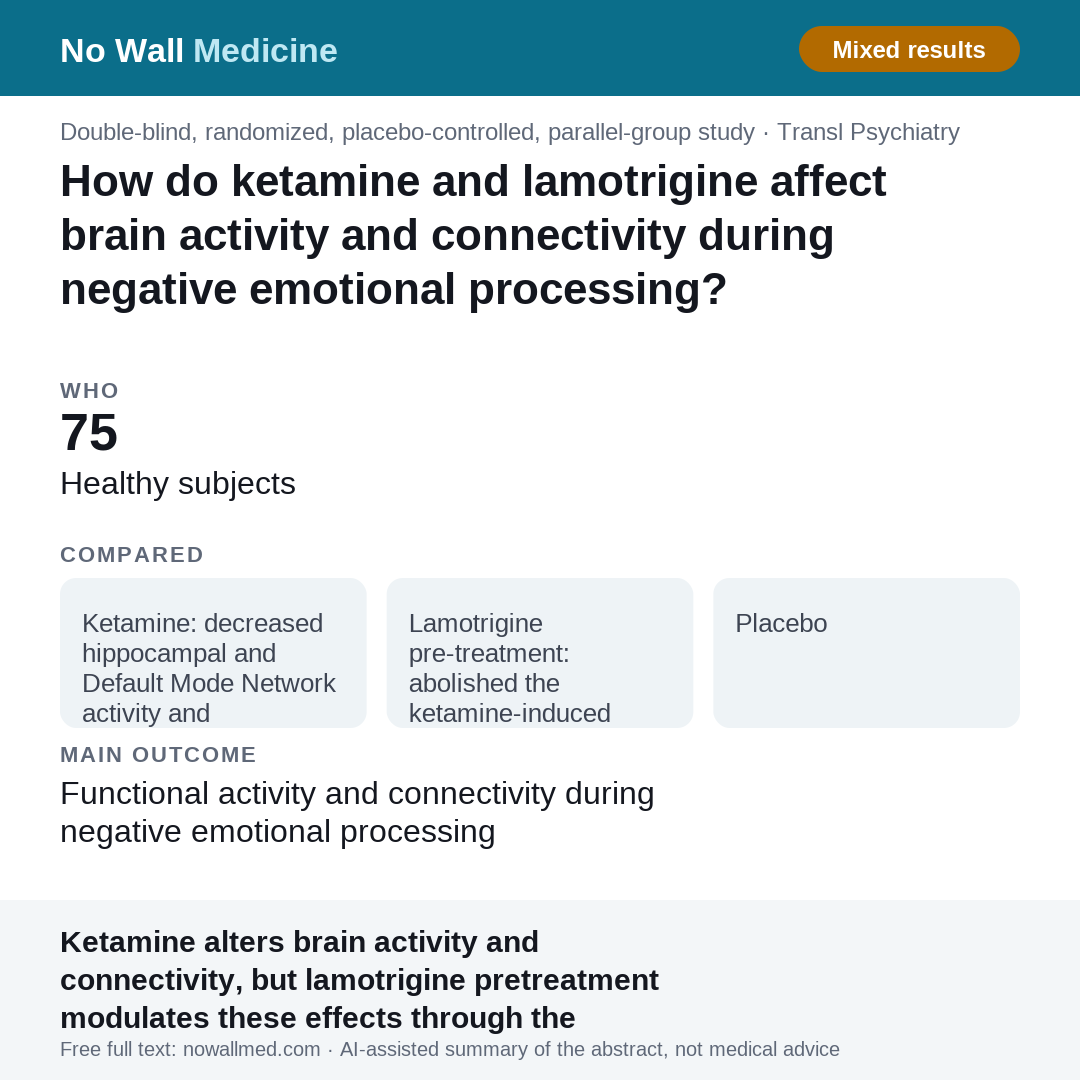
How do ketamine and lamotrigine affect brain activity and connectivity during negative emotional processing?
Who
75
Healthy subjects
Compared
Ketamine: decreased hippocampal and Default Mode Network activity and increased fronto-limbic coupling
Lamotrigine pre-treatment: abolished the ketamine-induced increase in functional connectivity
Placebo
Main outcome
Functional activity and connectivity during negative emotional processing
Bottom line: Ketamine alters brain activity and connectivity, but lamotrigine pretreatment modulates these effects through the glutamatergic system.
Transl Psychiatry · 2024-10-14Download image
Clinical question: How do ketamine and lamotrigine affect brain activity and connectivity during negative emotional processing?
Why it matters: It is unknown if the acute and sustained effects of ketamine on brain circuits during negative emotional processing are mediated through the glutamatergic system.
Key points
- Researchers studied 75 healthy subjects using a randomized, placebo-controlled trial to compare ketamine, lamotrigine pre-treatment, and placebo during emotional face viewing tasks.
- Acute ketamine administration decreased activity in the hippocampus and Default Mode Network (the brain network active during rest) and increased coupling between the frontal and limbic regions.
- Lamotrigine, a drug that inhibits glutamate release, abolished the ketamine-induced increase in functional connectivity and blocked the 24 h reduction in posterior Default Mode Network activity.
Headline and key points written with AI from the paper’s abstract, with every number checked against it. Read the paper before relying on them.
Was this summary helpful?
Subject terms
Cite this article
Meiering MS, Weigner D, Gärtner M, et al. Functional activity and connectivity signatures of ketamine and lamotrigine during negative emotional processing: a double-blind randomized controlled fMRI study. Transl Psychiatry. 2024. doi:10.1038/s41398-024-03120-6
Spotted a mistake? Suggest a correction