Genetic and drug-induced brain connectivity patterns show similarities linked to schizophrenia and receptor dysfunction
Functional connectivity signatures of NMDAR dysfunction in schizophrenia-integrating findings from imaging genetics and pharmaco-fMRI
Integration of imaging genetics and pharmaco-fMRI studiesBenefit found
Are there shared functional connectivity signatures of NMDAR dysfunction in schizophrenia?
Who
Patients with schizophrenia and healthy controls
Compared
Schizophrenia genetic variant rs7191183
Ketamine versus midazolam contrast
Main outcome
Functional connectivity signatures of NMDAR dysfunction
Bottom line: Shared functional connectivity profiles between genetic and pharmacological NMDAR dysfunction suggest excitatory/inhibitory imbalance in schizophrenia.
Transl Psychiatry · 2023-02-16Download image
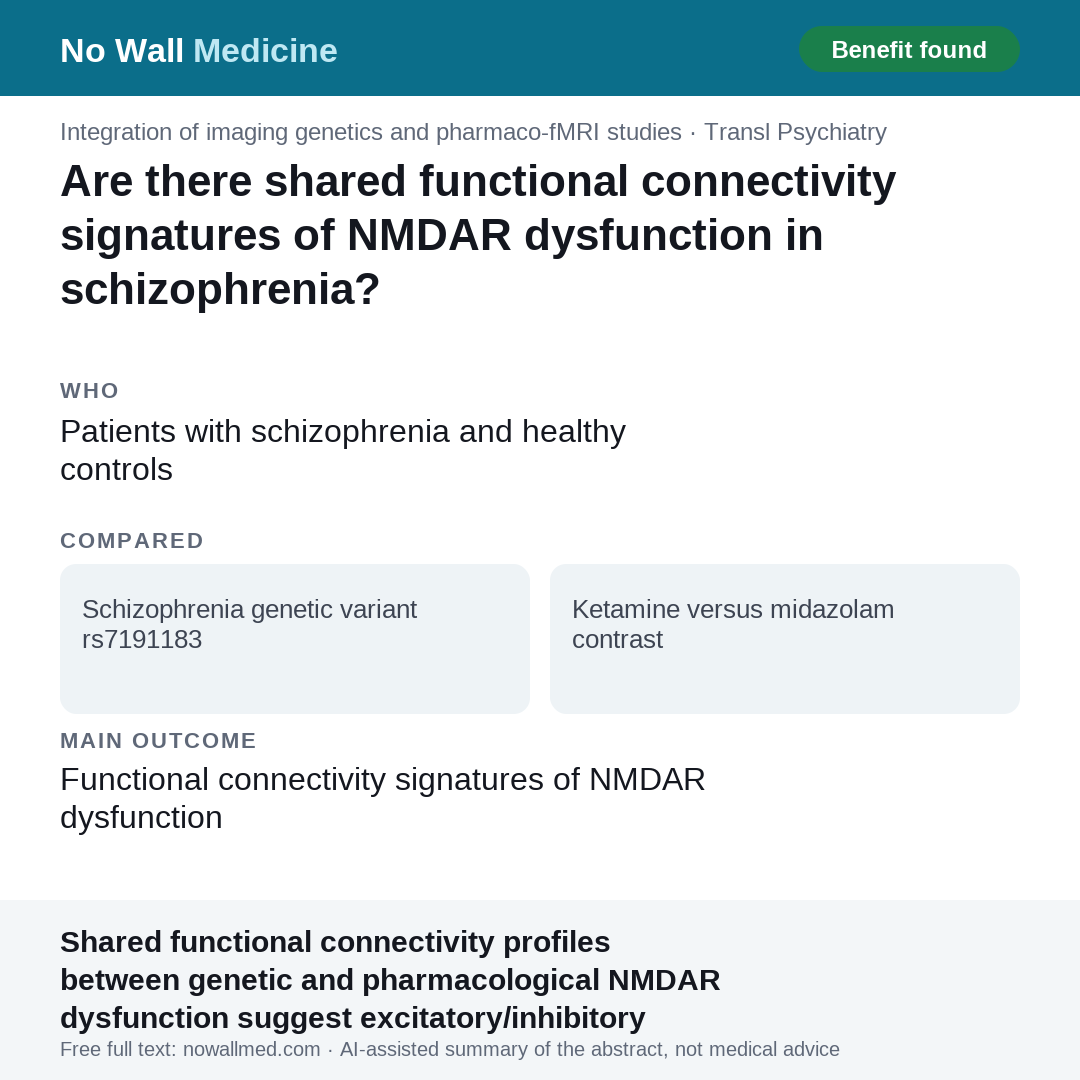
Clinical question: Are there shared functional connectivity signatures of NMDAR dysfunction in schizophrenia?
Why it matters: It is unknown if genetically induced N-methyl-D-aspartate receptor dysfunction and drug-induced receptor dysfunction produce shared brain connectivity signatures in schizophrenia.
Key points
- Researchers integrated data from 146 schizophrenia patients, 142 healthy controls, 28 healthy participants receiving drugs, and six postmortem brain donors.
- The genetic variant rs7191183 in the GRIN2A gene showed a resemblance to the brain connectivity changes caused by the ketamine versus midazolam drug contrast.
- These connectivity patterns were associated with the genetic variant, the drug effects, and schizophrenia, specifically involving excitatory and inhibitory balance in the brain.
Headline and key points written with AI from the paper’s abstract, with every number checked against it. Read the paper before relying on them.
Was this summary helpful?
Subject terms
Cite this article
Gaebler AJ, Fakour N, Stöhr F, Zweerings J, Taebi A, Suslova M. Functional connectivity signatures of NMDAR dysfunction in schizophrenia-integrating findings from imaging genetics and pharmaco-fMRI. Transl Psychiatry. 2023. doi:10.1038/s41398-023-02344-2
Spotted a mistake? Suggest a correction
Top studies every Monday
The week’s key trials and guidelines in your specialties, plus any topics you follow. By email, free.
Get the weekly digest