Genetic and environment influences on childhood victimization: a systematic review and meta-analysis
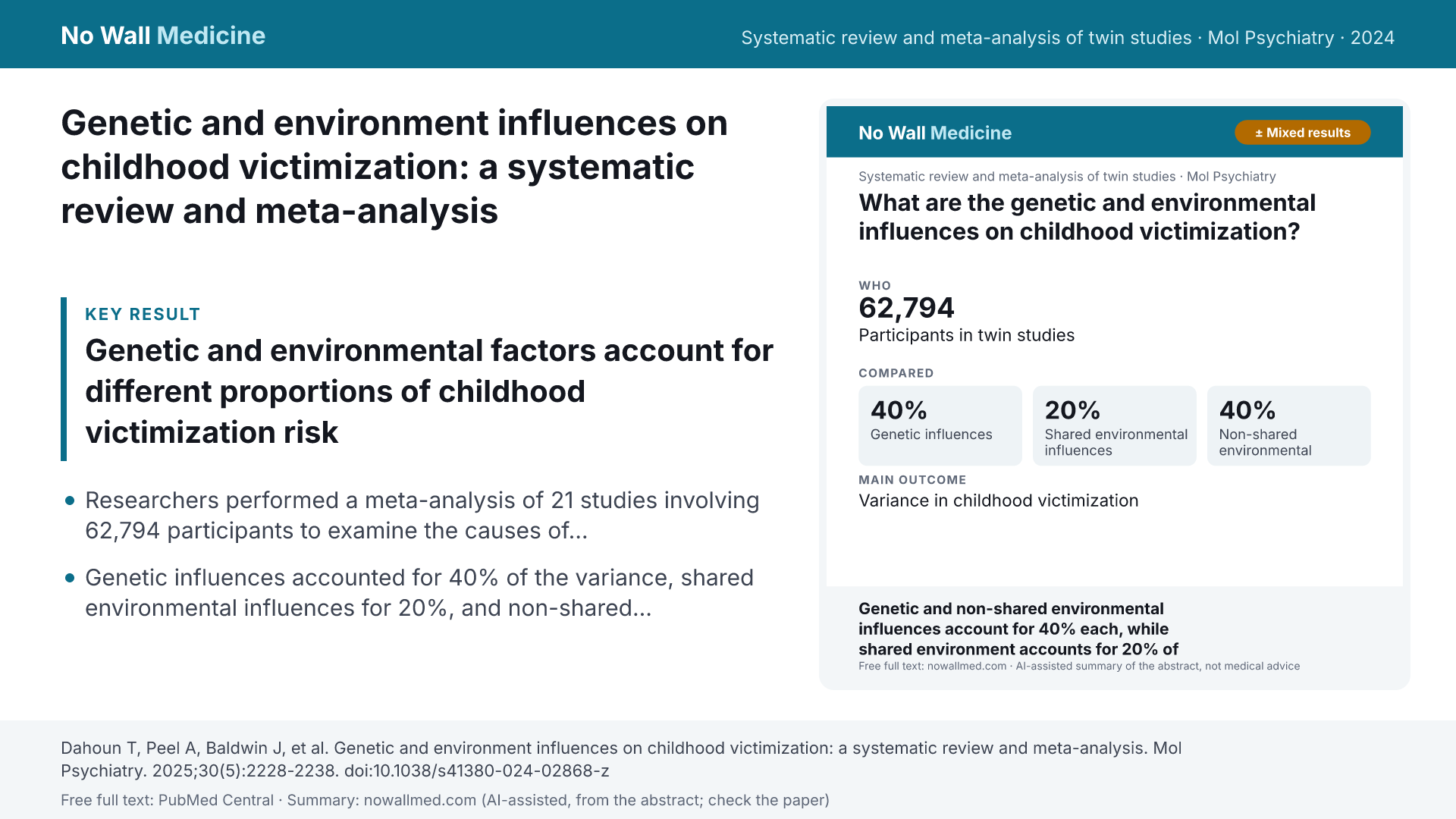
Key result: Genetic and environmental factors account for different proportions of childhood victimization risk
Systematic review and meta-analysis of twin studiesMixed results
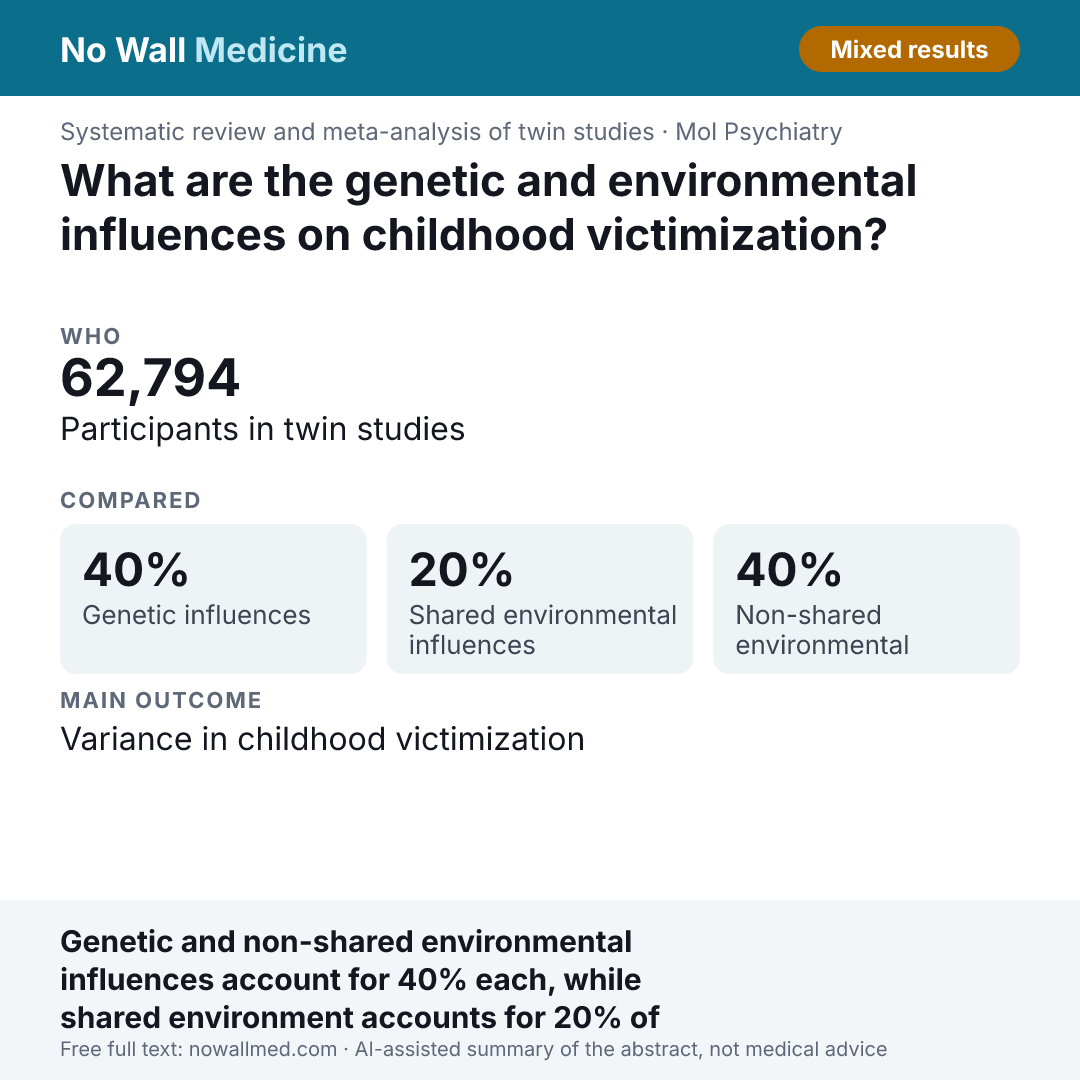
What are the genetic and environmental influences on childhood victimization?
Who
62,794
Participants in twin studies
Compared
40%Genetic influences
20%Shared environmental influences
40%Non-shared environmental influences
Main outcome
Variance in childhood victimization
Bottom line: Genetic and non-shared environmental influences account for 40% each, while shared environment accounts for 20% of variance.
Mol Psychiatry · 2024-12-11 · Save PNG
Key points
- Researchers performed a meta-analysis of 21 studies involving 62,794 participants to examine the causes of childhood victimization.
- Genetic influences accounted for 40% of the variance, shared environmental influences for 20%, and non-shared environmental influences for 40%.
- The influence of genetics and the environment varied depending on the type of victimization, the age of exposure, and who reported the experience.
Why it matters: The underlying causes of childhood victimization are not fully understood, making it difficult to identify specific targets for prevention.
Discussion prompts
- Would these patients look like yours? Who was left out?
- Is the main outcome one that matters to patients?
- Is the difference large enough to change what you do?
Cite: Dahoun T, Peel A, Baldwin J, et al. Genetic and environment influences on childhood victimization: a systematic review and meta-analysis. Mol Psychiatry. 2025;30(5):2228-2238. doi:10.1038/s41380-024-02868-z
Free full text: PubMed Central · Summary and visual abstract: nowallmed.com/a/genetic-and-environment-influences-on-childhood-victimization-a-878w1b/ (AI-assisted from the abstract; check the paper before relying on it).