Genetic and environmental factors account for different proportions of childhood victimization risk
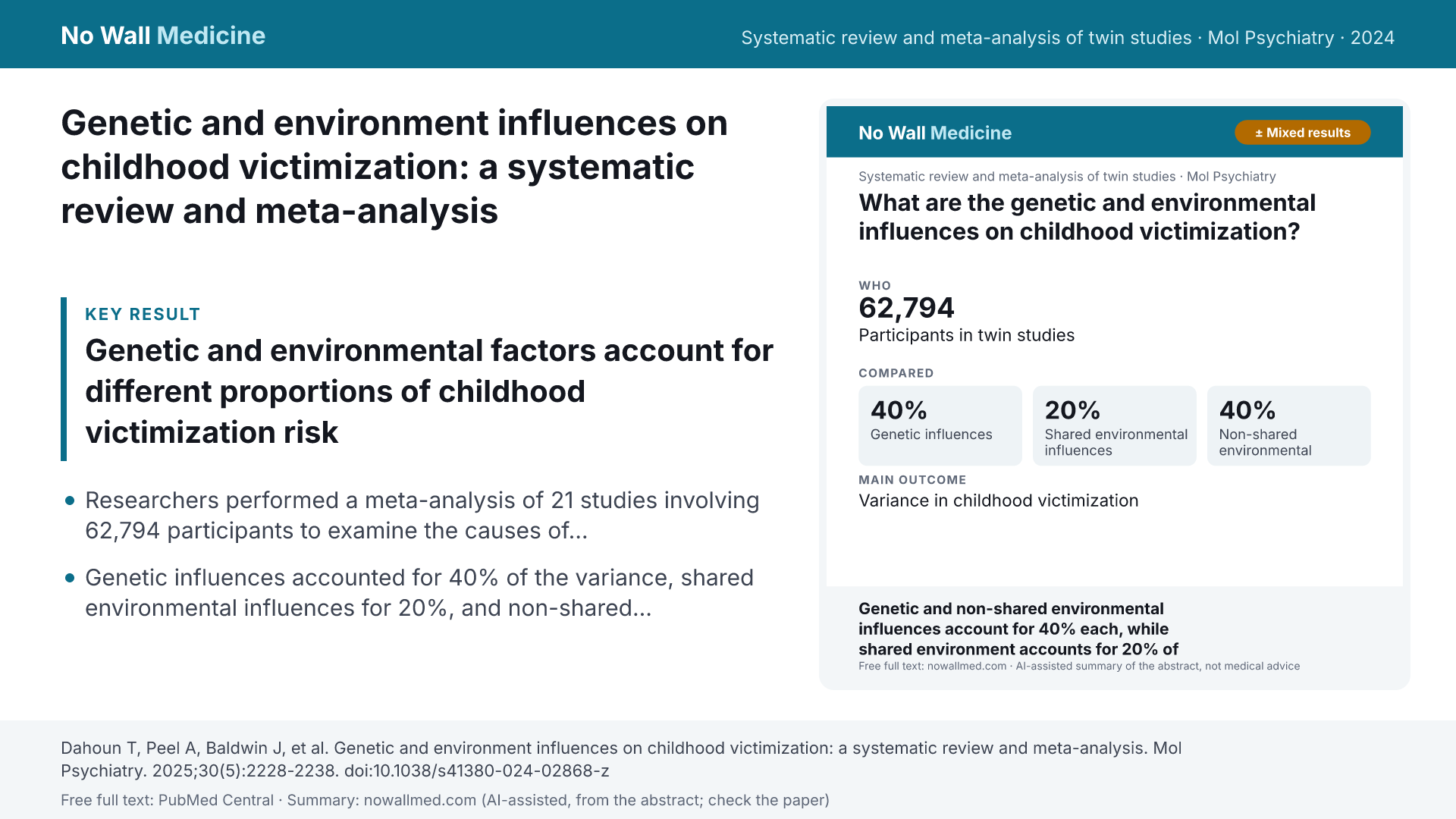
Genetic and environment influences on childhood victimization: a systematic review and meta-analysis
Systematic review and meta-analysis of twin studiesMixed results
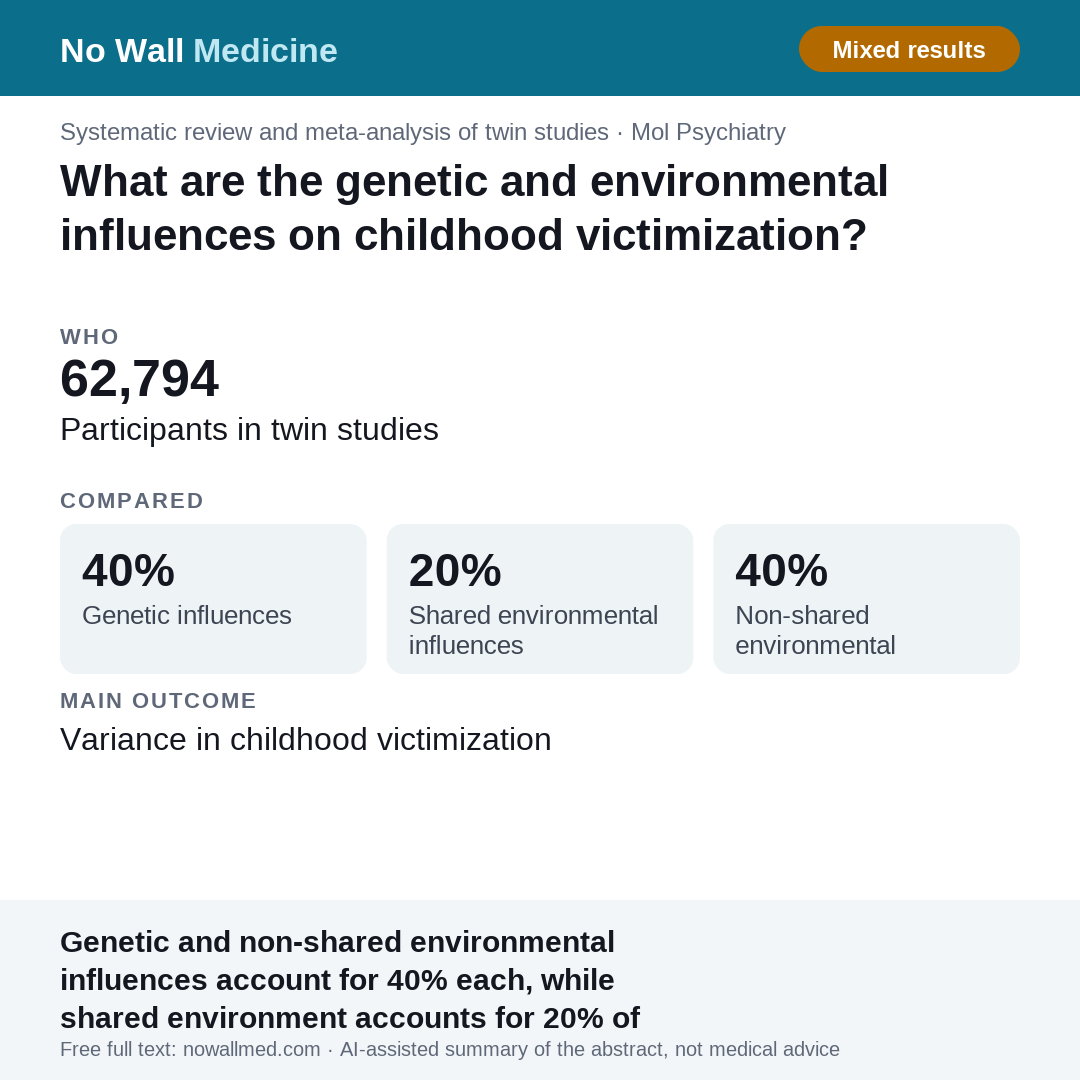
What are the genetic and environmental influences on childhood victimization?
Who
62,794
Participants in twin studies
Compared
40%Genetic influences
20%Shared environmental influences
40%Non-shared environmental influences
Main outcome
Variance in childhood victimization
Bottom line: Genetic and non-shared environmental influences account for 40% each, while shared environment accounts for 20% of variance.
Mol Psychiatry · 2024-12-11Download image
Clinical question: What are the genetic and environmental influences on childhood victimization?
Why it matters: The underlying causes of childhood victimization are not fully understood, making it difficult to identify specific targets for prevention.
Key points
- Researchers performed a meta-analysis of 21 studies involving 62,794 participants to examine the causes of childhood victimization.
- Genetic influences accounted for 40% of the variance, shared environmental influences for 20%, and non-shared environmental influences for 40%.
- The influence of genetics and the environment varied depending on the type of victimization, the age of exposure, and who reported the experience.
Headline and key points written with AI from the paper’s abstract, with every number checked against it. Read the paper before relying on them.
Was this summary helpful?
Subject terms
Cite this article
Dahoun T, Peel A, Baldwin J, Coleman O, Lewis SJ, Wertz J. Genetic and environment influences on childhood victimization: a systematic review and meta-analysis. Mol Psychiatry. 2024. doi:10.1038/s41380-024-02868-z
Spotted a mistake? Suggest a correction
Top studies every Monday
The week’s key trials and guidelines in your specialties, plus any topics you follow. By email, free.
Get the weekly digest