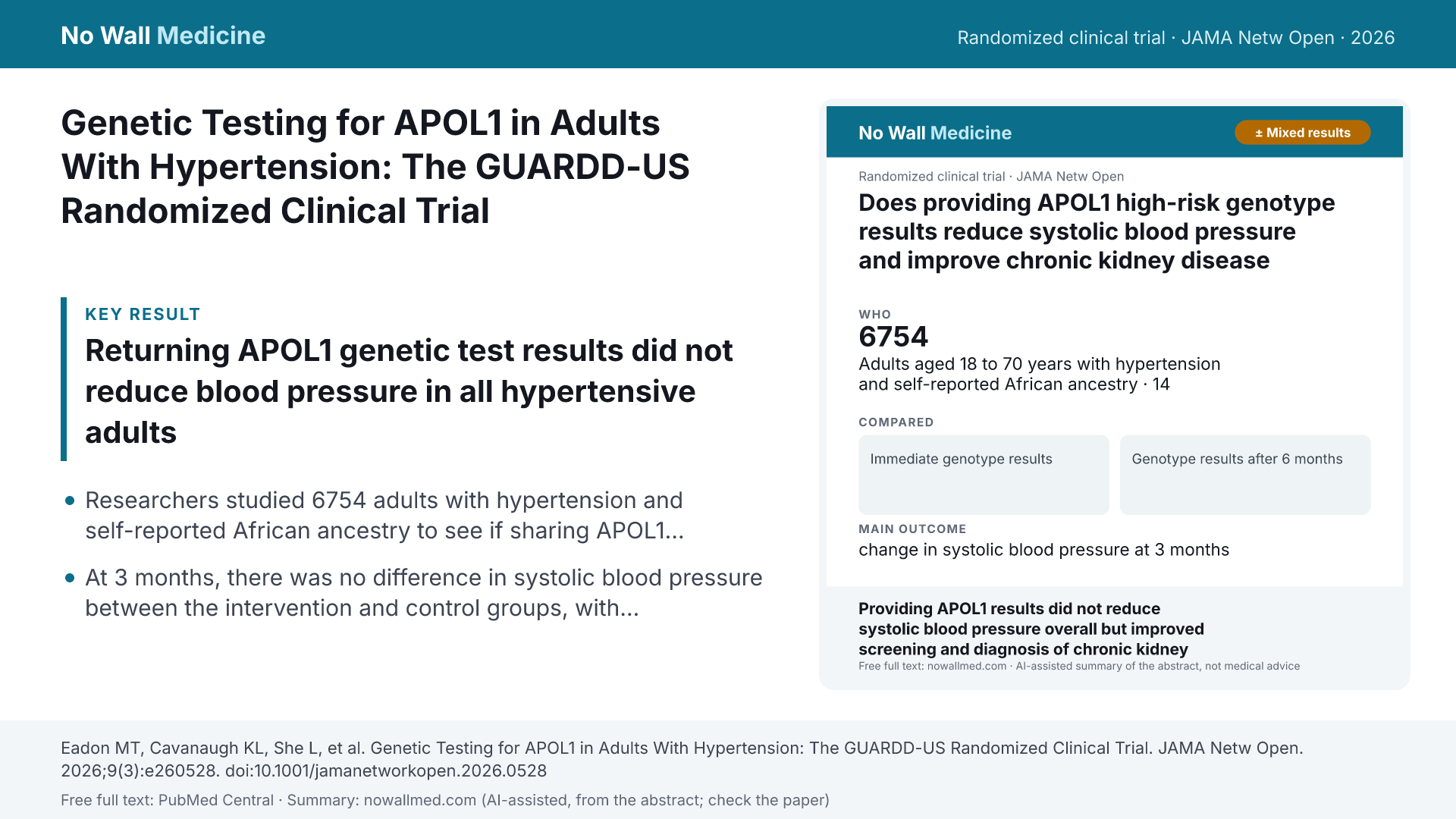
Returning APOL1 genetic test results did not reduce blood pressure in all hypertensive adults
Genetic Testing for APOL1 in Adults With Hypertension: The GUARDD-US Randomized Clinical Trial
Randomized clinical trialMixed results
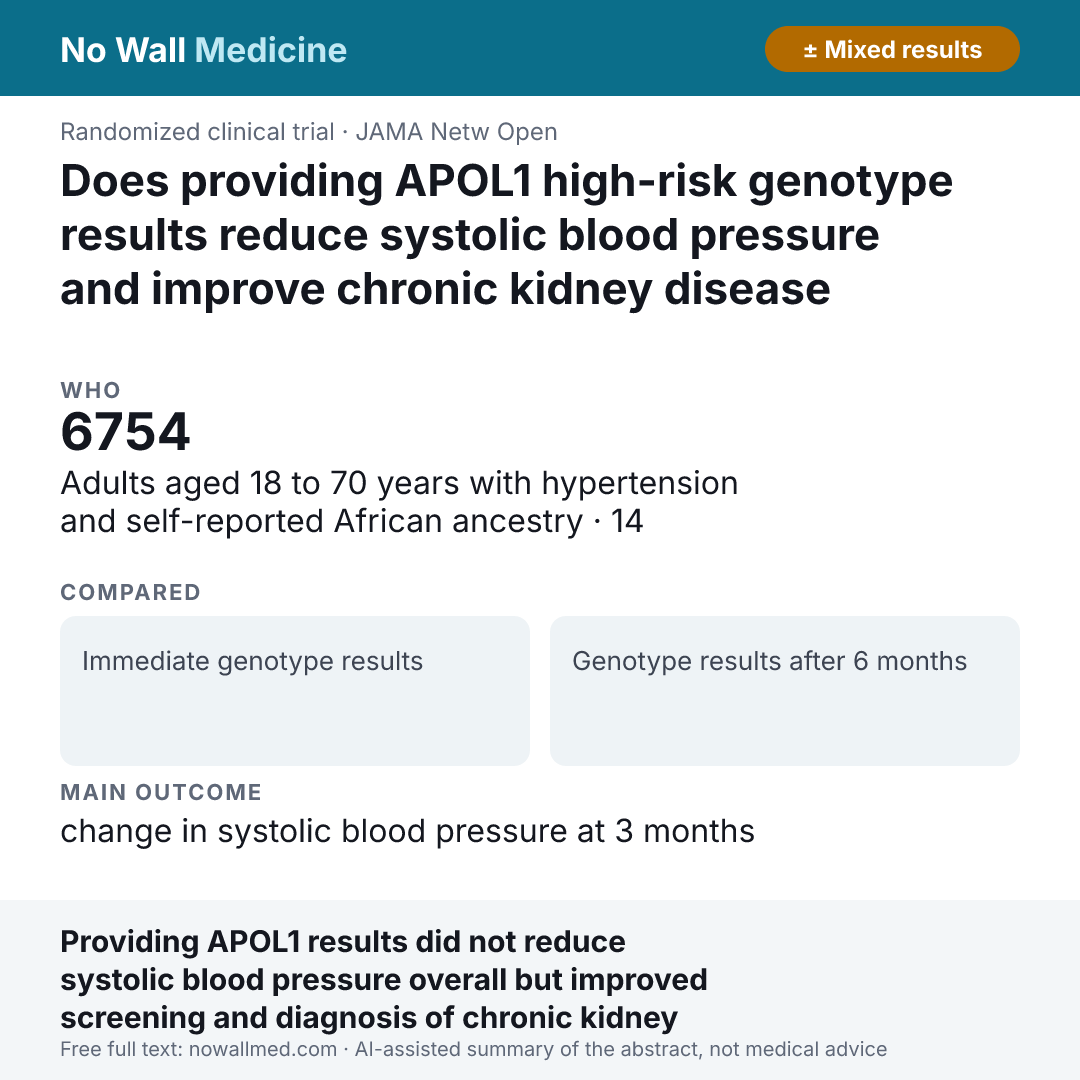
Does providing APOL1 high-risk genotype results reduce systolic blood pressure and improve chronic kidney disease screening?
Who
6754
Adults aged 18 to 70 years with hypertension and self-reported African ancestry · 14 institutions and 54 clinical sites across the US
Compared
Immediate genotype results
Genotype results after 6 months
Main outcome
change in systolic blood pressure at 3 months
Result: between-group difference, -0.3 mm Hg (95% CI, -2.7 to 2.1 mm Hg)
Bottom line: Providing APOL1 results did not reduce systolic blood pressure overall but improved screening and diagnosis of chronic kidney disease.
JAMA Netw Open · 2026-03-02 · NCT04191824
Why it matters: Few studies have examined the effect of genetic return of results on blood pressure management and control in people with APOL1 high-risk alleles.
Headline and visual abstract written with AI from the paper’s abstract, with every number checked against it. Read the paper before relying on them.
Was this summary helpful?
Subject terms
Cite this article
Eadon MT, Cavanaugh KL, She L, et al. Genetic Testing for APOL1 in Adults With Hypertension: The GUARDD-US Randomized Clinical Trial. JAMA Netw Open. 2026;9(3):e260528. doi:10.1001/jamanetworkopen.2026.0528
Spotted a mistake? Suggest a correction