Genetically adjusted prostate-specific antigen levels were associated with fewer negative biopsies in men
Genetically adjusted PSA levels for prostate cancer screening
Meta-analysis of menBenefit found
Does genetically adjusted PSA improve screening?
Who
95768
men of European ancestry and others
Compared
Genetically adjusted PSA
Unadjusted PSA
Main outcome
prostate cancer detection
Result: odds ratio 3.44 (no confidence interval given)
Bottom line: Genetically adjusted PSA improves screening
Nat Med · 2023-06-01Download image
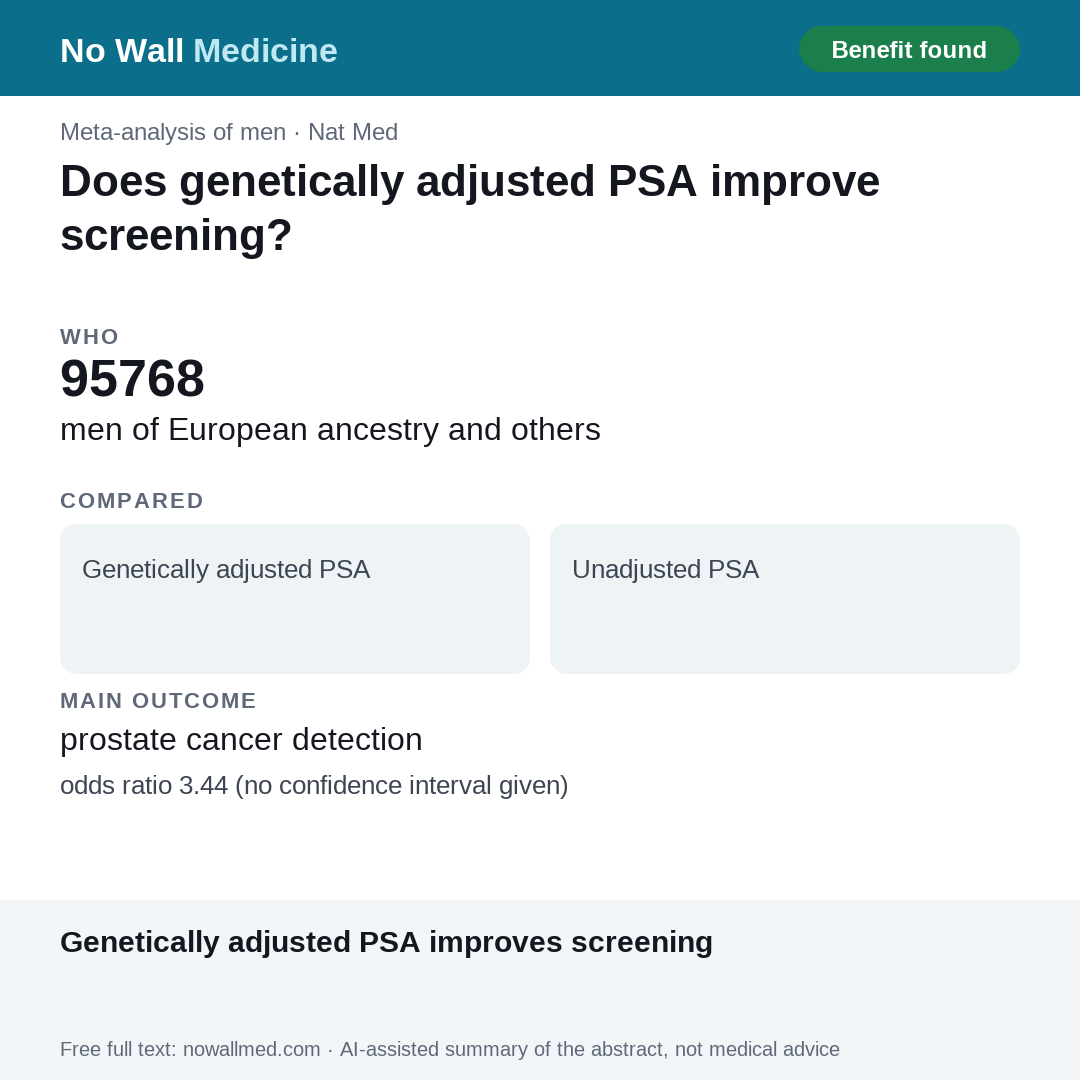
Clinical question: Does genetically adjusted PSA improve screening?
Why it matters: Prostate-specific antigen screening is controversial because it can lead to the diagnosis and treatment of tumors that are not clinically significant.
Key points
- Researchers analyzed 95,768 men to develop a polygenic score, which is a tool using many genetic variants, that explains 9.61% of non-cancer-related prostate-specific antigen variation.
- In men of European ancestry, using the adjusted score was associated with up to 31% fewer negative prostate biopsies and 12% fewer biopsies in patients with prostate cancer.
- The adjusted score was more predictive of aggressive prostate cancer with an area under the curve of 0.755 compared to 0.738 for unadjusted levels.
Headline and key points written with AI from the paper’s abstract, with every number checked against it. Read the paper before relying on them.
Topics
Cite this article
Kachuri L, Hoffmann TJ, Jiang Y, Berndt SI, Shelley JP, Schaffer KR. Genetically adjusted PSA levels for prostate cancer screening. Nat Med. 2023. doi:10.1038/s41591-023-02277-9
Spotted a mistake? Suggest a correction