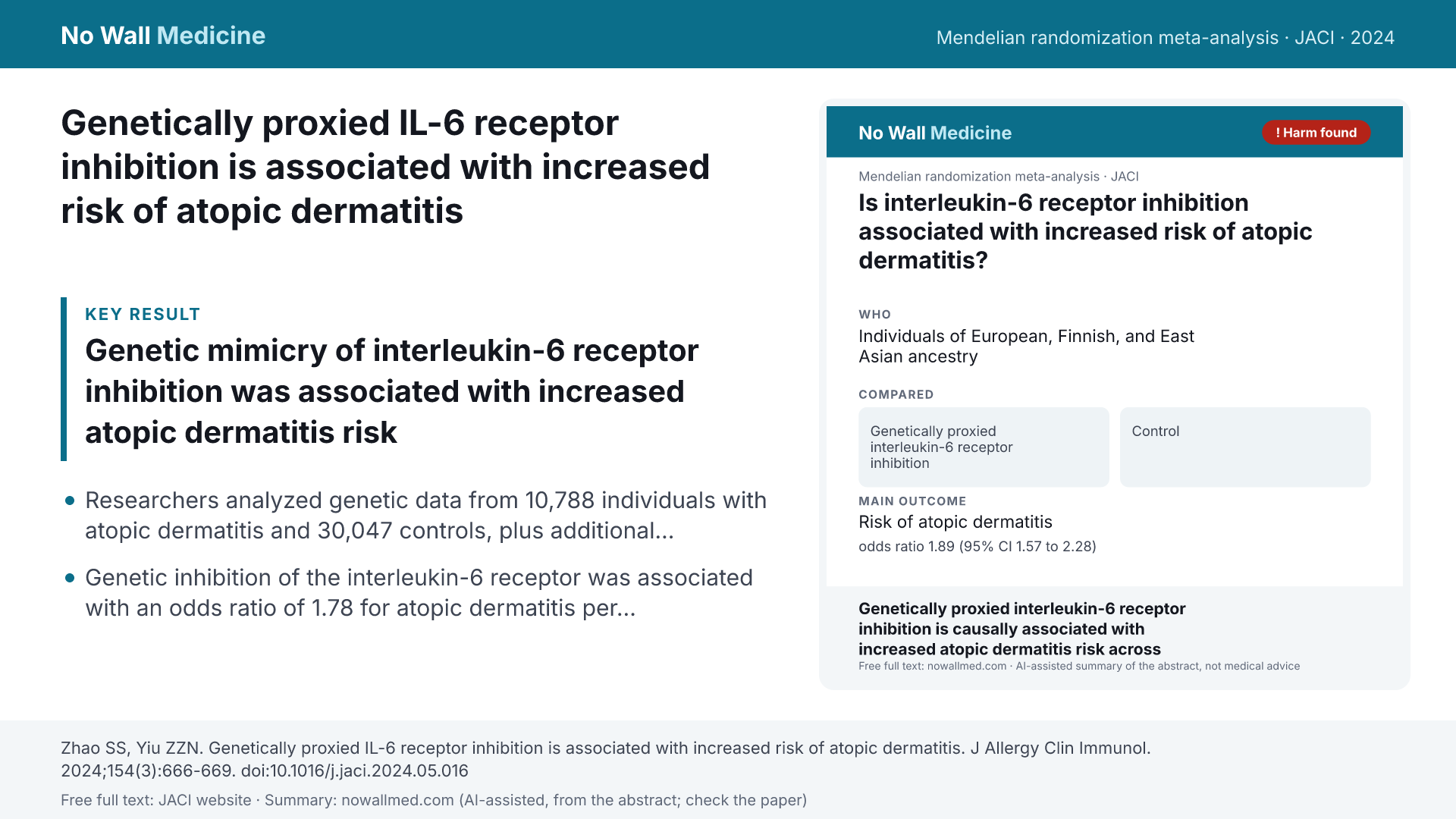
Genetically proxied IL-6 receptor inhibition is associated with increased risk of atopic dermatitis
Key result: Genetic mimicry of interleukin-6 receptor inhibition was associated with increased atopic dermatitis risk
Mendelian randomization meta-analysisHarm found
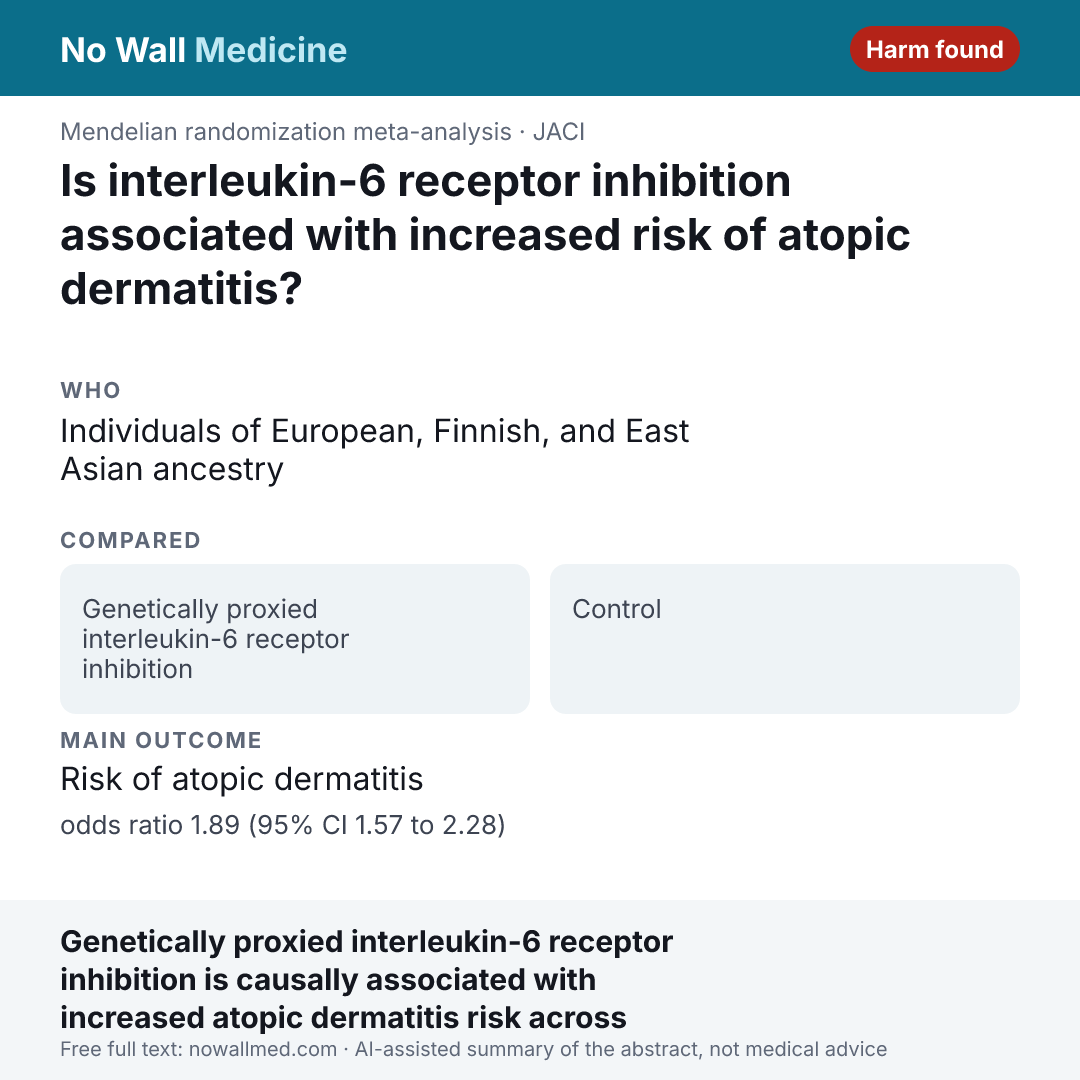
Is interleukin-6 receptor inhibition associated with increased risk of atopic dermatitis?
Who
Individuals of European, Finnish, and East Asian ancestry
Compared
Genetically proxied interleukin-6 receptor inhibition
Control
Main outcome
Risk of atopic dermatitis
Result: odds ratio 1.89 (95% CI 1.57 to 2.28)
Bottom line: Genetically proxied interleukin-6 receptor inhibition is causally associated with increased atopic dermatitis risk across multiple populations.
JACI · 2024-05-25 · Save PNG
Key points
- Researchers analyzed genetic data from 10,788 individuals with atopic dermatitis and 30,047 controls, plus additional Finnish and East Asian groups.
- Genetic inhibition of the interleukin-6 receptor was associated with an odds ratio of 1.78 for atopic dermatitis per 4.4-mg/L reduction in C-reactive protein.
- A meta-analysis of three independent populations showed an odds ratio of 1.89 for the risk of atopic dermatitis.
Discussion prompts
- Would these patients look like yours? Who was left out?
- Is the main outcome one that matters to patients?
- Is the difference large enough to change what you do?
Cite: Zhao SS, Yiu ZZN. Genetically proxied IL-6 receptor inhibition is associated with increased risk of atopic dermatitis. J Allergy Clin Immunol. 2024;154(3):666-669. doi:10.1016/j.jaci.2024.05.016
Free full text: JACI website · Summary and visual abstract: nowallmed.com/a/genetically-proxied-il-6-receptor-inhibition-is-associated-with-1cg7xda/ (AI-assisted from the abstract; check the paper before relying on it).