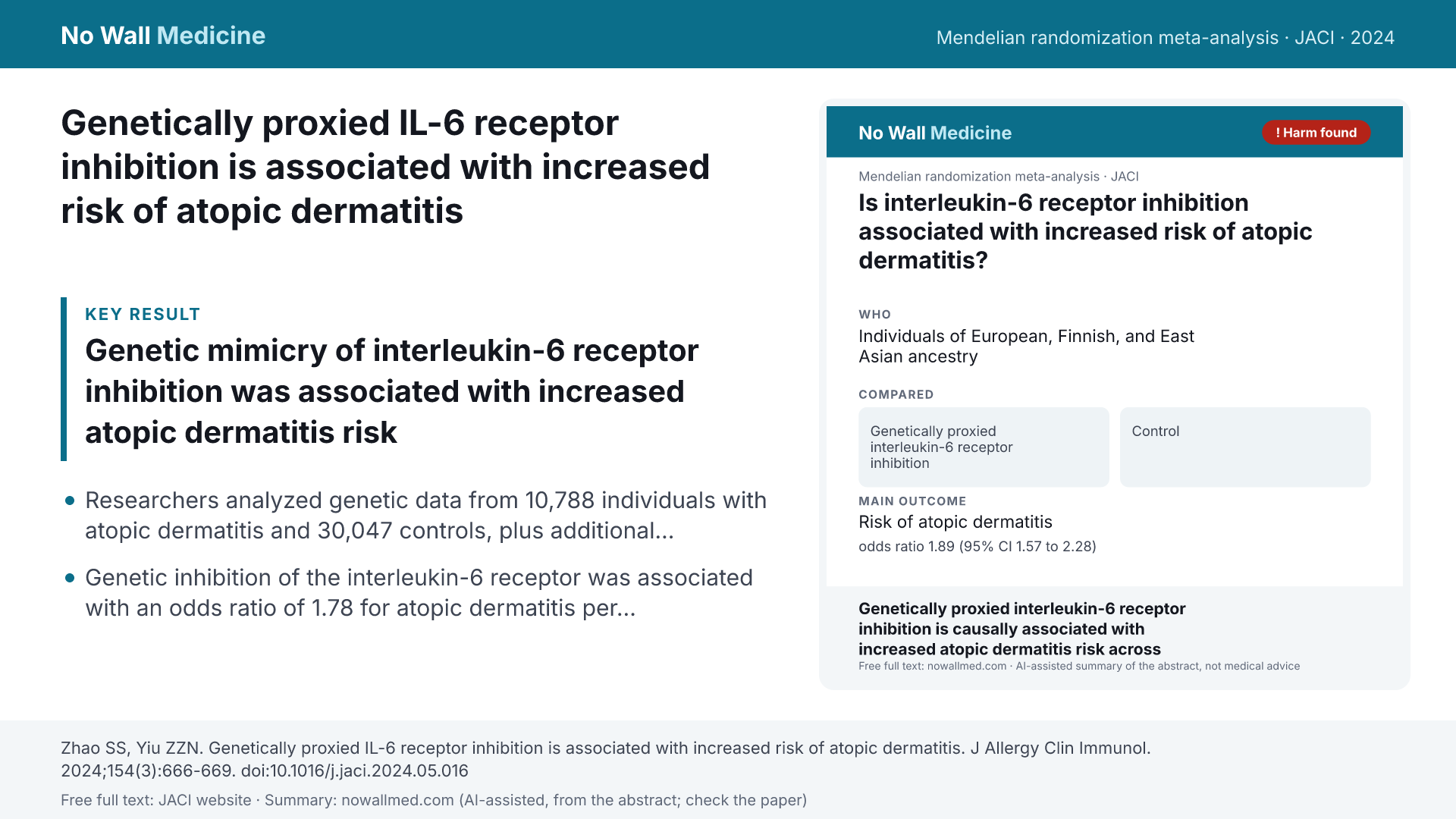
Genetic mimicry of interleukin-6 receptor inhibition was associated with increased atopic dermatitis risk
Genetically proxied IL-6 receptor inhibition is associated with increased risk of atopic dermatitis
Mendelian randomization meta-analysisHarm found
Is interleukin-6 receptor inhibition associated with increased risk of atopic dermatitis?
Who
Individuals of European, Finnish, and East Asian ancestry
Compared
Genetically proxied interleukin-6 receptor inhibition
Control
Main outcome
Risk of atopic dermatitis
Result: odds ratio 1.89 (95% CI 1.57 to 2.28)
Bottom line: Genetically proxied interleukin-6 receptor inhibition is causally associated with increased atopic dermatitis risk across multiple populations.
JACI · 2024-05-25Download image
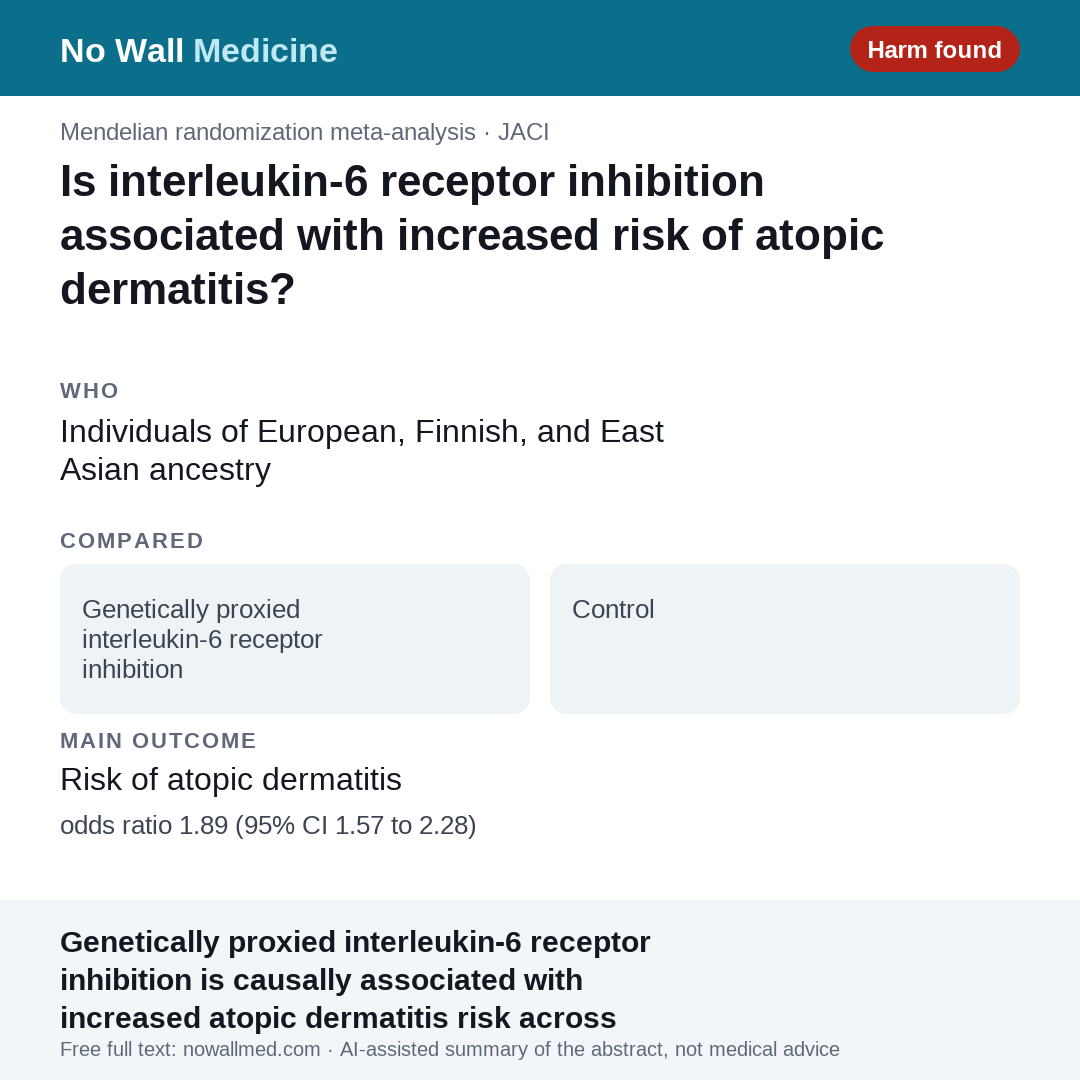
Clinical question: Is interleukin-6 receptor inhibition associated with increased risk of atopic dermatitis?
Why it matters: It was unclear if there was mechanistic evidence linking interleukin-6 receptor inhibition to the development of atopic dermatitis.
Key points
- Researchers analyzed genetic data from 10,788 individuals with atopic dermatitis and 30,047 controls, plus additional Finnish and East Asian groups.
- Genetic inhibition of the interleukin-6 receptor was associated with an odds ratio of 1.78 for atopic dermatitis per 4.4-mg/L reduction in C-reactive protein.
- A meta-analysis of three independent populations showed an odds ratio of 1.89 for the risk of atopic dermatitis.
Headline and key points written with AI from the paper’s abstract, with every number checked against it. Read the paper before relying on them.
Was this summary helpful?
Subject terms
Cite this article
Zhao SS, Yiu ZZN. Genetically proxied IL-6 receptor inhibition is associated with increased risk of atopic dermatitis. JACI. 2024. doi:10.1016/j.jaci.2024.05.016
Spotted a mistake? Suggest a correction