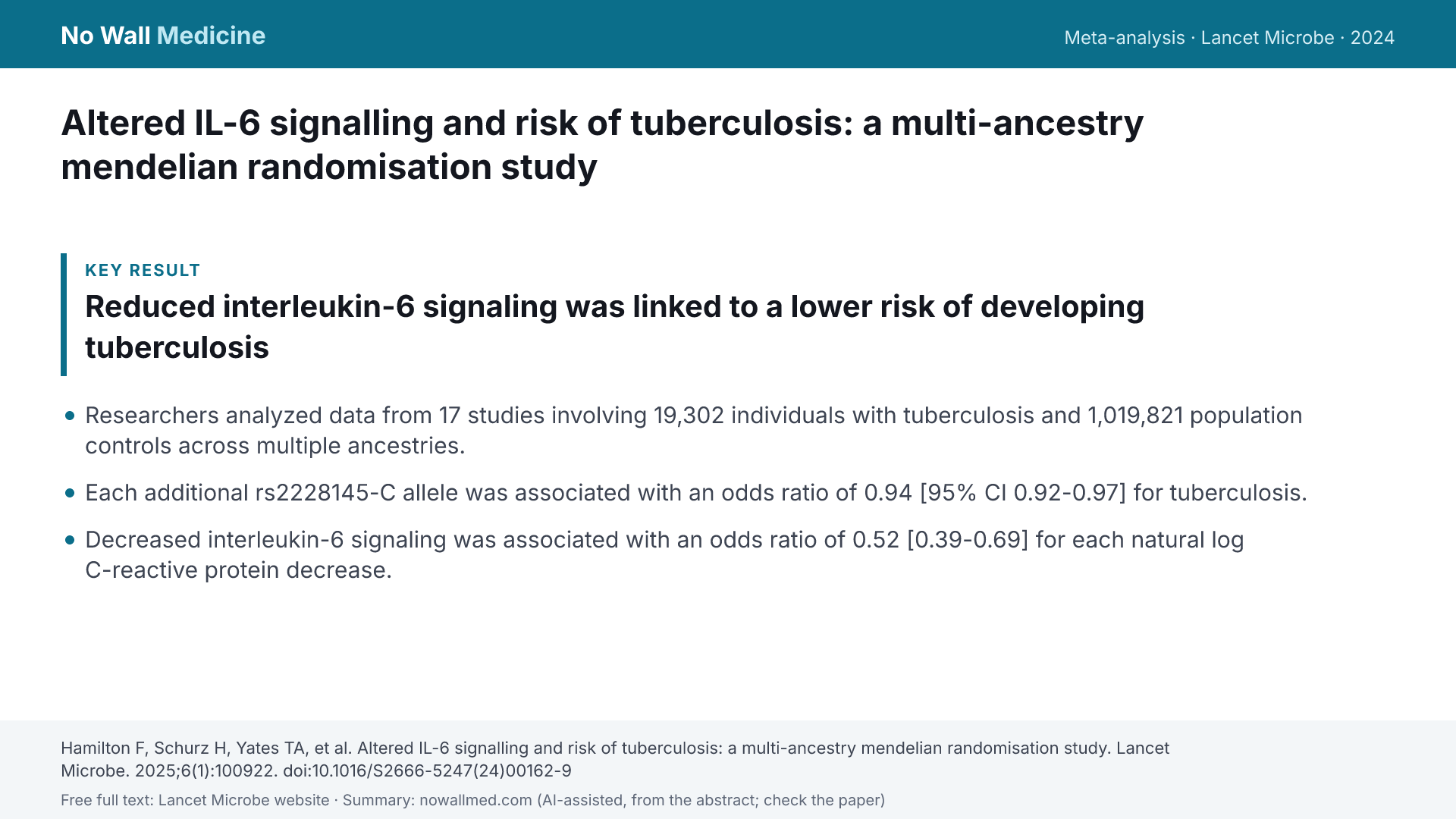
Reduced interleukin-6 signaling was linked to a lower risk of developing tuberculosis
Altered IL-6 signalling and risk of tuberculosis: a multi-ancestry mendelian randomisation study
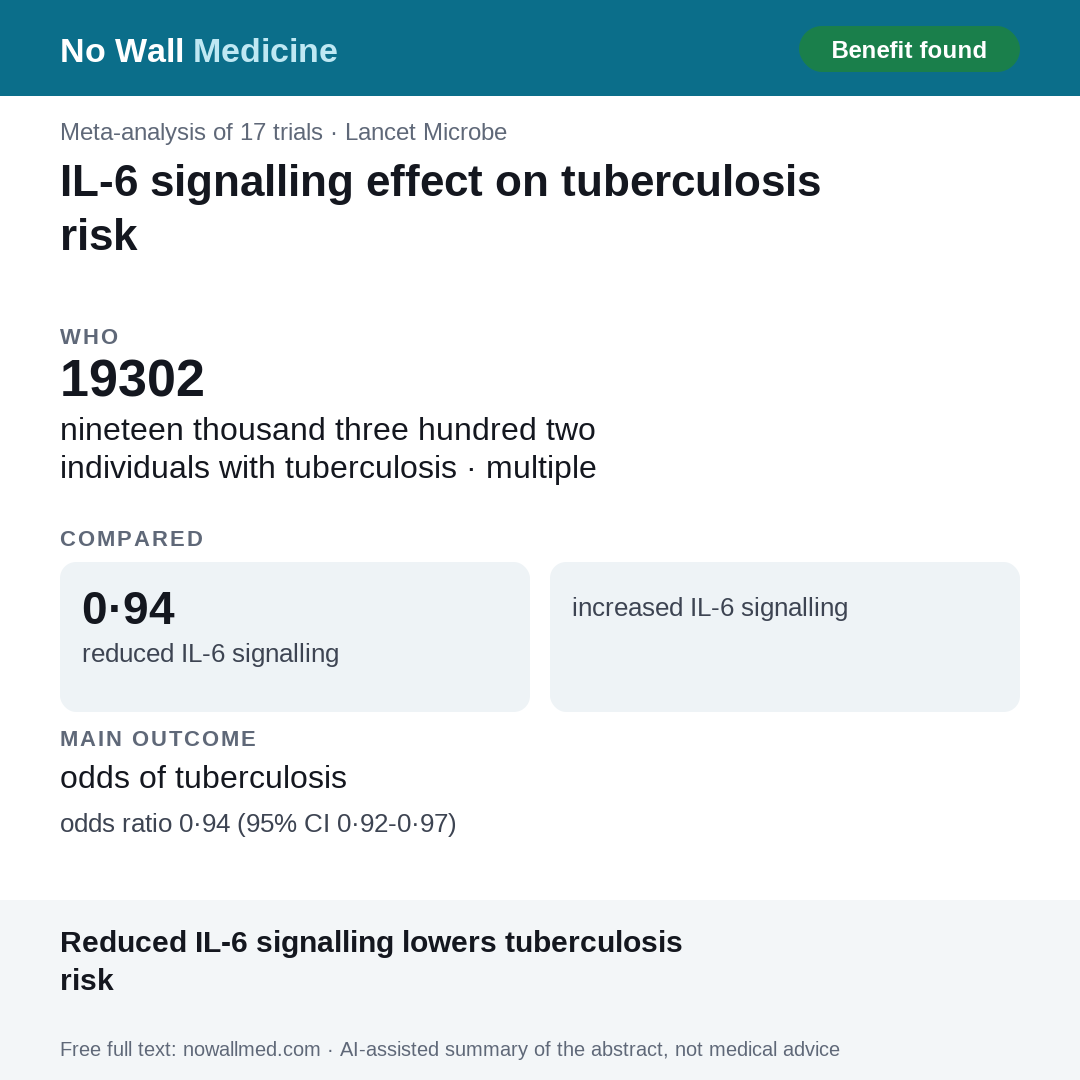
Meta-analysis of 17 trialsBenefit found
IL-6 signalling effect on tuberculosis risk
Who
19302
nineteen thousand three hundred two individuals with tuberculosis · multiple ancestries
Compared
0·94reduced IL-6 signalling (95% CI 0·92-0·97)
increased IL-6 signalling
Main outcome
odds of tuberculosis
Result: odds ratio 0·94 (95% CI 0·92-0·97)
Bottom line: Reduced IL-6 signalling lowers tuberculosis risk
Funded by: UK National Institute for Health and Care Research
Lancet Microbe · 2024-11-21Download image
Why it matters: The role of interleukin-6 signaling responses in human tuberculosis risk is unknown, particularly regarding whether interleukin-6 inhibitors increase the risk of disease progression.
Key points
- Researchers analyzed data from 17 studies involving 19,302 individuals with tuberculosis and 1,019,821 population controls across multiple ancestries.
- Each additional rs2228145-C allele was associated with an odds ratio of 0.94 [95% CI 0.92-0.97] for tuberculosis.
- Decreased interleukin-6 signaling was associated with an odds ratio of 0.52 [0.39-0.69] for each natural log C-reactive protein decrease.
Headline and key points written with AI from the paper’s abstract, with every number checked against it. Read the paper before relying on them.
Was this summary helpful?
Subject terms
Cite this article
Hamilton F, Schurz H, Yates TA, et al. Altered IL-6 signalling and risk of tuberculosis: a multi-ancestry mendelian randomisation study. Lancet Microbe. 2024. doi:10.1016/S2666-5247(24)00162-9
Spotted a mistake? Suggest a correction