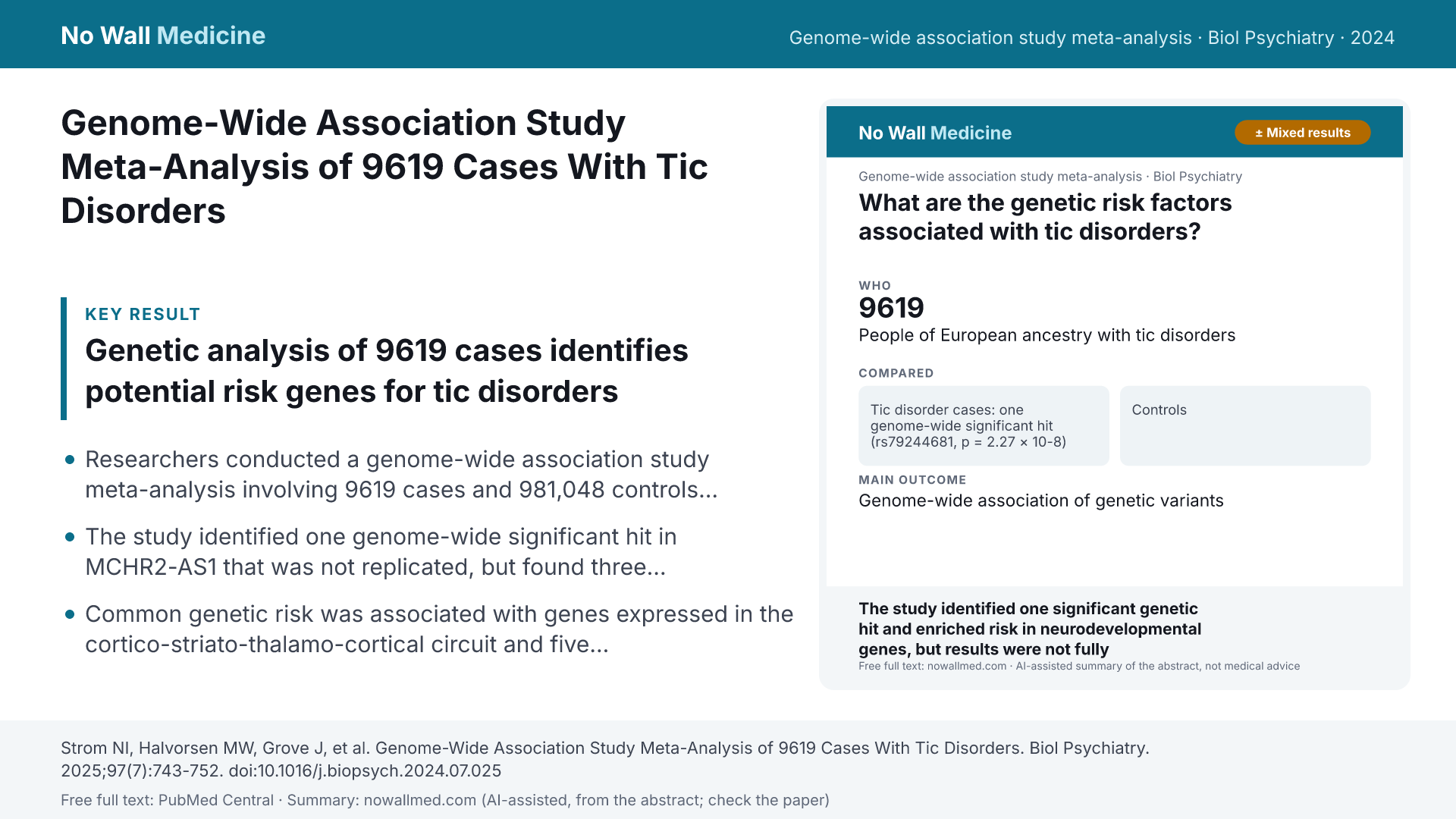
Genetic analysis of 9619 cases identifies potential risk genes for tic disorders
Genome-Wide Association Study Meta-Analysis of 9619 Cases With Tic Disorders
Genome-wide association study meta-analysisMixed results
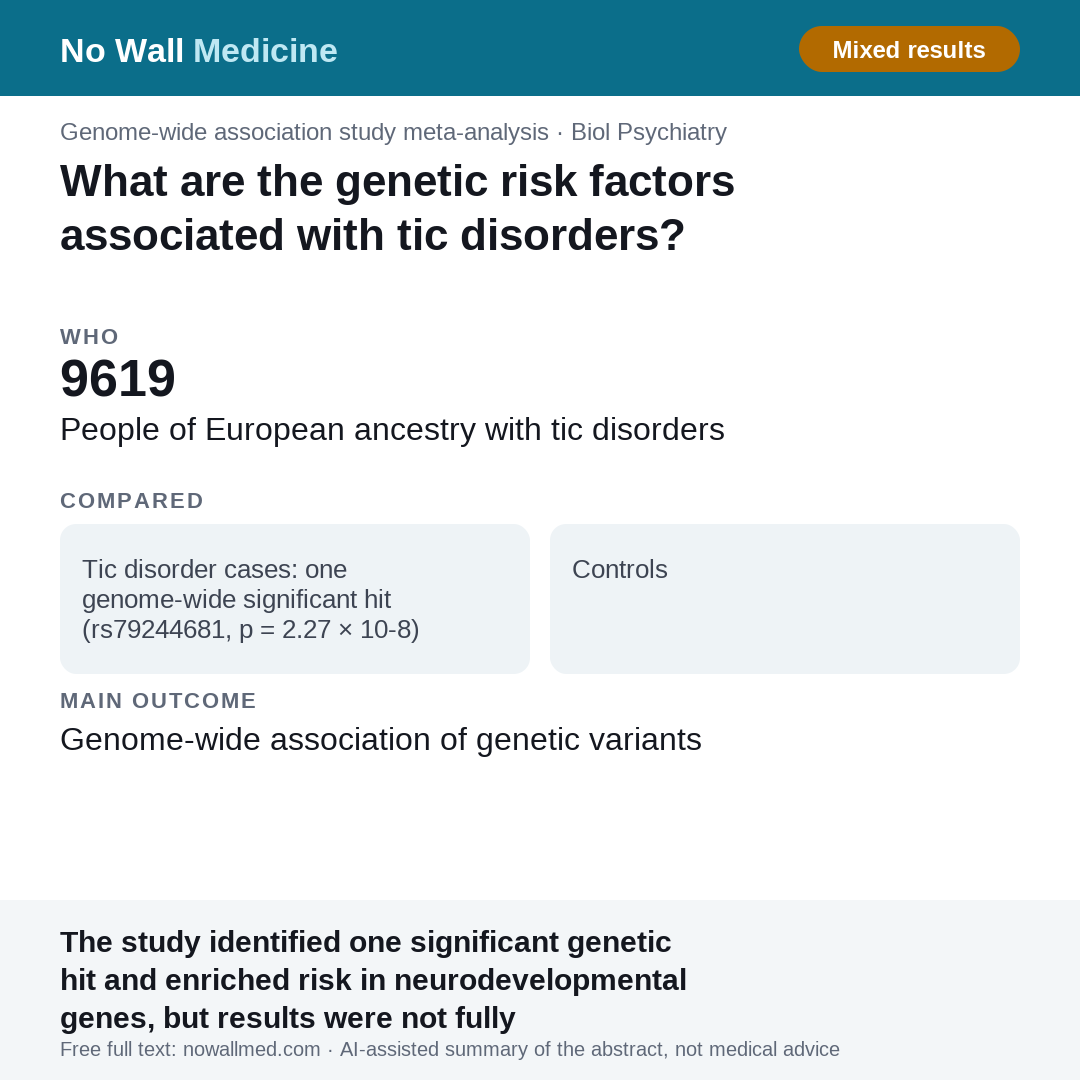
What are the genetic risk factors associated with tic disorders?
Who
9619
People of European ancestry with tic disorders
Compared
Tic disorder cases: one genome-wide significant hit (rs79244681, p = 2.27 × 10⁻⁸)
Controls
Main outcome
Genome-wide association of genetic variants
Bottom line: The study identified one significant genetic hit and enriched risk in neurodevelopmental genes, but results were not fully replicated.
Limitation: The study was still underpowered to identify high-confidence, replicable loci.
Biol Psychiatry · 2024-10-09Download image
Clinical question: What are the genetic risk factors associated with tic disorders?
Why it matters: The genetic causes of tic disorders are not fully understood, and previous studies were limited by small sample sizes.
Key points
- Researchers conducted a genome-wide association study meta-analysis involving 9619 cases and 981,048 controls of European ancestry to find genetic links to tic disorders.
- The study identified one genome-wide significant hit in MCHR2-AS1 that was not replicated, but found three significant genes: BCL11B, NDFIP2, and RBM26.
- Common genetic risk was associated with genes expressed in the cortico-striato-thalamo-cortical circuit and five specific brain cell types.
Headline and key points written with AI from the paper’s abstract, with every number checked against it. Read the paper before relying on them.
Was this summary helpful?
Subject terms
Cite this article
Strom NI, Halvorsen MW, Grove J, et al. Genome-Wide Association Study Meta-Analysis of 9619 Cases With Tic Disorders. Biol Psychiatry. 2024. doi:10.1016/j.biopsych.2024.07.025
Spotted a mistake? Suggest a correction