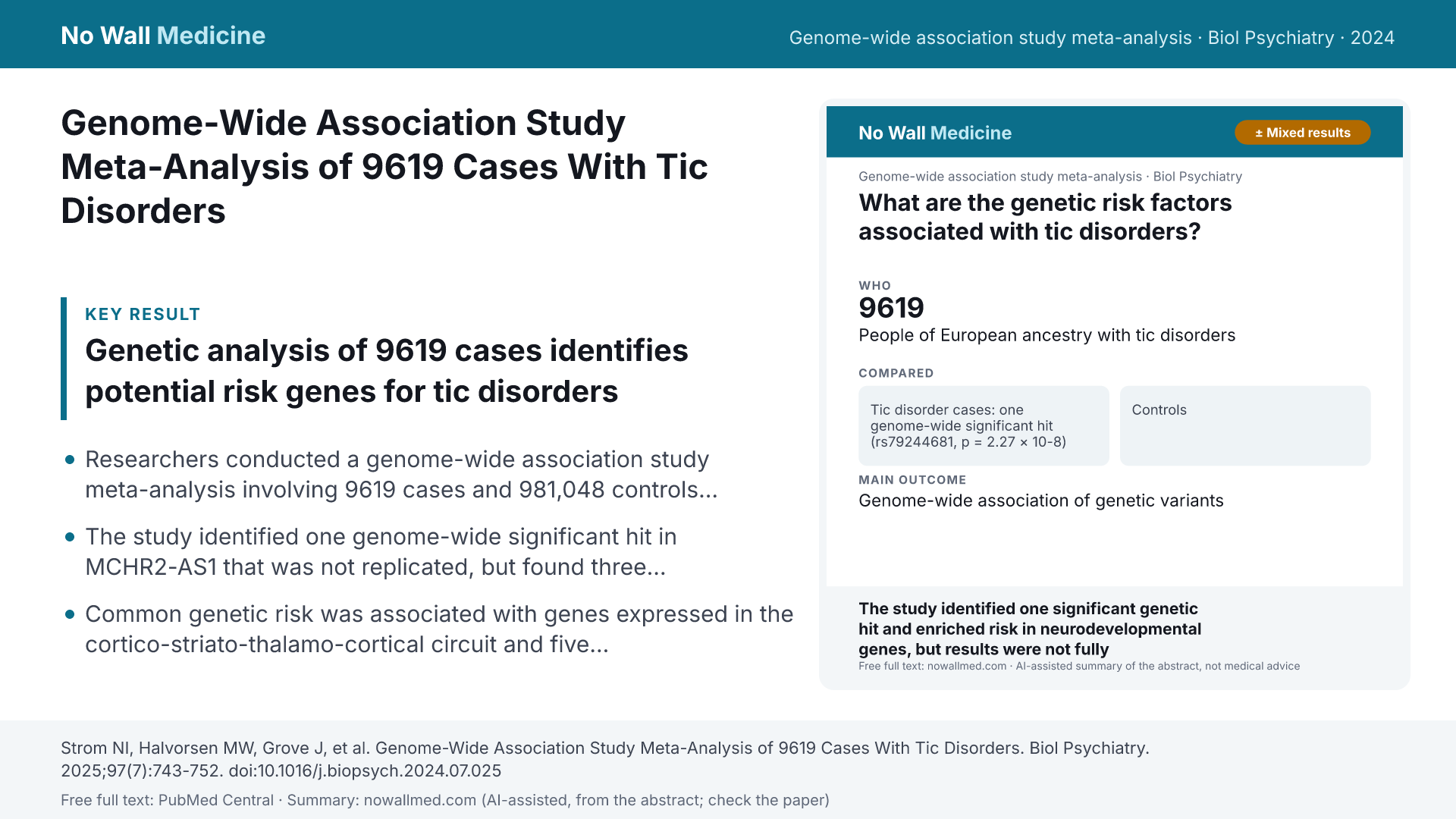
Genome-Wide Association Study Meta-Analysis of 9619 Cases With Tic Disorders
Key result: Genetic analysis of 9619 cases identifies potential risk genes for tic disorders
Genome-wide association study meta-analysisMixed results
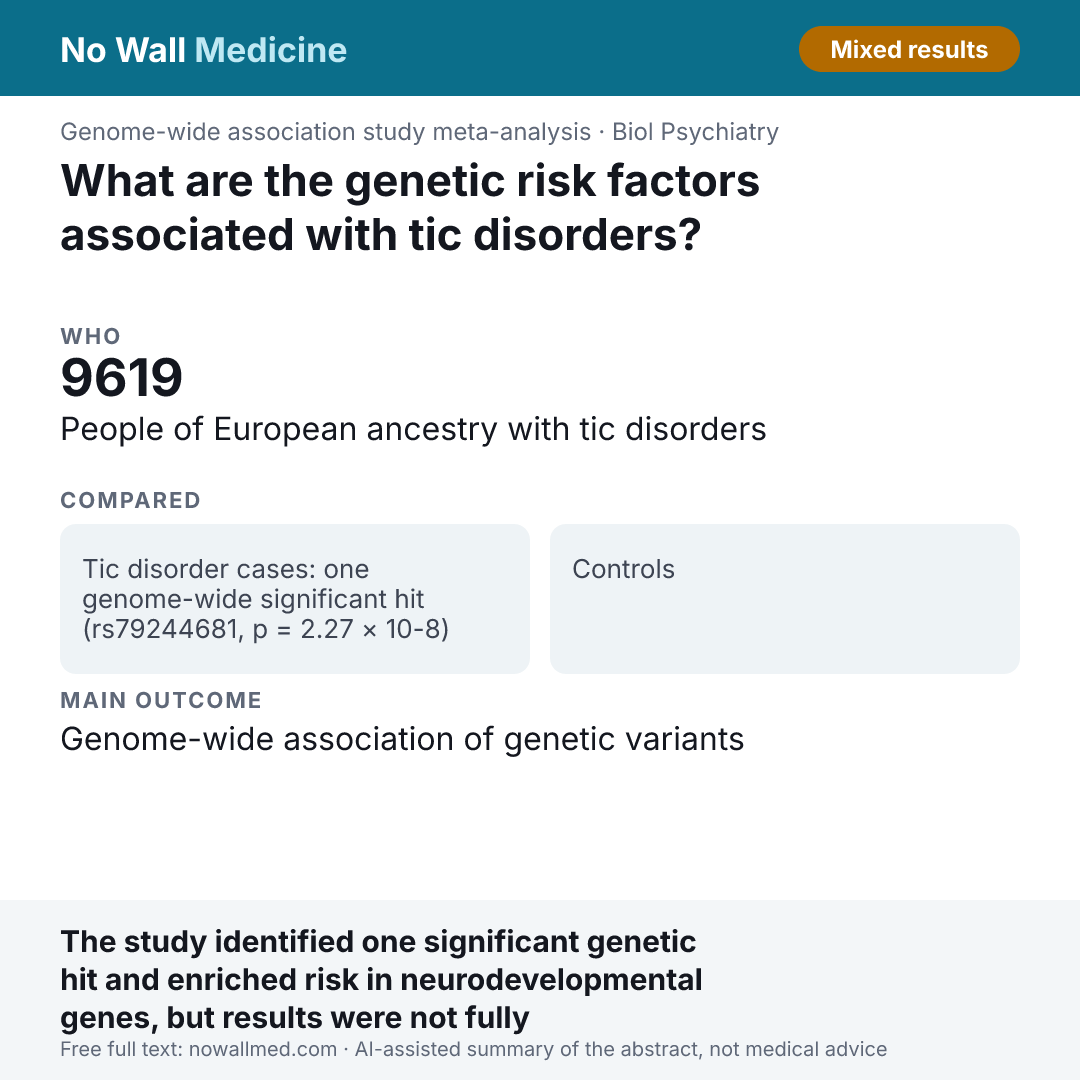
What are the genetic risk factors associated with tic disorders?
Who
9619
People of European ancestry with tic disorders
Compared
Tic disorder cases: one genome-wide significant hit (rs79244681, p = 2.27 × 10⁻⁸)
Controls
Main outcome
Genome-wide association of genetic variants
Bottom line: The study identified one significant genetic hit and enriched risk in neurodevelopmental genes, but results were not fully replicated.
Limitation: The study was still underpowered to identify high-confidence, replicable loci.
Biol Psychiatry · 2024-10-09 · Save PNG
Key points
- Researchers conducted a genome-wide association study meta-analysis involving 9619 cases and 981,048 controls of European ancestry to find genetic links to tic disorders.
- The study identified one genome-wide significant hit in MCHR2-AS1 that was not replicated, but found three significant genes: BCL11B, NDFIP2, and RBM26.
- Common genetic risk was associated with genes expressed in the cortico-striato-thalamo-cortical circuit and five specific brain cell types.
Why it matters: The genetic causes of tic disorders are not fully understood, and previous studies were limited by small sample sizes.
Discussion prompts
- Would these patients look like yours? Who was left out?
- Is the main outcome one that matters to patients?
- Is the difference large enough to change what you do?
Cite: Strom NI, Halvorsen MW, Grove J, et al. Genome-Wide Association Study Meta-Analysis of 9619 Cases With Tic Disorders. Biol Psychiatry. 2025;97(7):743-752. doi:10.1016/j.biopsych.2024.07.025
Free full text: PubMed Central · Summary and visual abstract: nowallmed.com/a/genome-wide-association-study-meta-analysis-of-9619-cases-with-tic-12720k2/ (AI-assisted from the abstract; check the paper before relying on it).