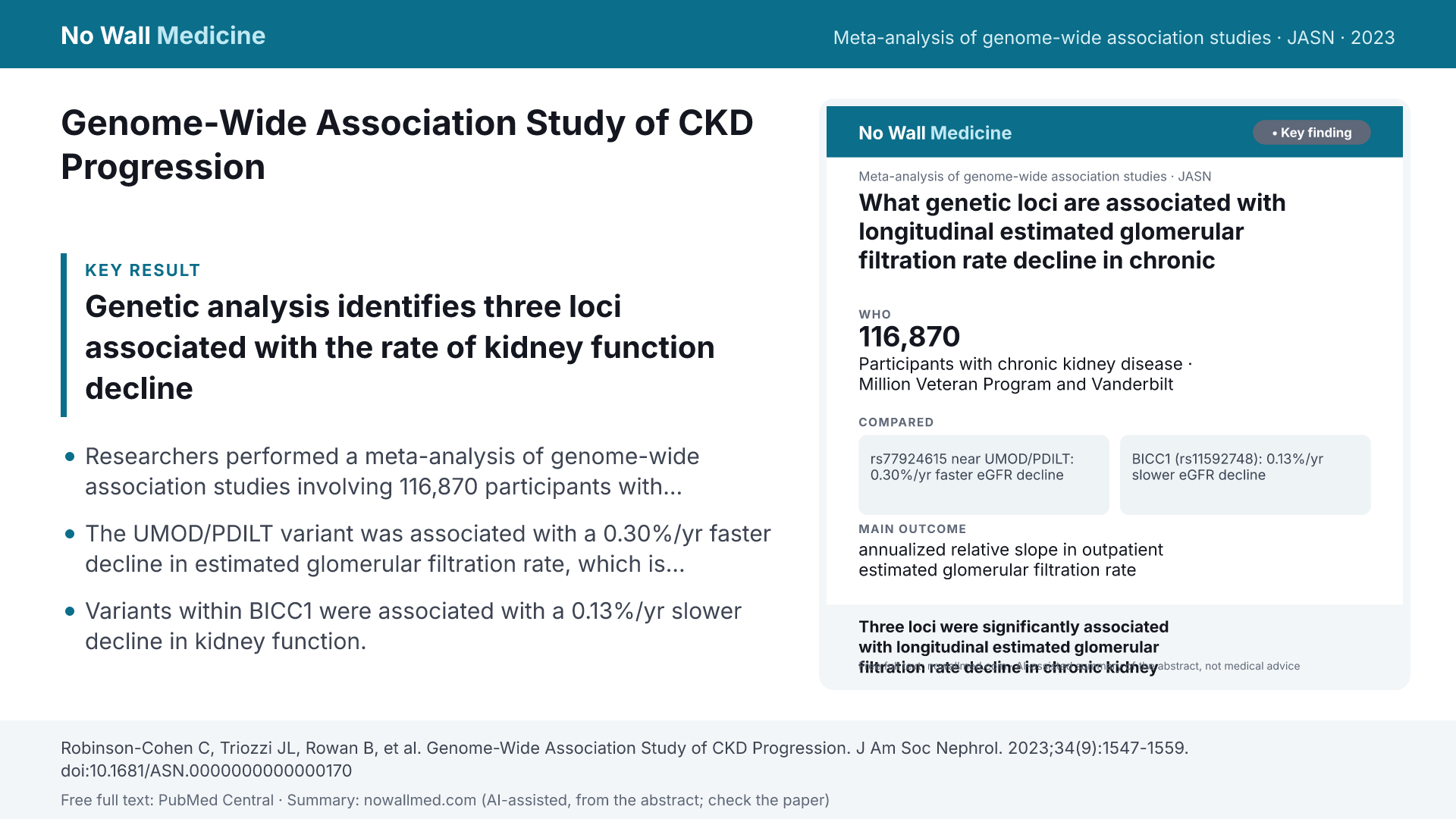
Genetic analysis identifies three loci associated with the rate of kidney function decline
Genome-Wide Association Study of CKD Progression
Meta-analysis of genome-wide association studiesBenefit found
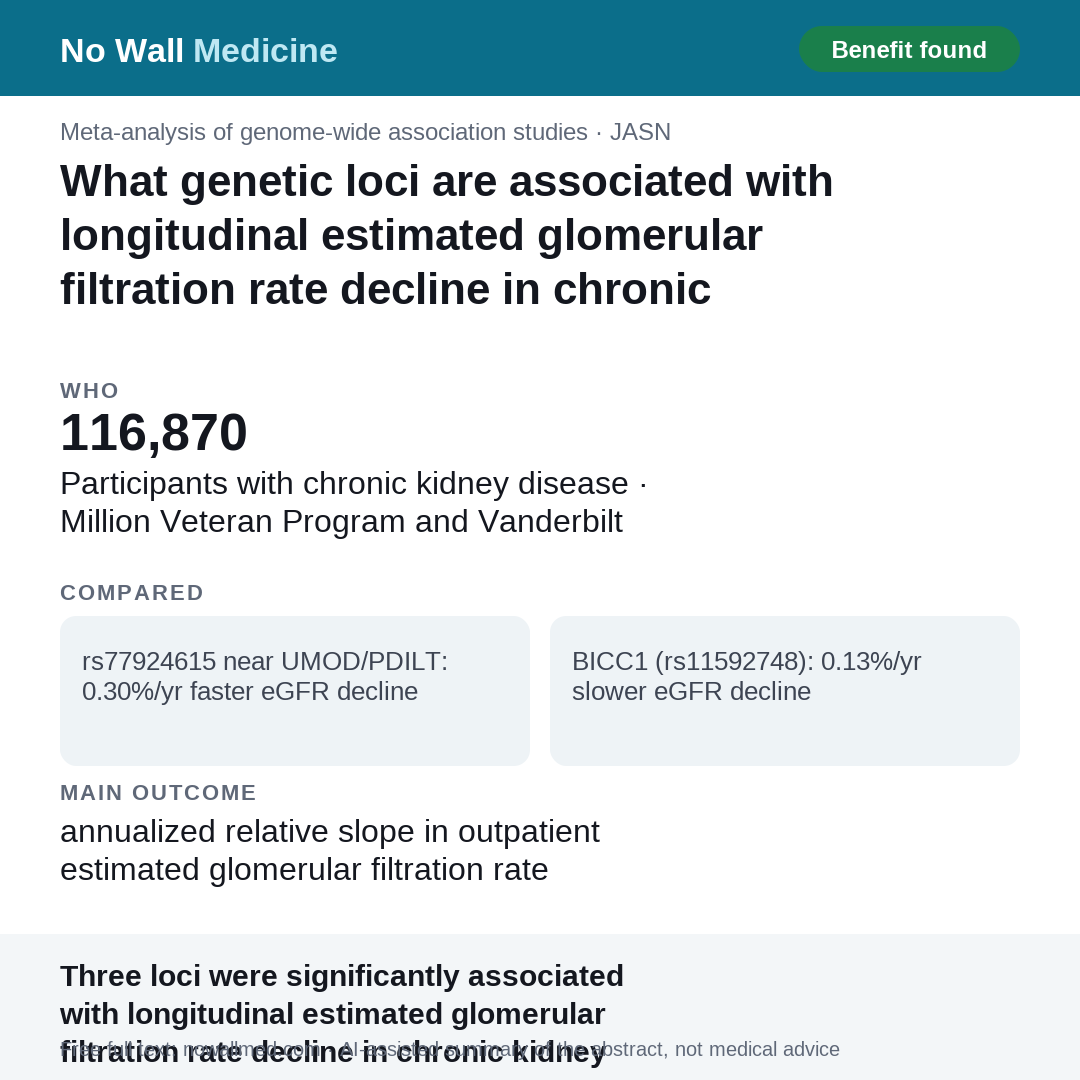
What genetic loci are associated with longitudinal estimated glomerular filtration rate decline in chronic kidney disease?
Who
116,870
Participants with chronic kidney disease · Million Veteran Program and Vanderbilt University Medical Center
Compared
rs77924615 near UMOD/PDILT: 0.30%/yr faster eGFR decline
BICC1 (rs11592748): 0.13%/yr slower eGFR decline
Main outcome
annualized relative slope in outpatient estimated glomerular filtration rate
Bottom line: Three loci were significantly associated with longitudinal estimated glomerular filtration rate decline in chronic kidney disease.
JASN · 2023-06-01Download image
Clinical question: What genetic loci are associated with longitudinal estimated glomerular filtration rate decline in chronic kidney disease?
Why it matters: Most previous studies on genetic factors for kidney function used cross-sectional data rather than longitudinal data to track how kidney function changes over time.
Key points
- Researchers performed a meta-analysis of genome-wide association studies involving 116,870 participants with chronic kidney disease.
- The UMOD/PDILT variant was associated with a 0.30%/yr faster decline in estimated glomerular filtration rate, which is a measure of kidney function.
- Variants within BICC1 were associated with a 0.13%/yr slower decline in kidney function.
Headline and key points written with AI from the paper’s abstract, with every number checked against it. Read the paper before relying on them.
Was this summary helpful?
Subject terms
Cite this article
Robinson-Cohen C, Triozzi JL, Rowan B, et al. Genome-Wide Association Study of CKD Progression. JASN. 2023. doi:10.1681/ASN.0000000000000170
Spotted a mistake? Suggest a correction