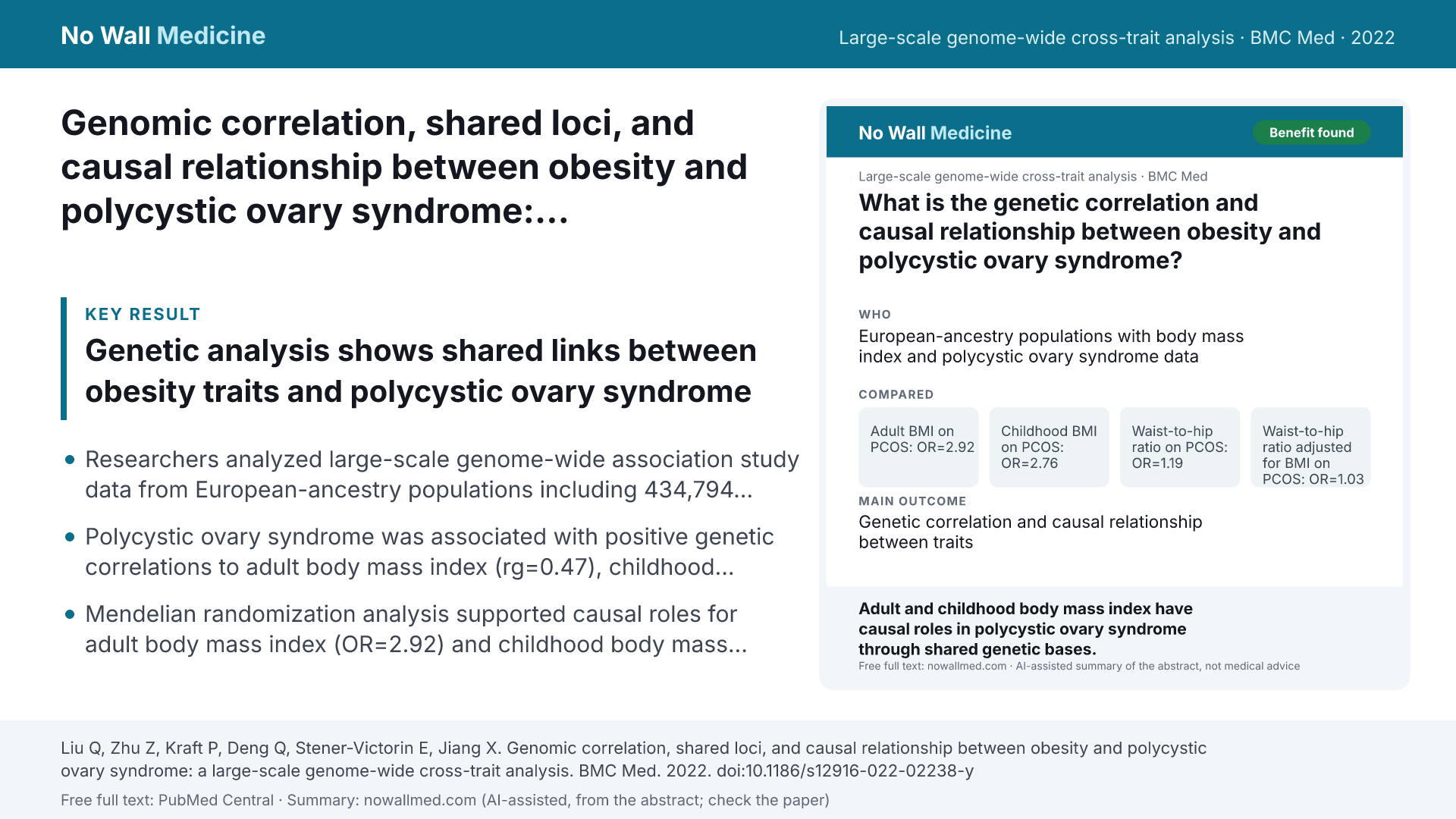
Genetic analysis shows shared links between obesity traits and polycystic ovary syndrome
Genomic correlation, shared loci, and causal relationship between obesity and polycystic ovary syndrome: a large-scale genome-wide cross-trait analysis
Medical Genetics & GenomicsAdult and pediatric
Large-scale genome-wide cross-trait analysisBenefit found
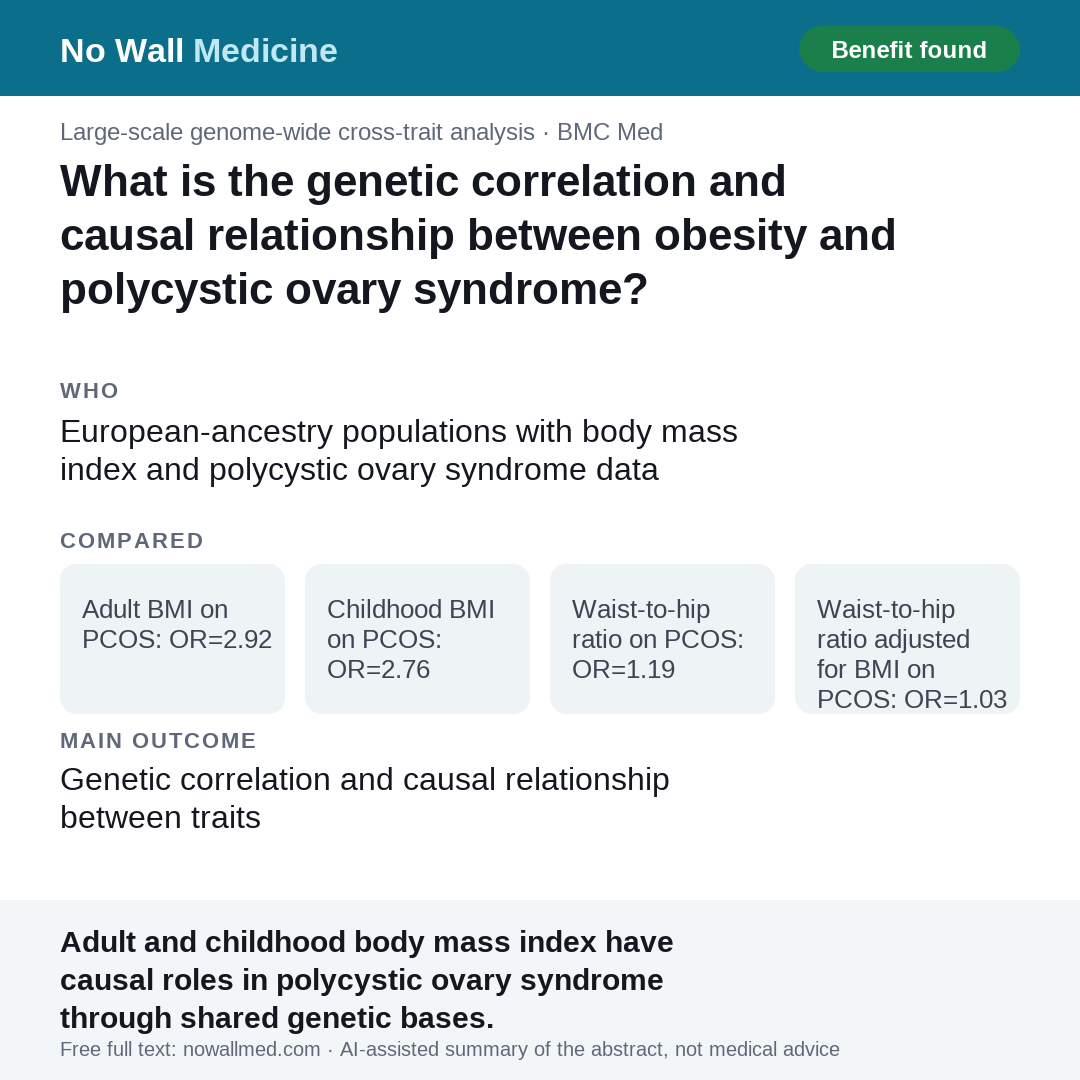
What is the genetic correlation and causal relationship between obesity and polycystic ovary syndrome?
Who
European-ancestry populations with body mass index and polycystic ovary syndrome data
Compared
Adult BMI on PCOS: OR=2.92
Childhood BMI on PCOS: OR=2.76
Waist-to-hip ratio on PCOS: OR=1.19
Waist-to-hip ratio adjusted for BMI on PCOS: OR=1.03
Main outcome
Genetic correlation and causal relationship between traits
Result: adult BMI OR=2.92 (95% CI=2.33-3.67); childhood BMI OR=2.76 (95% CI=2.09-3.66)
Bottom line: Adult and childhood body mass index have causal roles in polycystic ovary syndrome through shared genetic bases.
BMC Med · 2022-02-11Download image
Clinical question: What is the genetic correlation and causal relationship between obesity and polycystic ovary syndrome?
Why it matters: The shared genetic basis between polycystic ovary syndrome and obesity has remained unclear despite clinical observations of their comorbidity.
Key points
- Researchers analyzed large-scale genome-wide association study data from European-ancestry populations including 434,794 women for adult body mass index and 10,074 cases of polycystic ovary syndrome.
- Polycystic ovary syndrome was associated with positive genetic correlations to adult body mass index (rg=0.47), childhood body mass index (rg=0.31), and waist-to-hip ratio (rg=0.32).
- Mendelian randomization analysis supported causal roles for adult body mass index (OR=2.92) and childhood body mass index (OR=2.76) in polycystic ovary syndrome.
Headline and key points written with AI from the paper’s abstract, with every number checked against it. Read the paper before relying on them.
Was this summary helpful?
Subject terms
Cite this article
Liu Q, Zhu Z, Kraft P, Deng Q, Stener-Victorin E, Jiang X. Genomic correlation, shared loci, and causal relationship between obesity and polycystic ovary syndrome: a large-scale genome-wide cross-trait analysis. BMC Med. 2022. doi:10.1186/s12916-022-02238-y
Spotted a mistake? Suggest a correction