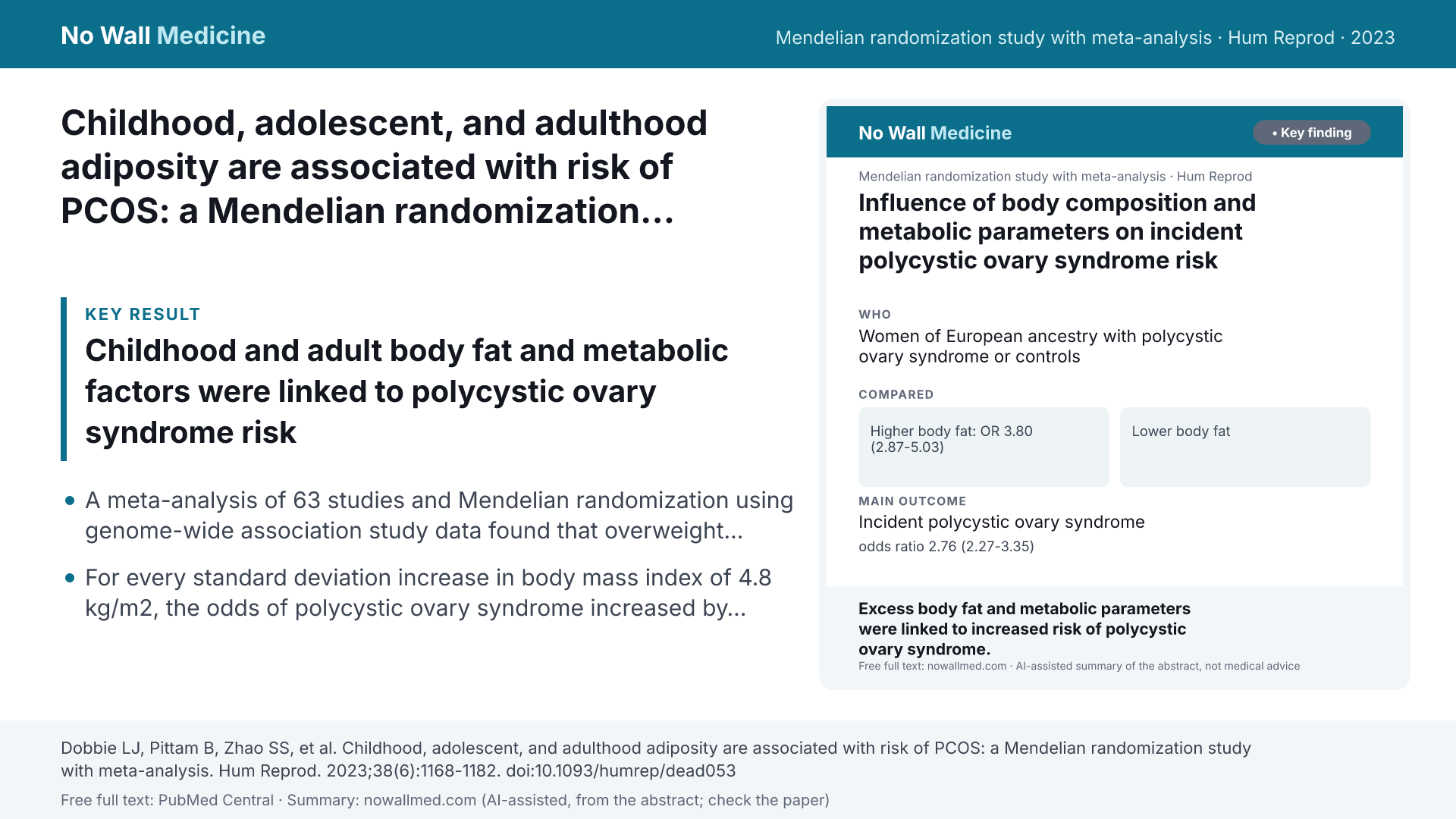
Childhood and adult body fat and metabolic factors were linked to polycystic ovary syndrome risk
Childhood, adolescent, and adulthood adiposity are associated with risk of PCOS: a Mendelian randomization study with meta-analysis
Mendelian randomization study with meta-analysisKey finding
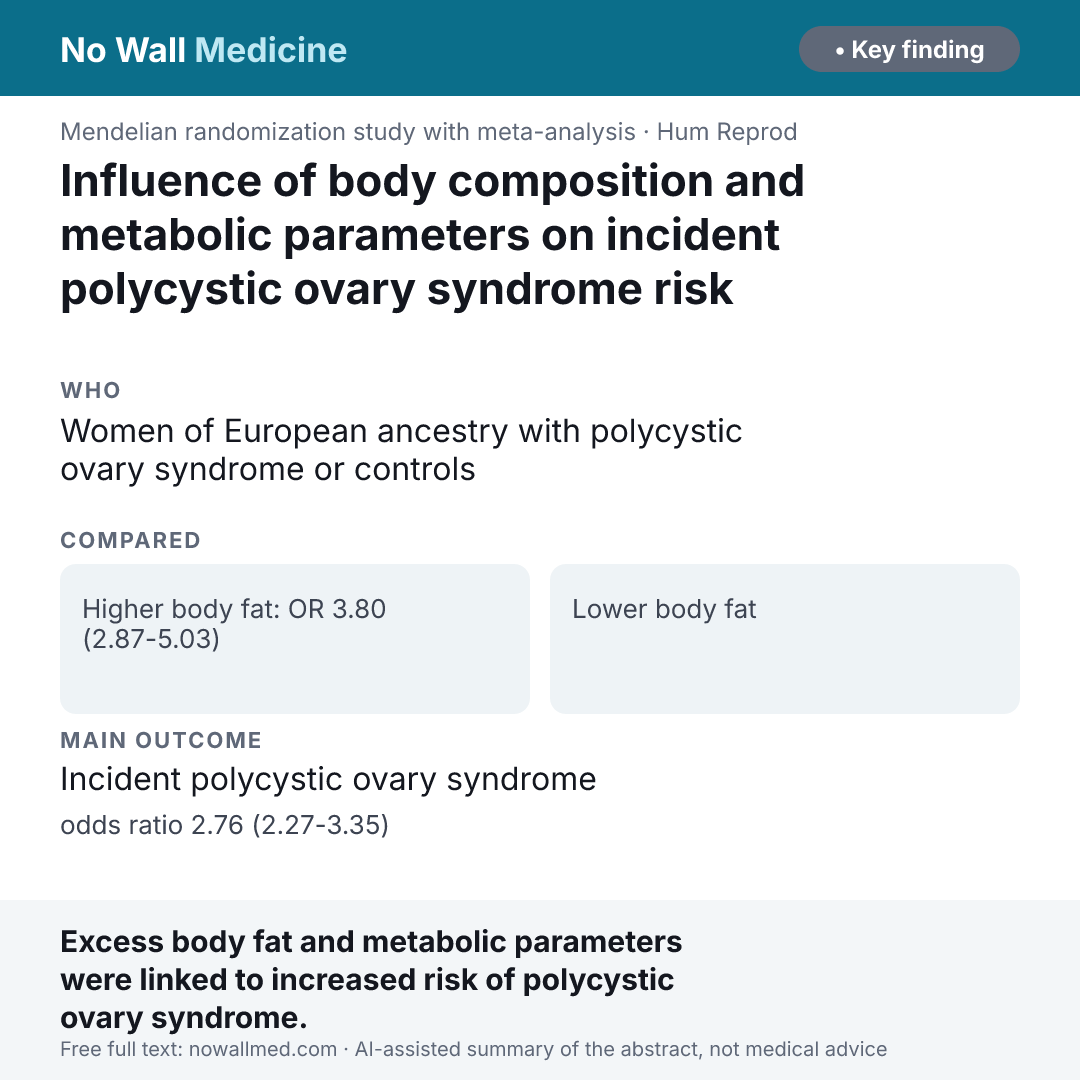
Influence of body composition and metabolic parameters on incident polycystic ovary syndrome risk
Who
Women of European ancestry with polycystic ovary syndrome or controls
Compared
Higher body fat: OR 3.80 (2.87-5.03)
Lower body fat
Main outcome
Incident polycystic ovary syndrome
Result: odds ratio 2.76 (2.27-3.35)
Bottom line: Excess body fat and metabolic parameters were linked to increased risk of polycystic ovary syndrome.
Limitation: Meta-analysis included cross-sectional and retrospective studies, limiting ability to determine causality.
Funded by: National Institute for Health and Care Research
Hum Reprod · 2023-04-05 · Save PNG
Key points
- A meta-analysis of 63 studies and Mendelian randomization using genome-wide association study data found that overweight (OR 3.80, 2.87-5.03) and obesity (OR 4.99, 3.74-6.67) were associated with polycystic ovary syndrome.
- For every standard deviation increase in body mass index of 4.8 kg/m2, the odds of polycystic ovary syndrome increased by 2.76 (2.27-3.35).
- Genetically determined body fat percentage (OR 3.05, 2.24-4.15), fasting serum insulin (OR 6.98, 2.02-24.13), and lower sex hormone-binding globulin (OR 0.74, 0.64-0.87) were all associated with the condition.
Limitation the authors note: The meta-analysis included cross-sectional and retrospective studies, and the Mendelian randomization was limited to subjects of European ancestry.
Headline and key points written with AI from the paper’s abstract, with every number checked against it. Read the paper before relying on them.
Was this summary helpful?
Subject terms
Headline, design, result, key points, caveat and citation as plain text.
Cite this article
Dobbie LJ, Pittam B, Zhao SS, et al. Childhood, adolescent, and adulthood adiposity are associated with risk of PCOS: a Mendelian randomization study with meta-analysis. Hum Reprod. 2023;38(6):1168-1182. doi:10.1093/humrep/dead053
Spotted a mistake? Suggest a correction