Weight loss interventions for women with polycystic ovary syndrome show limited evidence for pregnancy outcomes
Pre-conception weight loss interventions in women with polycystic ovary syndrome and the effect on perinatal outcomes: A quantitative synthesis of surrogate outcomes
Systematic review and meta-analysis of 37 randomized controlled trialsUnclear result
Do weight loss interventions improve pregnancy outcomes for women with polycystic ovary syndrome?
Who
Women with polycystic ovary syndrome and body mass index 25 kg/m2 or greater
Compared
12-month lifestyle intervention: 23.3%-26.7% pregnancy rate
Standard care: 16.7% pregnancy rate
Main outcome
Pregnancy rates, live births and miscarriages
Result: BMI reduction -0.34 kg/m2 (-0.65 to -0.02)
Bottom line: Lifestyle interventions may increase pregnancy rates, but data on live births and antenatal outcomes remain limited.
Limitation: Outcome measure heterogeneity, intervention heterogeneity, inconsistent definitions and low use of core outcome sets.
Diabetes Obes Metab · 2025-10-01Download image
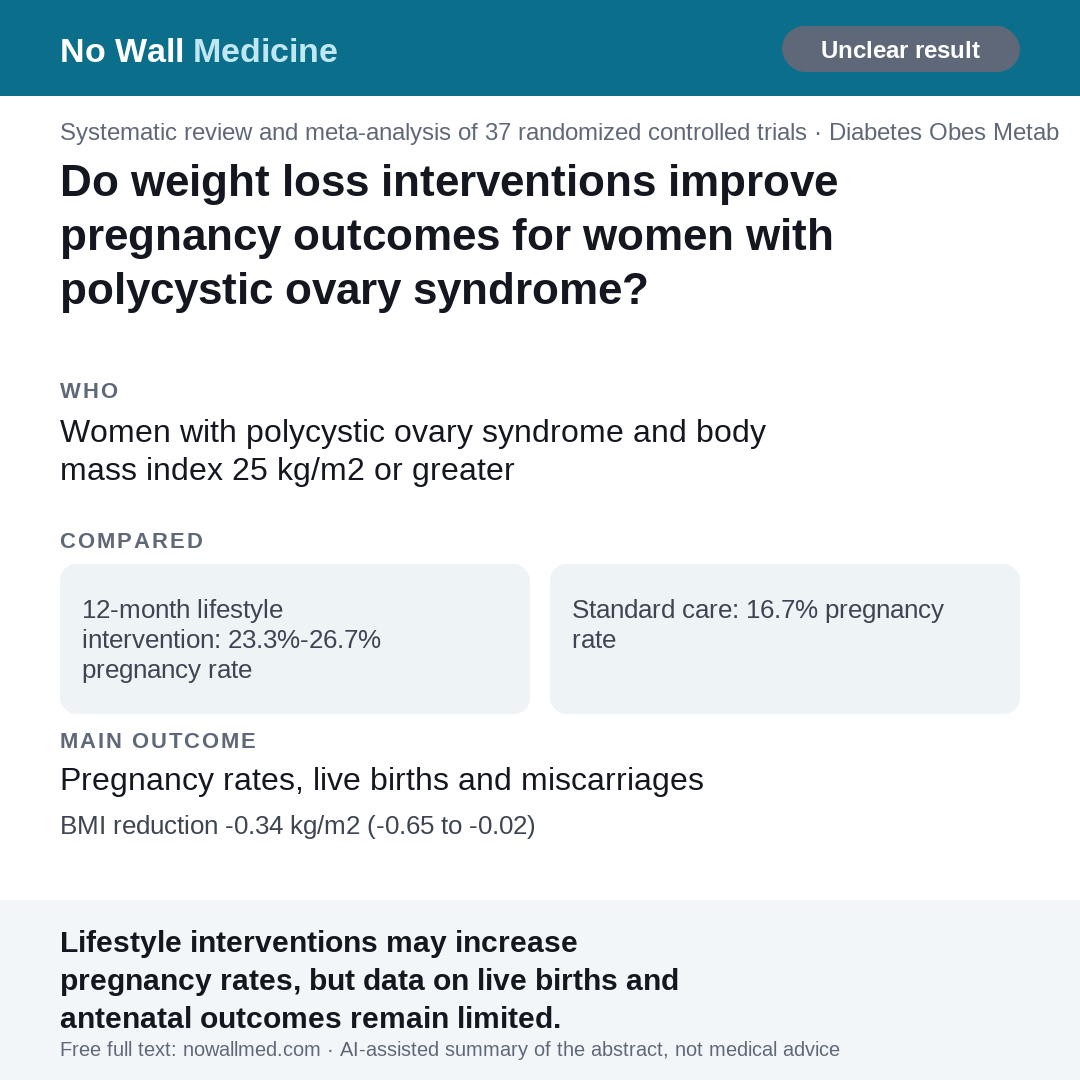
Clinical question: Do weight loss interventions improve pregnancy outcomes for women with polycystic ovary syndrome?
Why it matters: Current guidelines recommend weight optimization for polycystic ovary syndrome, but data is lacking regarding how these interventions affect pregnancy outcomes.
Key points
- Researchers analyzed 37 randomized controlled trials involving women with polycystic ovary syndrome and a body mass index of 25 kg/m2 or higher.
- One study found a 12-month lifestyle intervention was associated with pregnancy rates of 23.3%-26.7% compared to 16.7% for standard care, though live birth rates showed no difference.
- Lifestyle interventions were associated with a body mass index reduction of -0.34 kg/m2 (-0.65 to -0.02) across the meta-analysis.
Limitation the authors note: The authors noted limitations including outcome measure heterogeneity, intervention heterogeneity, inconsistent definitions, and low use of core outcome sets.
Headline and key points written with AI from the paper’s abstract, with every number checked against it. Read the paper before relying on them.
Was this summary helpful?
Subject terms
Cite this article
Fernandes A, Gordon A, Sweeting A. Pre-conception weight loss interventions in women with polycystic ovary syndrome and the effect on perinatal outcomes: A quantitative synthesis of surrogate outcomes. Diabetes Obes Metab. 2025. doi:10.1111/dom.70116
Spotted a mistake? Suggest a correction
Top studies every Monday
The week’s key trials and guidelines in your specialties, plus any topics you follow. By email, free.
Get the weekly digest