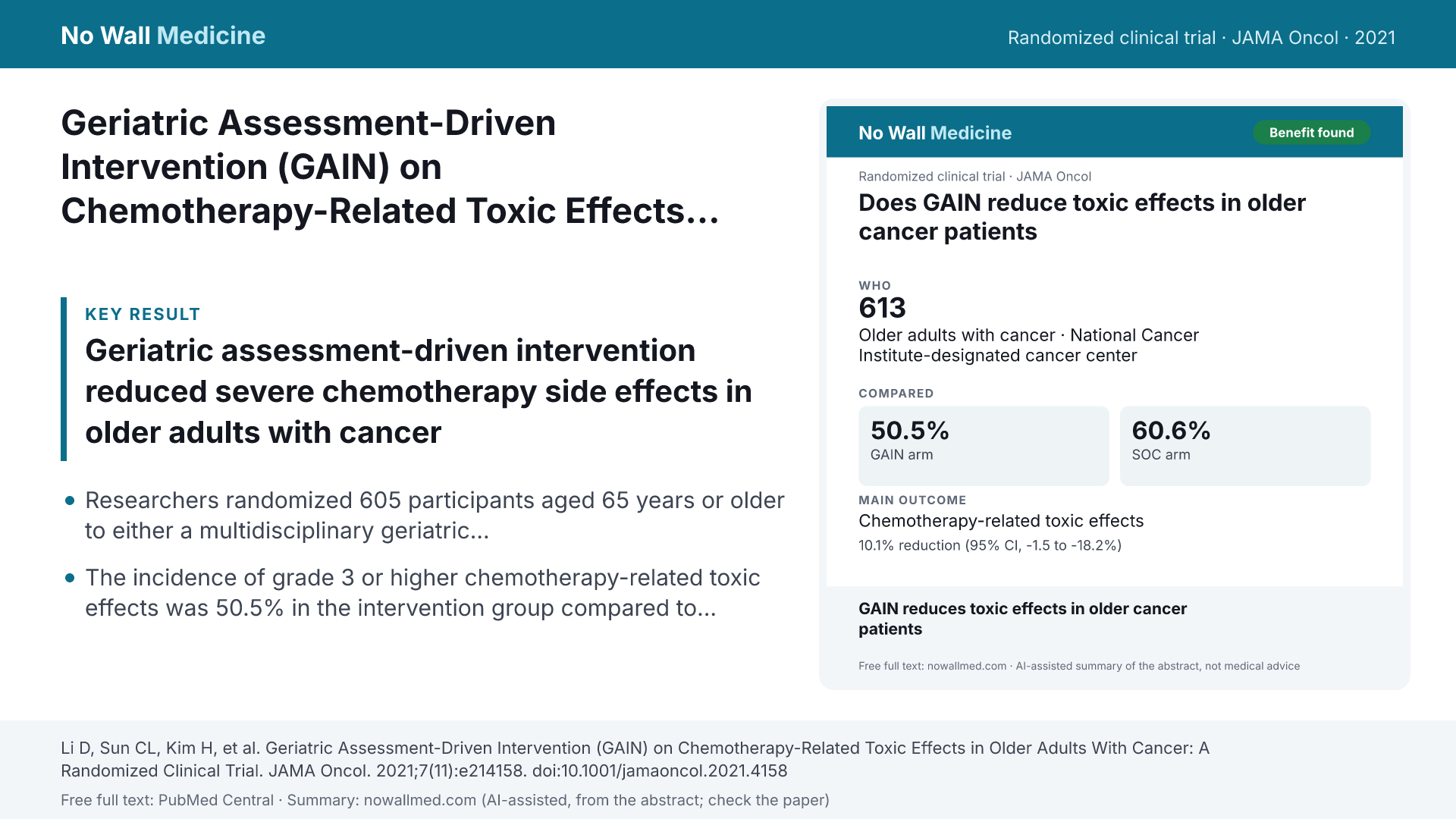
Geriatric Assessment-Driven Intervention (GAIN) on Chemotherapy-Related Toxic Effects in Older Adults With Cancer: A Randomized Clinical Trial
Key result: Geriatric assessment-driven intervention reduced severe chemotherapy side effects in older adults with cancer
Randomized clinical trialBenefit found
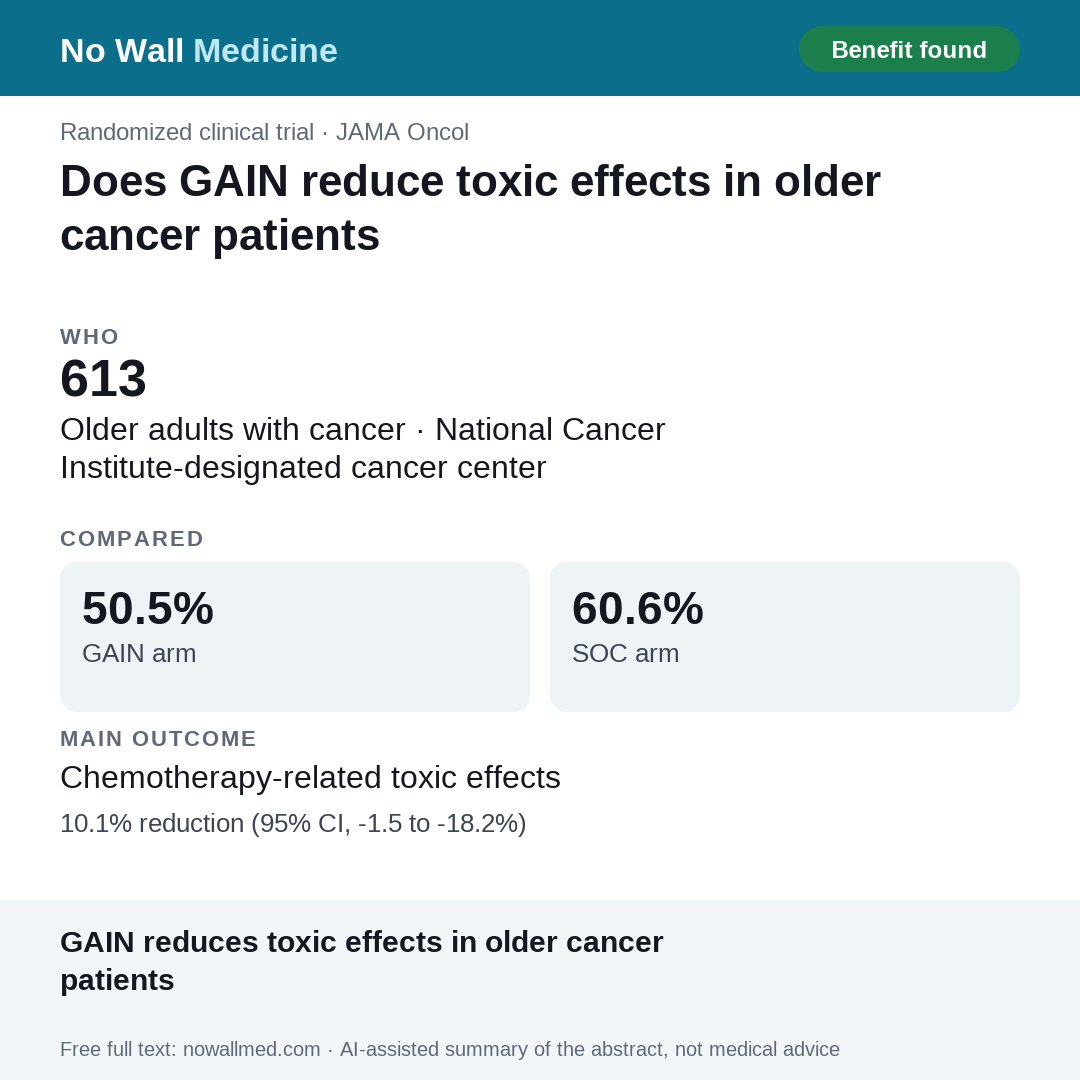
Does GAIN reduce toxic effects in older cancer patients
Who
613
Older adults with cancer · National Cancer Institute-designated cancer center
Compared
50.5%GAIN arm (95% CI, 45.6% to 55.4%)
60.6%SOC arm (95% CI, 53.9% to 67.3%)
Main outcome
Chemotherapy-related toxic effects
Result: 10.1% reduction (95% CI, -1.5 to -18.2%)
Bottom line: GAIN reduces toxic effects in older cancer patients
JAMA Oncol · 2021-11-18Download image
Key points
- Researchers randomized 605 participants aged 65 years or older to either a multidisciplinary geriatric assessment-driven intervention or standard of care.
- The incidence of grade 3 or higher chemotherapy-related toxic effects was 50.5% in the intervention group compared to 60.6% in the standard care group.
- The intervention was associated with a 28.4% advance directive completion rate compared to 13.3% for standard care, but showed no significant difference in overall survival.
Discussion prompts
- Would these patients look like yours? Who was left out?
- Is the main outcome one that matters to patients?
- Is the difference large enough to change what you do?
Cite: Li D, Sun CL, Kim H, et al. Geriatric Assessment-Driven Intervention (GAIN) on Chemotherapy-Related Toxic Effects in Older Adults With Cancer: A Randomized Clinical Trial. JAMA Oncol. 2021. doi:10.1001/jamaoncol.2021.4158
Free full text: PubMed Central · Summary and visual abstract: nowallmed.com/a/geriatric-assessment-driven-intervention-gain-on-chemotherapy-related-194mhxs/ (AI-assisted from the abstract; check the paper before relying on it).