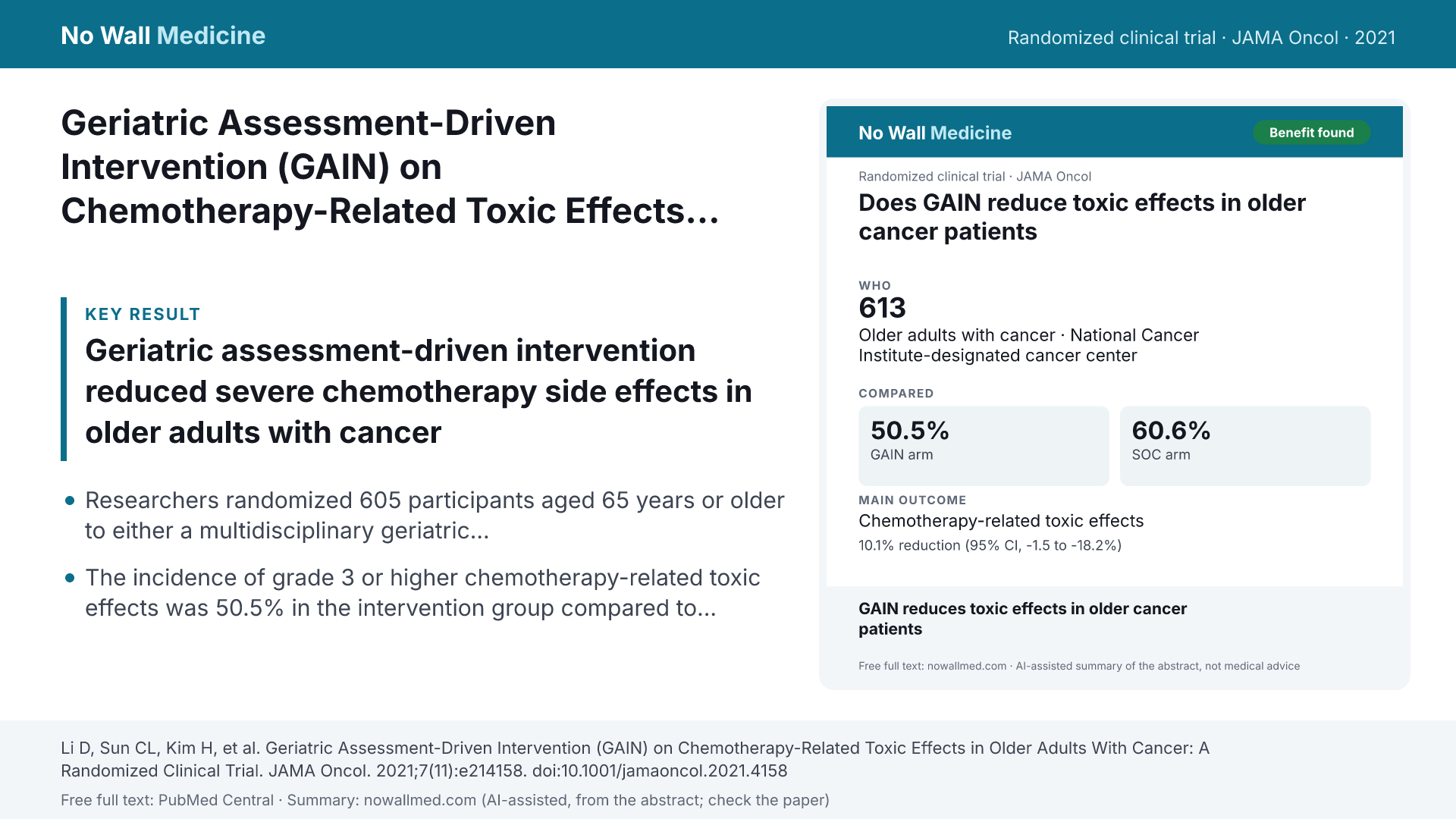
Geriatric assessment-driven intervention reduced severe chemotherapy side effects in older adults with cancer
Geriatric Assessment-Driven Intervention (GAIN) on Chemotherapy-Related Toxic Effects in Older Adults With Cancer: A Randomized Clinical Trial
Randomized clinical trialBenefit found
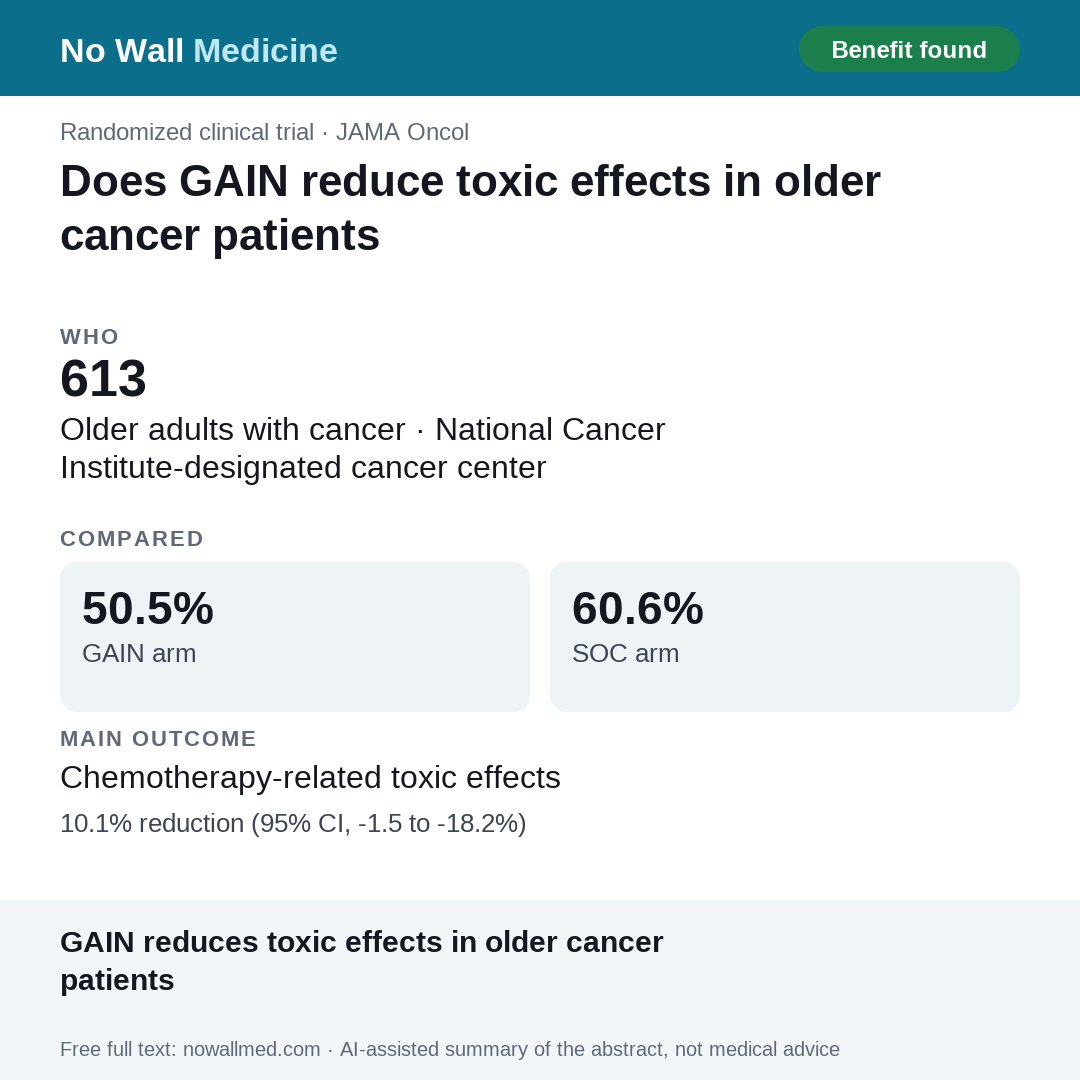
Does GAIN reduce toxic effects in older cancer patients
Who
613
Older adults with cancer · National Cancer Institute-designated cancer center
Compared
50.5%GAIN arm (95% CI, 45.6% to 55.4%)
60.6%SOC arm (95% CI, 53.9% to 67.3%)
Main outcome
Chemotherapy-related toxic effects
Result: 10.1% reduction (95% CI, -1.5 to -18.2%)
Bottom line: GAIN reduces toxic effects in older cancer patients
JAMA Oncol · 2021-11-18Download image
Key points
- Researchers randomized 605 participants aged 65 years or older to either a multidisciplinary geriatric assessment-driven intervention or standard of care.
- The incidence of grade 3 or higher chemotherapy-related toxic effects was 50.5% in the intervention group compared to 60.6% in the standard care group.
- The intervention was associated with a 28.4% advance directive completion rate compared to 13.3% for standard care, but showed no significant difference in overall survival.
Headline and key points written with AI from the paper’s abstract, with every number checked against it. Read the paper before relying on them.
Was this summary helpful?
Subject terms
Cite this article
Li D, Sun CL, Kim H, et al. Geriatric Assessment-Driven Intervention (GAIN) on Chemotherapy-Related Toxic Effects in Older Adults With Cancer: A Randomized Clinical Trial. JAMA Oncol. 2021. doi:10.1001/jamaoncol.2021.4158
Spotted a mistake? Suggest a correction