Geriatric assessment for older adults receiving less-intensive therapy for acute myeloid leukemia: report of CALGB 361101
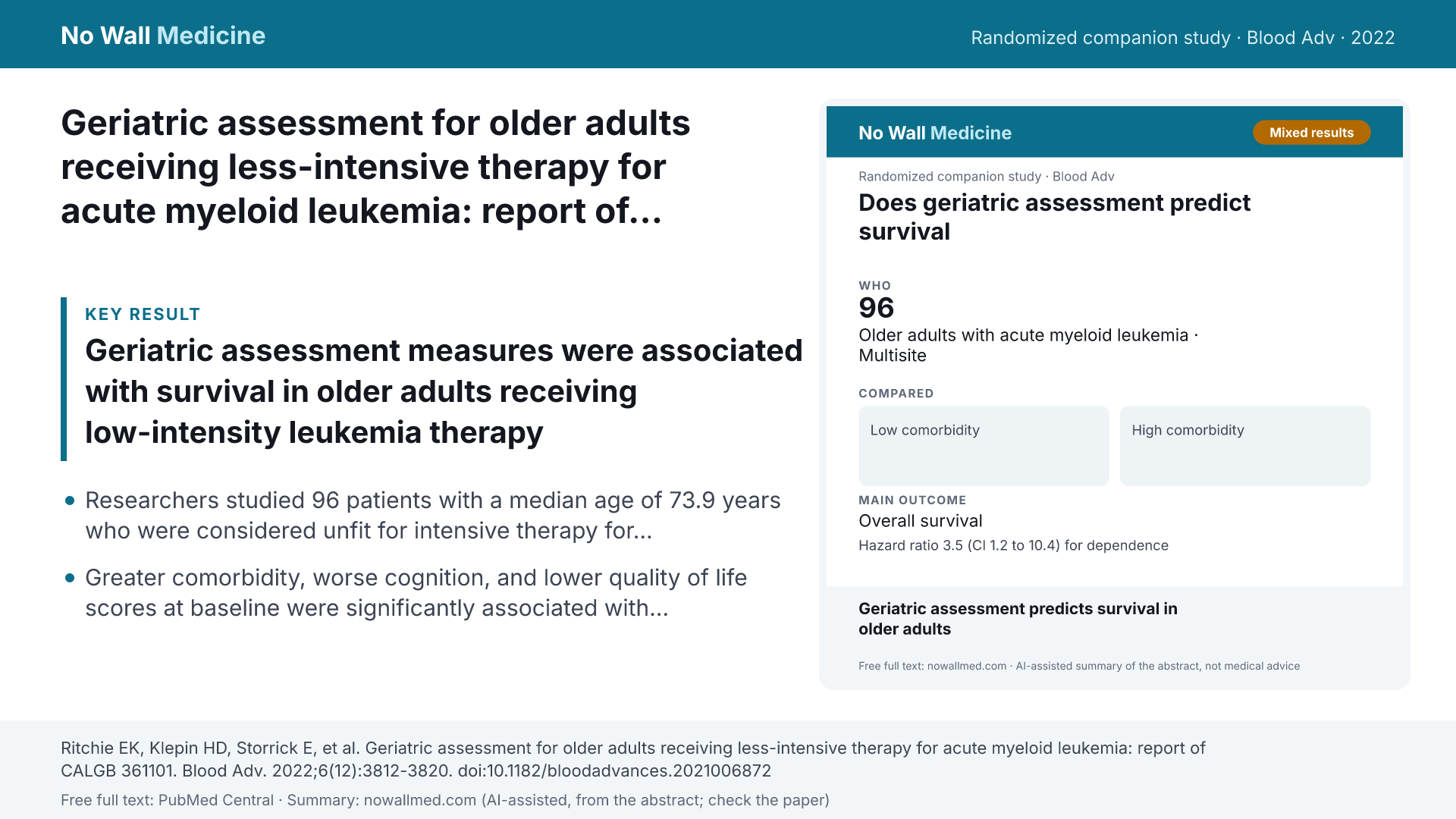
Key result: Geriatric assessment measures were associated with survival in older adults receiving low-intensity leukemia therapy
Randomized companion studyMixed results
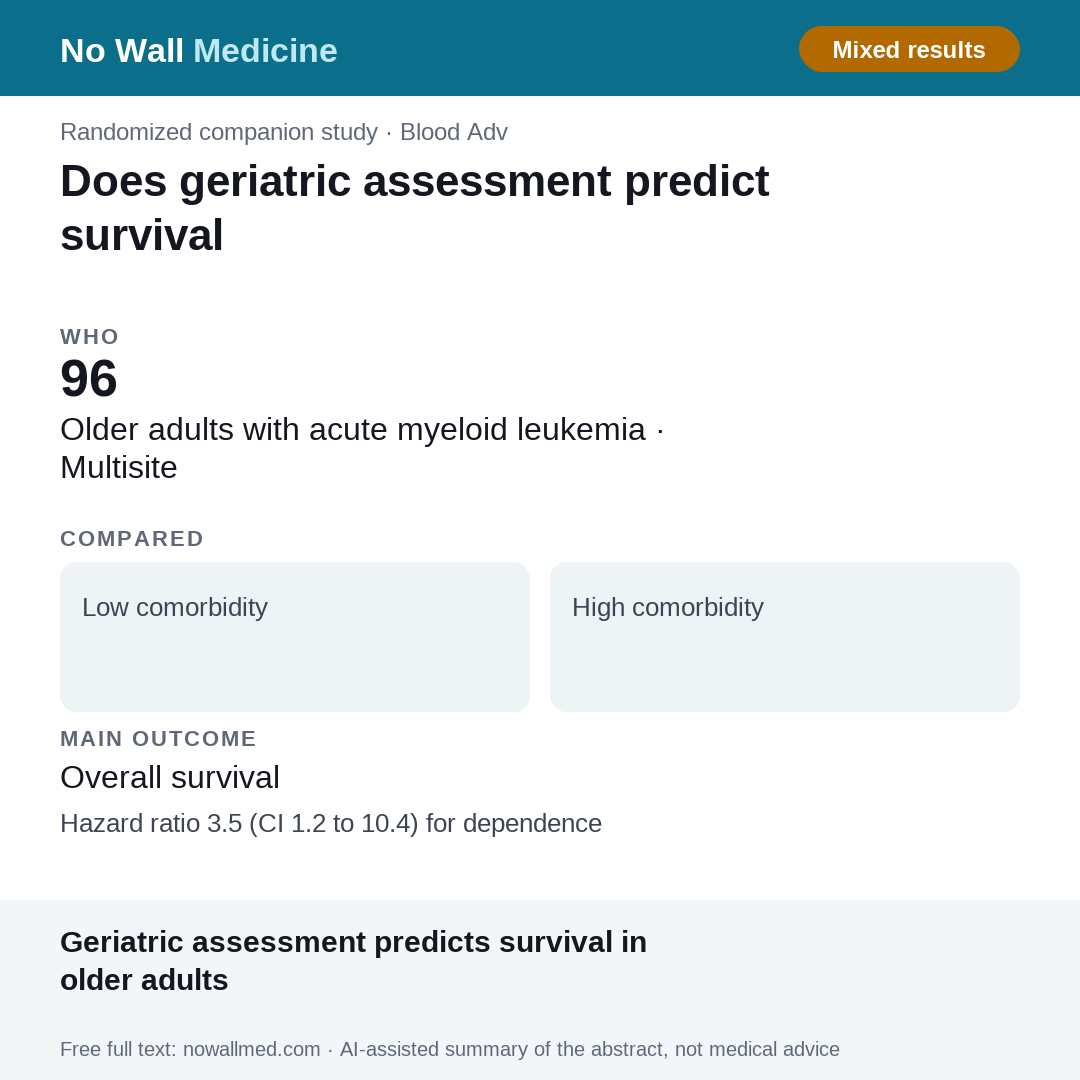
Does geriatric assessment predict survival
Who
96
Older adults with acute myeloid leukemia · Multisite
Compared
Low comorbidity
High comorbidity
Main outcome
Overall survival
Result: Hazard ratio 3.5 (CI 1.2 to 10.4) for dependence
Bottom line: Geriatric assessment predicts survival in older adults
Blood Adv · 2022-04-15Download image
Key points
- Researchers studied 96 patients with a median age of 73.9 years who were considered unfit for intensive therapy for acute myeloid leukemia.
- Greater comorbidity, worse cognition, and lower quality of life scores at baseline were significantly associated with shorter overall survival.
- Dependence in instrumental activities of daily living and cognitive impairment were associated with 6-month mortality with hazard ratios of 3.5 and 3.1, respectively.
Discussion prompts
- Would these patients look like yours? Who was left out?
- Is the main outcome one that matters to patients?
- Is the difference large enough to change what you do?
Cite: Ritchie EK, Klepin HD, Storrick E, et al. Geriatric assessment for older adults receiving less-intensive therapy for acute myeloid leukemia: report of CALGB 361101. Blood Adv. 2022. doi:10.1182/bloodadvances.2021006872
Free full text: PubMed Central · Summary and visual abstract: nowallmed.com/a/geriatric-assessment-for-older-adults-receiving-less-intensive-1em4510/ (AI-assisted from the abstract; check the paper before relying on it).