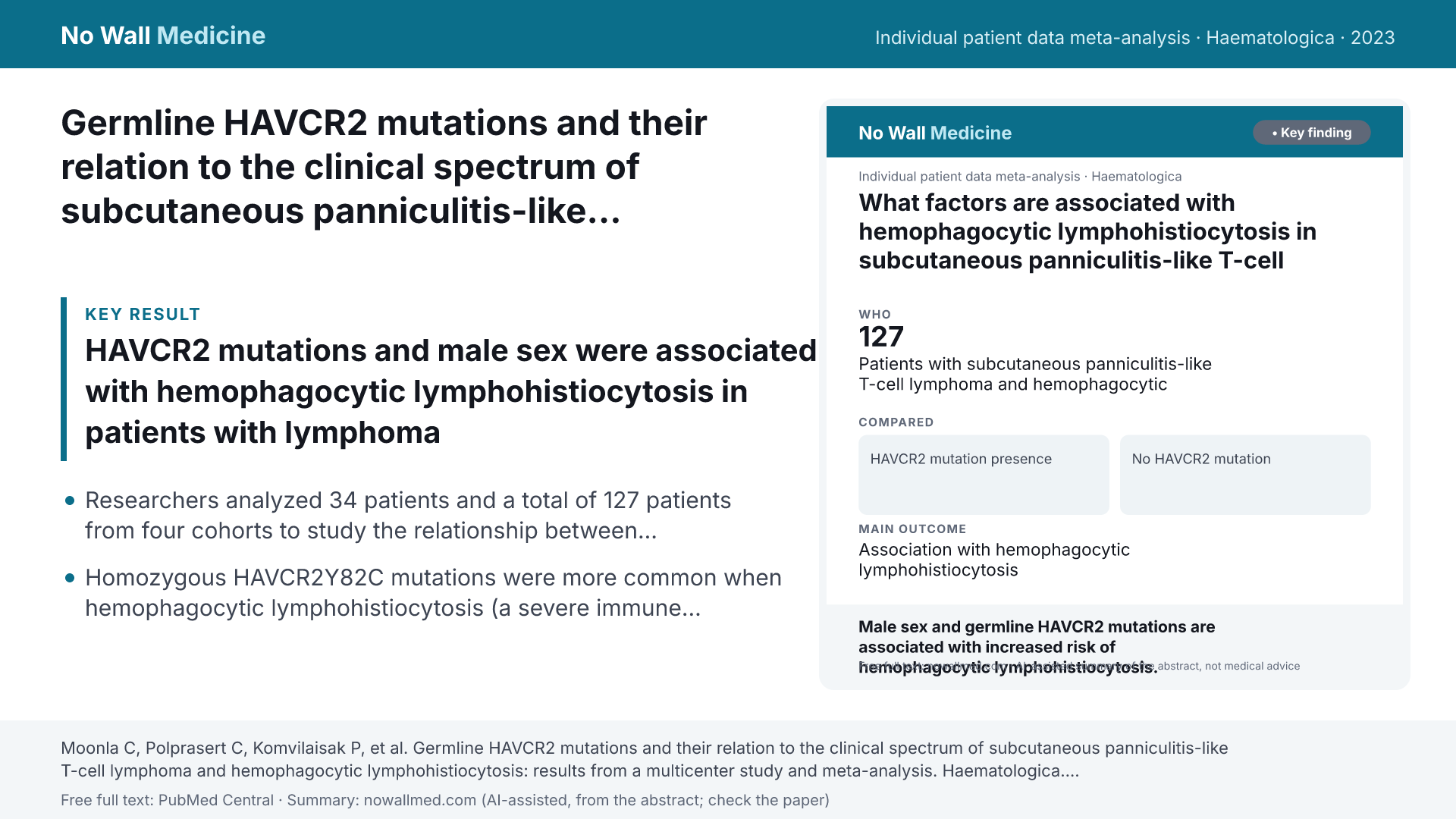
HAVCR2 mutations and male sex were associated with hemophagocytic lymphohistiocytosis in patients with lymphoma
Germline HAVCR2 mutations and their relation to the clinical spectrum of subcutaneous panniculitis-like T-cell lymphoma and hemophagocytic lymphohistiocytosis: results from a multicenter study and meta-analysis
Individual patient data meta-analysisBenefit found
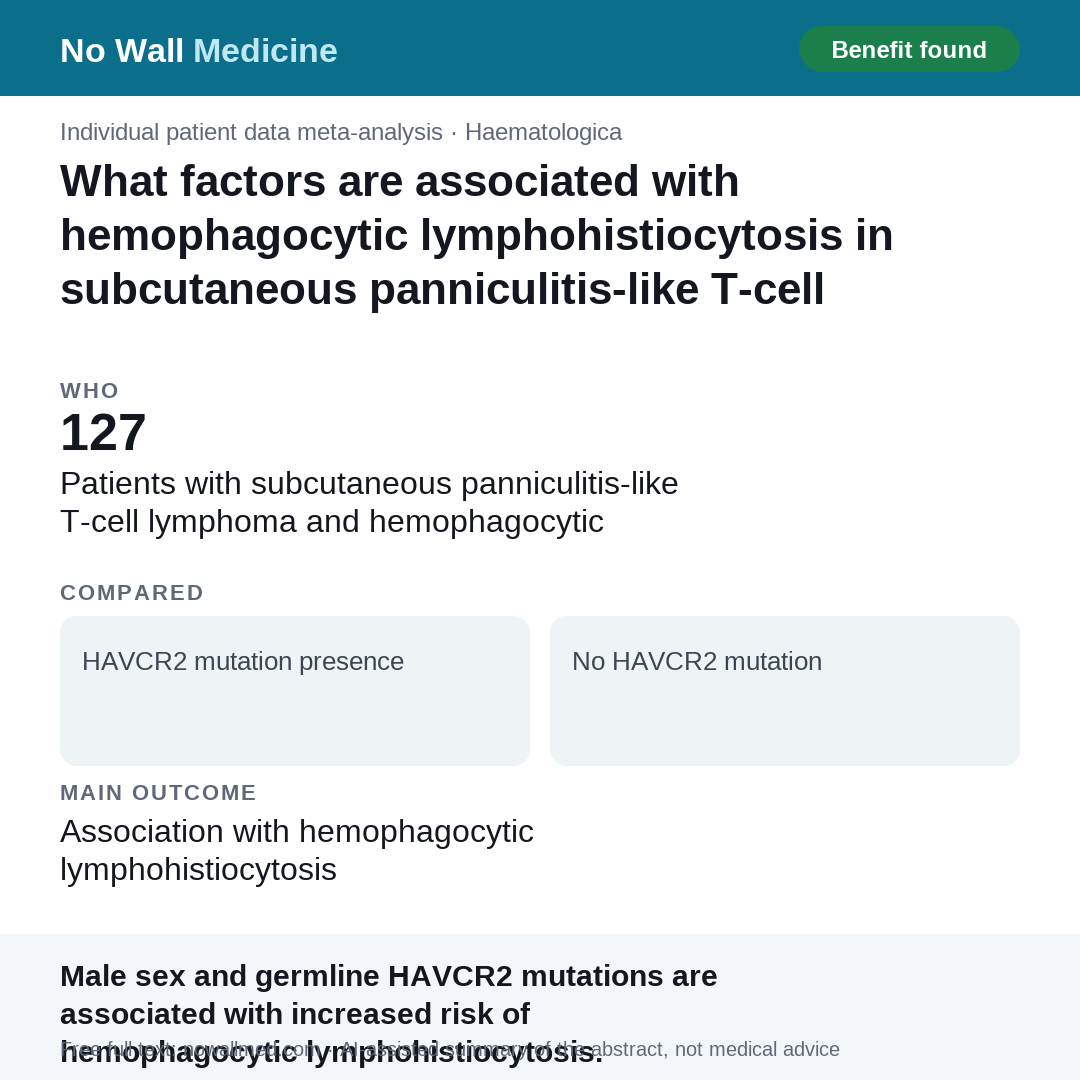
What factors are associated with hemophagocytic lymphohistiocytosis in subcutaneous panniculitis-like T-cell lymphoma?
Who
127
Patients with subcutaneous panniculitis-like T-cell lymphoma and hemophagocytic lymphohistiocytosis
Compared
HAVCR2 mutation presence
No HAVCR2 mutation
Main outcome
Association with hemophagocytic lymphohistiocytosis
Result: adjusted odds ratio 2.93 (95% CI 1.22-7.06) for heterozygous mutations
Bottom line: Male sex and germline HAVCR2 mutations are associated with increased risk of hemophagocytic lymphohistiocytosis.
Haematologica · 2023-10-01Download image
Clinical question: What factors are associated with hemophagocytic lymphohistiocytosis in subcutaneous panniculitis-like T-cell lymphoma?
Why it matters: The factors that lead to different clinical manifestations in patients with subcutaneous panniculitis-like T-cell lymphoma and hemophagocytic lymphohistiocytosis remain undetermined.
Key points
- Researchers analyzed 34 patients and a total of 127 patients from four cohorts to study the relationship between HAVCR2 mutations and clinical symptoms.
- Homozygous HAVCR2Y82C mutations were more common when hemophagocytic lymphohistiocytosis (a severe immune reaction) was present compared to when it was absent (75.0% vs. 44.4%).
- In the meta-analysis, male sex, heterozygous mutations, and homozygous or compound heterozygous mutations were associated with an increased risk of hemophagocytic lymphohistiocytosis.
Headline and key points written with AI from the paper’s abstract, with every number checked against it. Read the paper before relying on them.
Was this summary helpful?
Subject terms
Cite this article
Moonla C, Polprasert C, Komvilaisak P, et al. Germline HAVCR2 mutations and their relation to the clinical spectrum of subcutaneous panniculitis-like T-cell lymphoma and hemophagocytic lymphohistiocytosis: results from a multicenter study and meta-analysis. Haematologica. 2023. doi:10.3324/haematol.2022.282419
Spotted a mistake? Suggest a correction