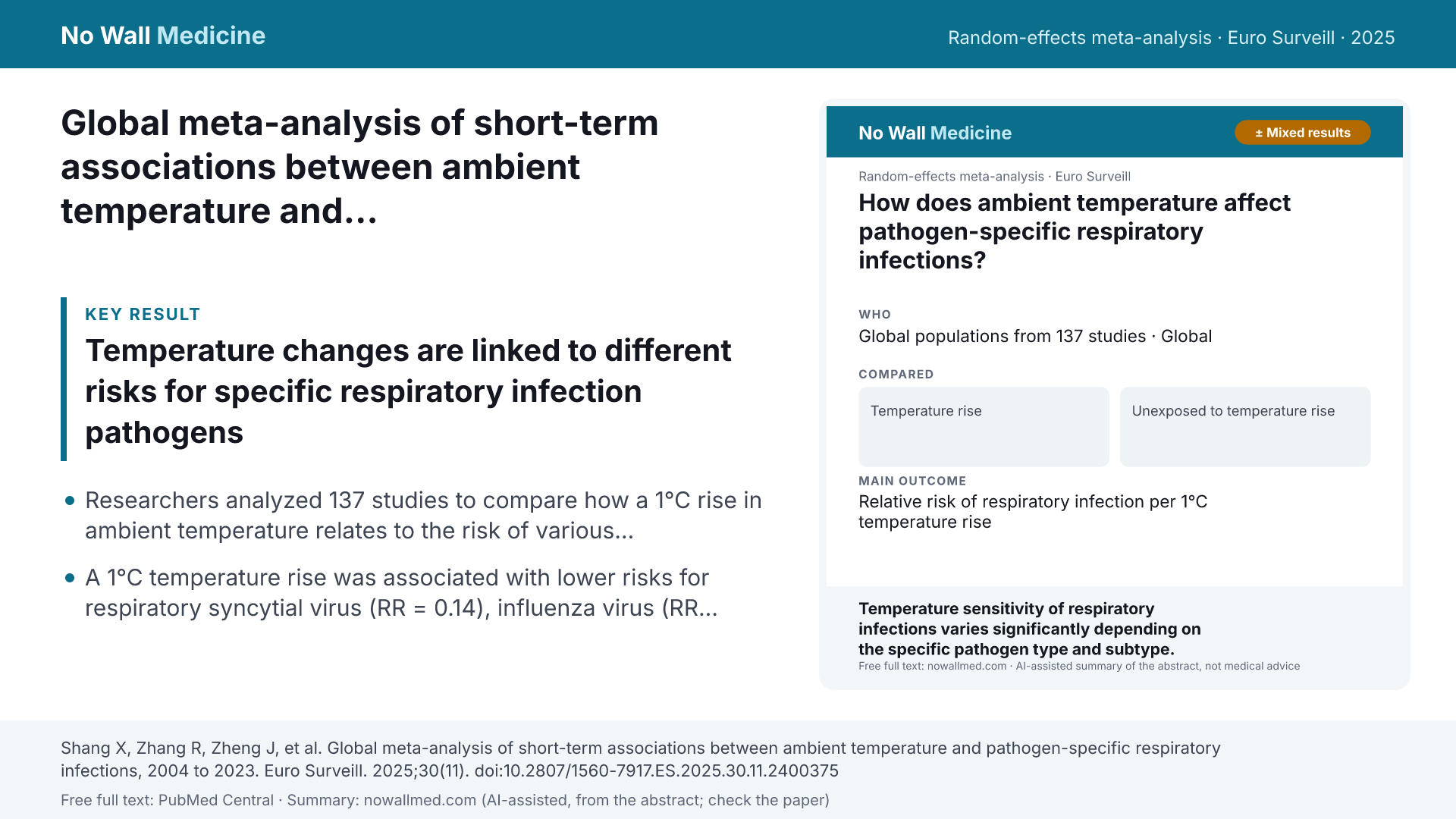
Temperature changes are linked to different risks for specific respiratory infection pathogens
Global meta-analysis of short-term associations between ambient temperature and pathogen-specific respiratory infections, 2004 to 2023
Random-effects meta-analysisMixed results
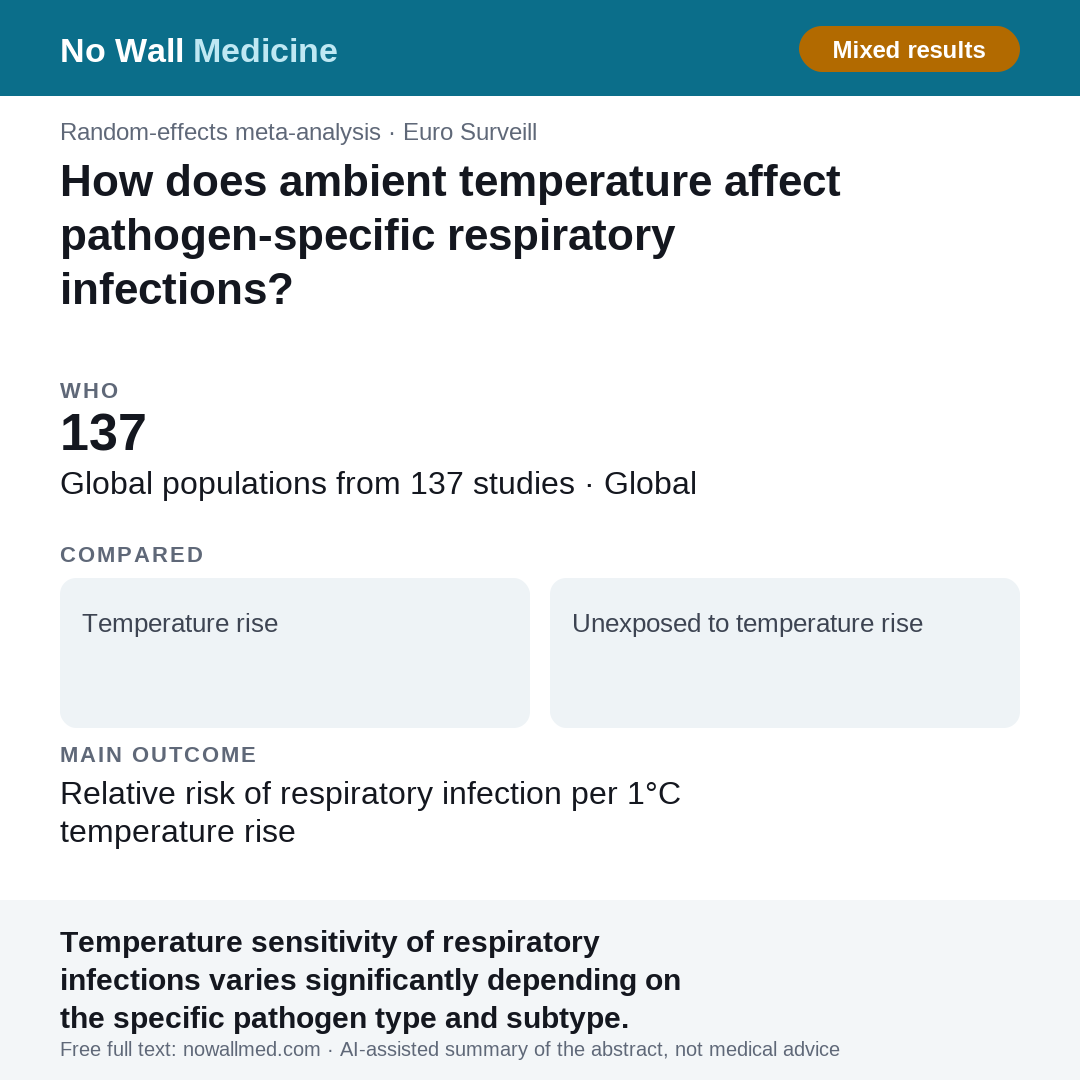
How does ambient temperature affect pathogen-specific respiratory infections?
Who
137
Global populations from 137 studies · Global
Compared
Temperature rise
Unexposed to temperature rise
Main outcome
Relative risk of respiratory infection per 1°C temperature rise
Bottom line: Temperature sensitivity of respiratory infections varies significantly depending on the specific pathogen type and subtype.
Euro Surveill · 2025-03-21Download image
Clinical question: How does ambient temperature affect pathogen-specific respiratory infections?
Why it matters: It was unknown if the sensitivity of respiratory infections to changes in ambient temperature depends on the specific type of pathogen involved.
Key points
- Researchers analyzed 137 studies to compare how a 1°C rise in ambient temperature relates to the risk of various respiratory infections.
- A 1°C temperature rise was associated with lower risks for respiratory syncytial virus (RR = 0.14), influenza virus (RR = 0.40), and SARS-CoV-2 (RR = 0.52).
- Higher temperatures were associated with increased risks for human parainfluenza virus (RR = 2.35), human bocavirus (RR = 1.86), and Legionella pneumophila (RR = 2.69).
Headline and key points written with AI from the paper’s abstract, with every number checked against it. Read the paper before relying on them.
Was this summary helpful?
Subject terms
Cite this article
Shang X, Zhang R, Zheng J, Luo Y, Guo K, Zhou Q. Global meta-analysis of short-term associations between ambient temperature and pathogen-specific respiratory infections, 2004 to 2023. Euro Surveill. 2025. doi:10.2807/1560-7917.ES.2025.30.11.2400375
Spotted a mistake? Suggest a correction
Top studies every Monday
The week’s key trials and guidelines in your specialties, plus any topics you follow. By email, free.
Get the weekly digest