Glucagon-like peptide-1 receptor agonist treatment reduces body weight and improves glycaemic outcomes in patients with concurrent overweight/obesity and type 1 diabetes: A systematic review and meta-analysis
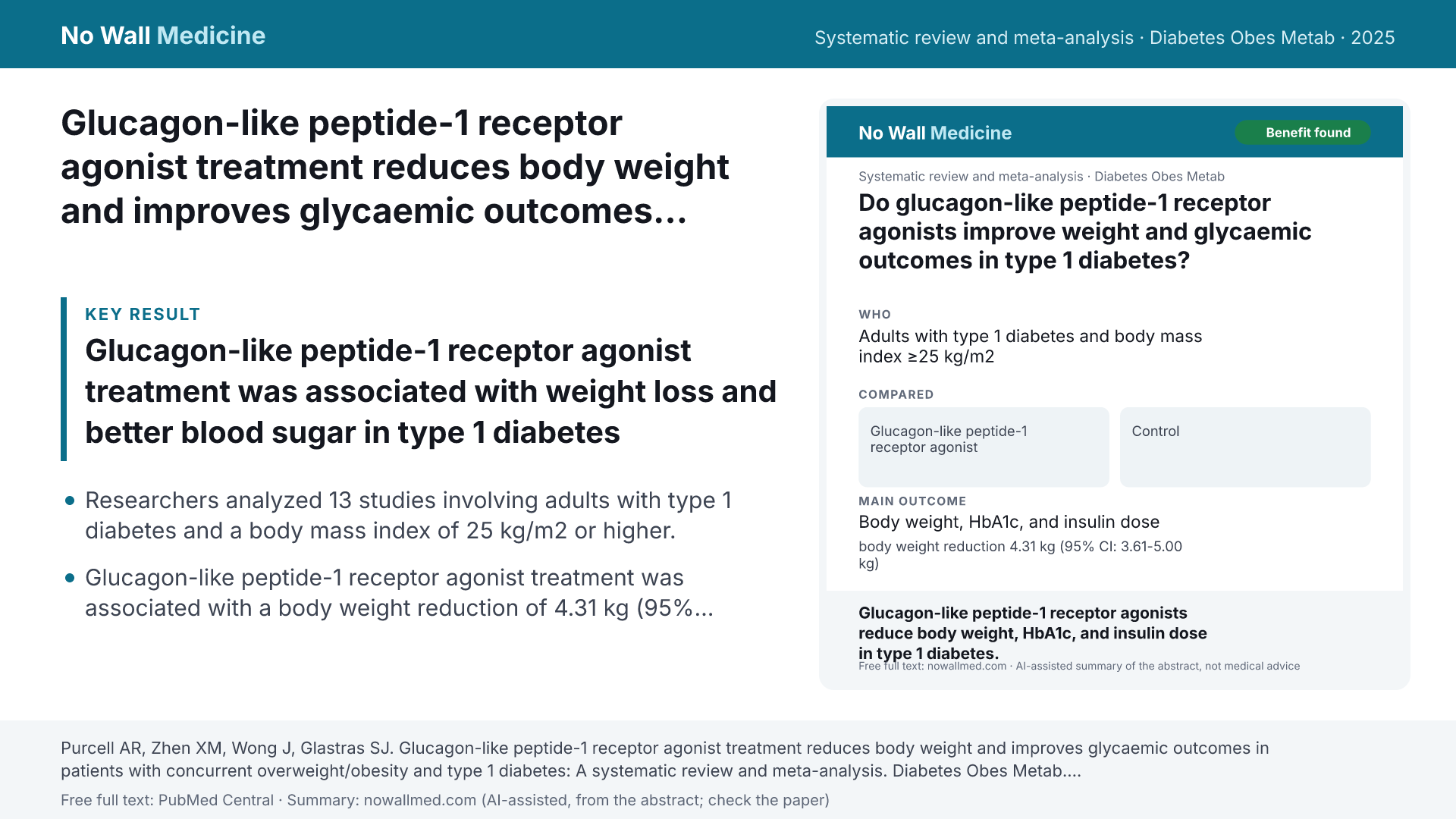
Key result: Glucagon-like peptide-1 receptor agonist treatment was associated with weight loss and better blood sugar in type 1 diabetes
Key points
- Researchers analyzed 13 studies involving adults with type 1 diabetes and a body mass index of 25 kg/m2 or higher.
- Glucagon-like peptide-1 receptor agonist treatment was associated with a body weight reduction of 4.31 kg (95% CI: 3.61-5.00 kg) and an HbA1c reduction of 0.25% (95% CI: 0.18-0.32%).
- The treatment was associated with increased hypoglycaemic episodes (OR = 1.34; 95% CI: 1.02-1.76) and more frequent gastrointestinal adverse events like nausea and vomiting.
Why it matters: The long-term efficacy and safety of adding glucagon-like peptide-1 receptor agonists to insulin therapy for people with type 1 diabetes and overweight or obesity needed evaluation.
Discussion prompts
- Would these patients look like yours? Who was left out?
- Is the main outcome one that matters to patients?
- Is the difference large enough to change what you do?
Cite: Purcell AR, Zhen XM, Wong J, Glastras SJ. Glucagon-like peptide-1 receptor agonist treatment reduces body weight and improves glycaemic outcomes in patients with concurrent overweight/obesity and type 1 diabetes: A systematic review and meta-analysis. Diabetes Obes Metab. 2026;28(1):296-305. doi:10.1111/dom.70188
Free full text: PubMed Central · Summary and visual abstract: nowallmed.com/a/glucagon-like-peptide-1-receptor-agonist-treatment-reduces-body-16htdot/ (AI-assisted from the abstract; check the paper before relying on it).