Glucagon-like peptide-1 receptor agonist treatment was associated with weight loss and better blood sugar in type 1 diabetes
Glucagon-like peptide-1 receptor agonist treatment reduces body weight and improves glycaemic outcomes in patients with concurrent overweight/obesity and type 1 diabetes: A systematic review and meta-analysis
Systematic review and meta-analysisBenefit found
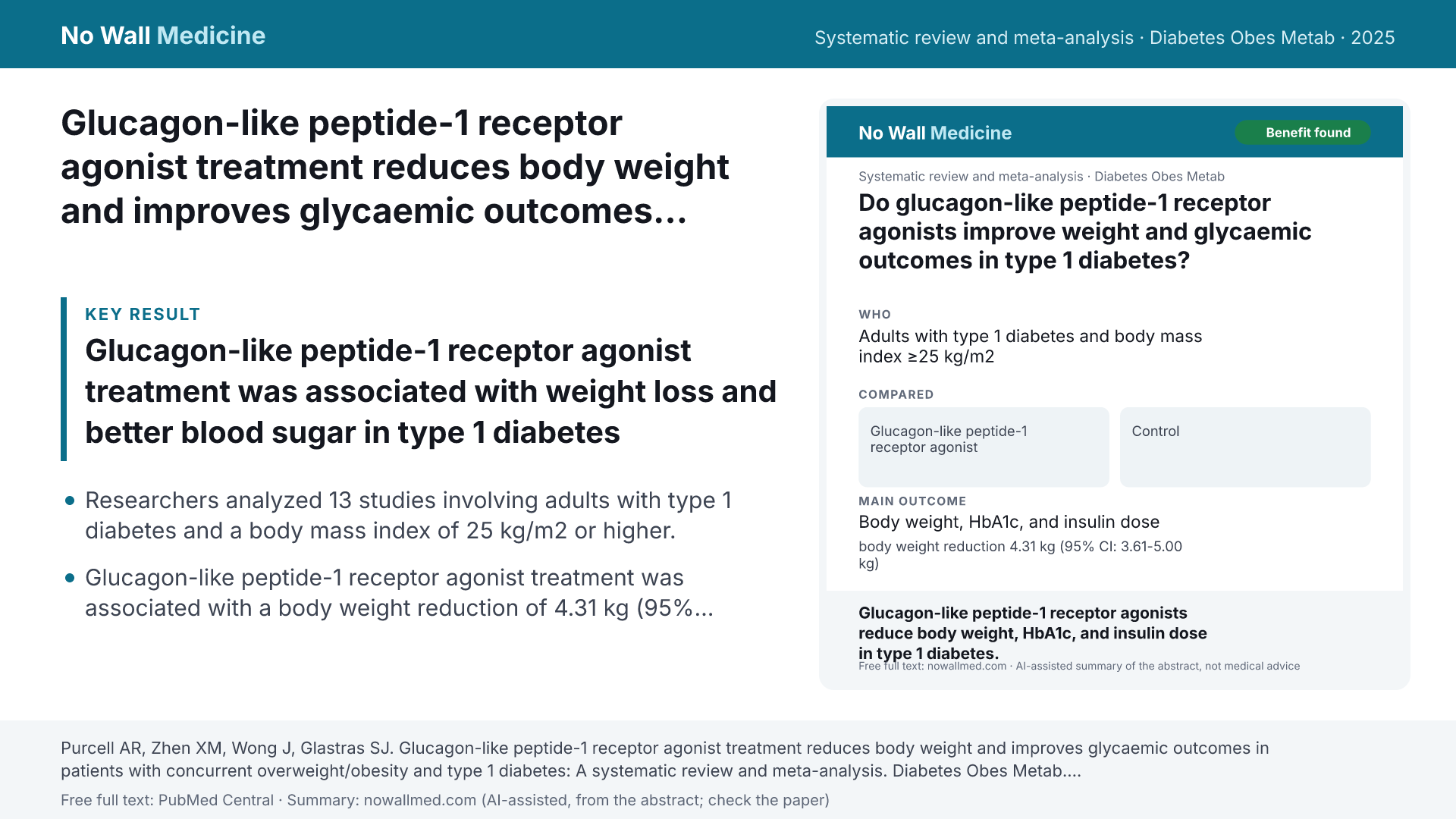
Do glucagon-like peptide-1 receptor agonists improve weight and glycaemic outcomes in type 1 diabetes?
Who
Adults with type 1 diabetes and body mass index ≥25 kg/m2
Compared
Glucagon-like peptide-1 receptor agonist
Control
Main outcome
Body weight, HbA1c, and insulin dose
Result: body weight reduction 4.31 kg (95% CI: 3.61-5.00 kg)
Bottom line: Glucagon-like peptide-1 receptor agonists reduce body weight, HbA1c, and insulin dose in type 1 diabetes.
Diabetes Obes Metab · 2025-10-20Download image

Clinical question: Do glucagon-like peptide-1 receptor agonists improve weight and glycaemic outcomes in type 1 diabetes?
Why it matters: The long-term efficacy and safety of adding glucagon-like peptide-1 receptor agonists to insulin therapy for people with type 1 diabetes and overweight or obesity needed evaluation.
Key points
- Researchers analyzed 13 studies involving adults with type 1 diabetes and a body mass index of 25 kg/m2 or higher.
- Glucagon-like peptide-1 receptor agonist treatment was associated with a body weight reduction of 4.31 kg (95% CI: 3.61-5.00 kg) and an HbA1c reduction of 0.25% (95% CI: 0.18-0.32%).
- The treatment was associated with increased hypoglycaemic episodes (OR = 1.34; 95% CI: 1.02-1.76) and more frequent gastrointestinal adverse events like nausea and vomiting.
Headline and key points written with AI from the paper’s abstract, with every number checked against it. Read the paper before relying on them.
Was this summary helpful?
Subject terms
Cite this article
Purcell AR, Zhen XM, Wong J, Glastras SJ. Glucagon-like peptide-1 receptor agonist treatment reduces body weight and improves glycaemic outcomes in patients with concurrent overweight/obesity and type 1 diabetes: A systematic review and meta-analysis. Diabetes Obes Metab. 2025. doi:10.1111/dom.70188
Spotted a mistake? Suggest a correction