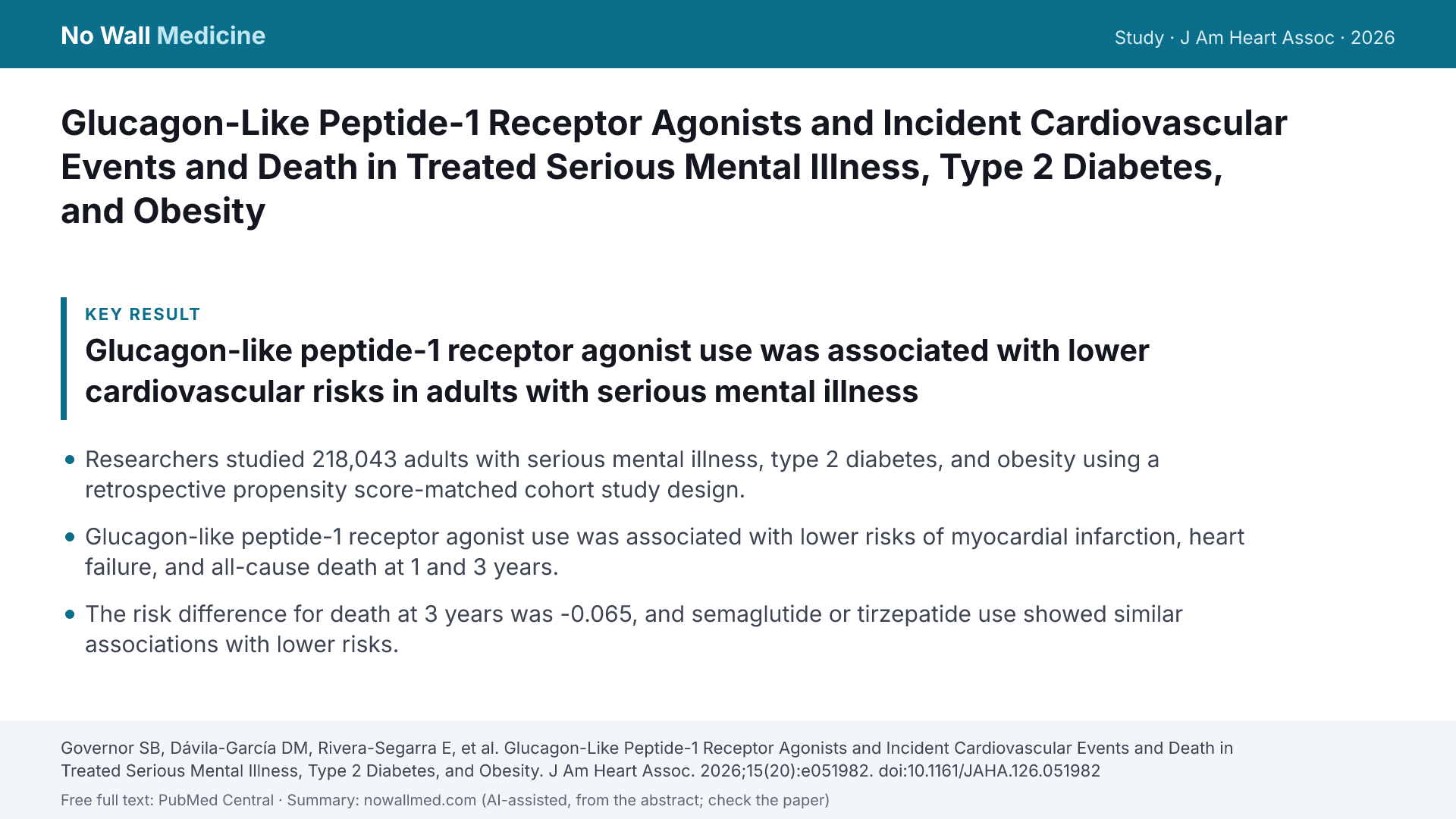
Glucagon-like peptide-1 receptor agonist use was associated with lower cardiovascular risks in adults with serious mental illness
Glucagon-Like Peptide-1 Receptor Agonists and Incident Cardiovascular Events and Death in Treated Serious Mental Illness, Type 2 Diabetes, and Obesity
Why it matters: The cardiometabolic benefits of glucagon-like peptide-1 receptor agonists are known in the general population, but their associations in people with serious mental illness are unclear.
Key points
- Researchers studied 218,043 adults with serious mental illness, type 2 diabetes, and obesity using a retrospective propensity score-matched cohort study design.
- Glucagon-like peptide-1 receptor agonist use was associated with lower risks of myocardial infarction, heart failure, and all-cause death at 1 and 3 years.
- The risk difference for death at 3 years was -0.065, and semaglutide or tirzepatide use showed similar associations with lower risks.
Limitation the authors note: The authors note the limitations of administrative case ascertainment and the clinical heterogeneity of serious mental illness.
Study type: Observational study: it can show a link, but not prove that one thing causes another.
Headline and key points written with AI from the paper’s abstract, with every number checked against it. Read the paper before relying on them.
Was this summary helpful?
Subject terms
Cite this article
Governor SB, Dávila-García DM, Rivera-Segarra E, et al. Glucagon-Like Peptide-1 Receptor Agonists and Incident Cardiovascular Events and Death in Treated Serious Mental Illness, Type 2 Diabetes, and Obesity. J Am Heart Assoc. 2026. doi:10.1161/JAHA.126.051982
Spotted a mistake? Suggest a correction