Glucagon-Like Peptide-1 Receptor Agonists and Incident Cardiovascular Events and Death in Treated Serious Mental Illness, Type 2 Diabetes, and Obesity
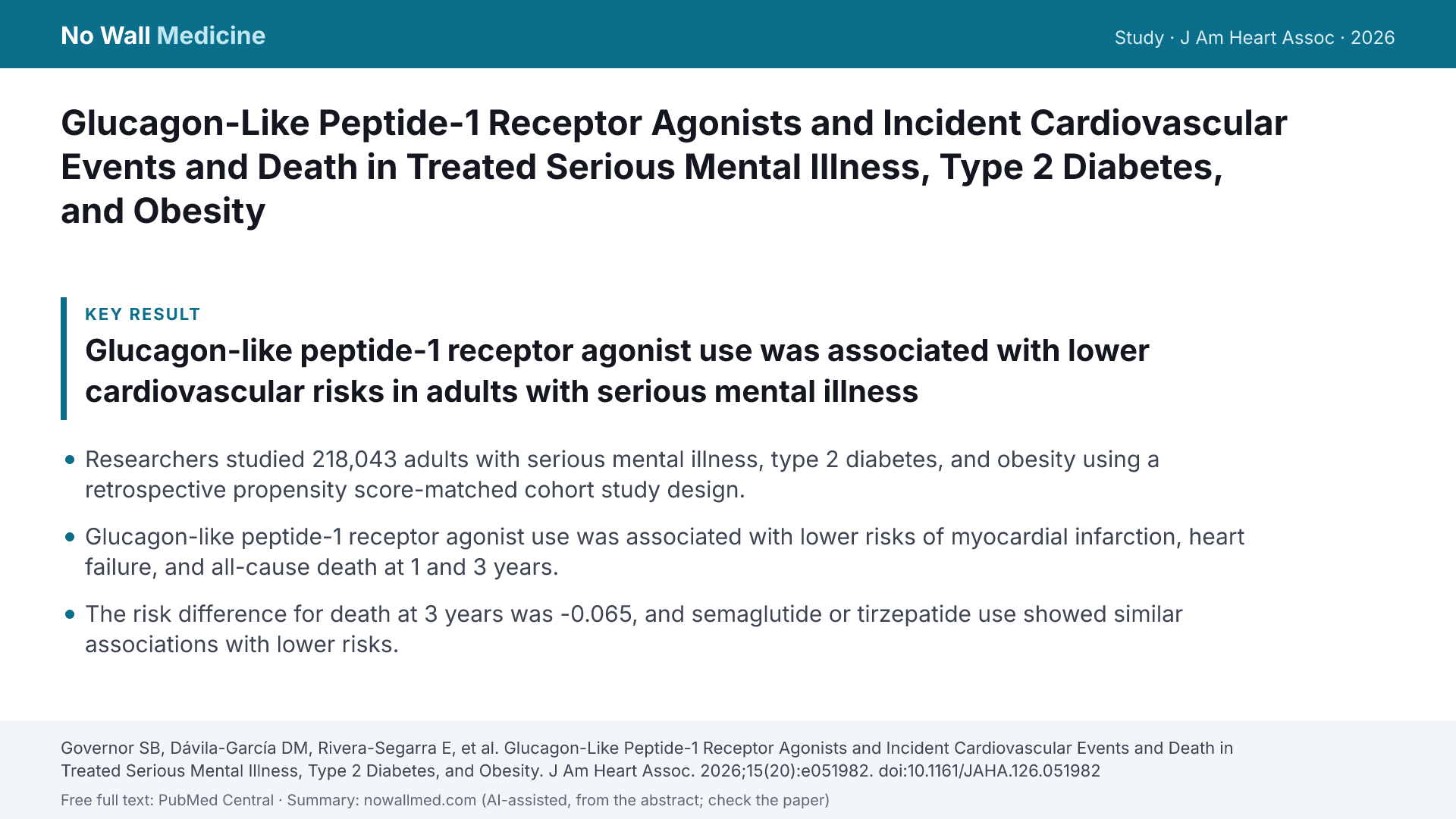
Key result: Glucagon-like peptide-1 receptor agonist use was associated with lower cardiovascular risks in adults with serious mental illness
Key points
- Researchers studied 218,043 adults with serious mental illness, type 2 diabetes, and obesity using a retrospective propensity score-matched cohort study design.
- Glucagon-like peptide-1 receptor agonist use was associated with lower risks of myocardial infarction, heart failure, and all-cause death at 1 and 3 years.
- The risk difference for death at 3 years was -0.065, and semaglutide or tirzepatide use showed similar associations with lower risks.
Limitation the authors note: The authors note the limitations of administrative case ascertainment and the clinical heterogeneity of serious mental illness.
Discussion prompts
- Would these patients look like yours? Who was left out?
- Is the main outcome one that matters to patients?
- Is the difference large enough to change what you do?
Cite: Governor SB, Dávila-García DM, Rivera-Segarra E, et al. Glucagon-Like Peptide-1 Receptor Agonists and Incident Cardiovascular Events and Death in Treated Serious Mental Illness, Type 2 Diabetes, and Obesity. J Am Heart Assoc. 2026;15(20):e051982. doi:10.1161/JAHA.126.051982
Free full text: PubMed Central · Summary and visual abstract: nowallmed.com/a/glucagon-like-peptide-1-receptor-agonists-and-incident-cardiovascular-miqfde/ (AI-assisted from the abstract; check the paper before relying on it).