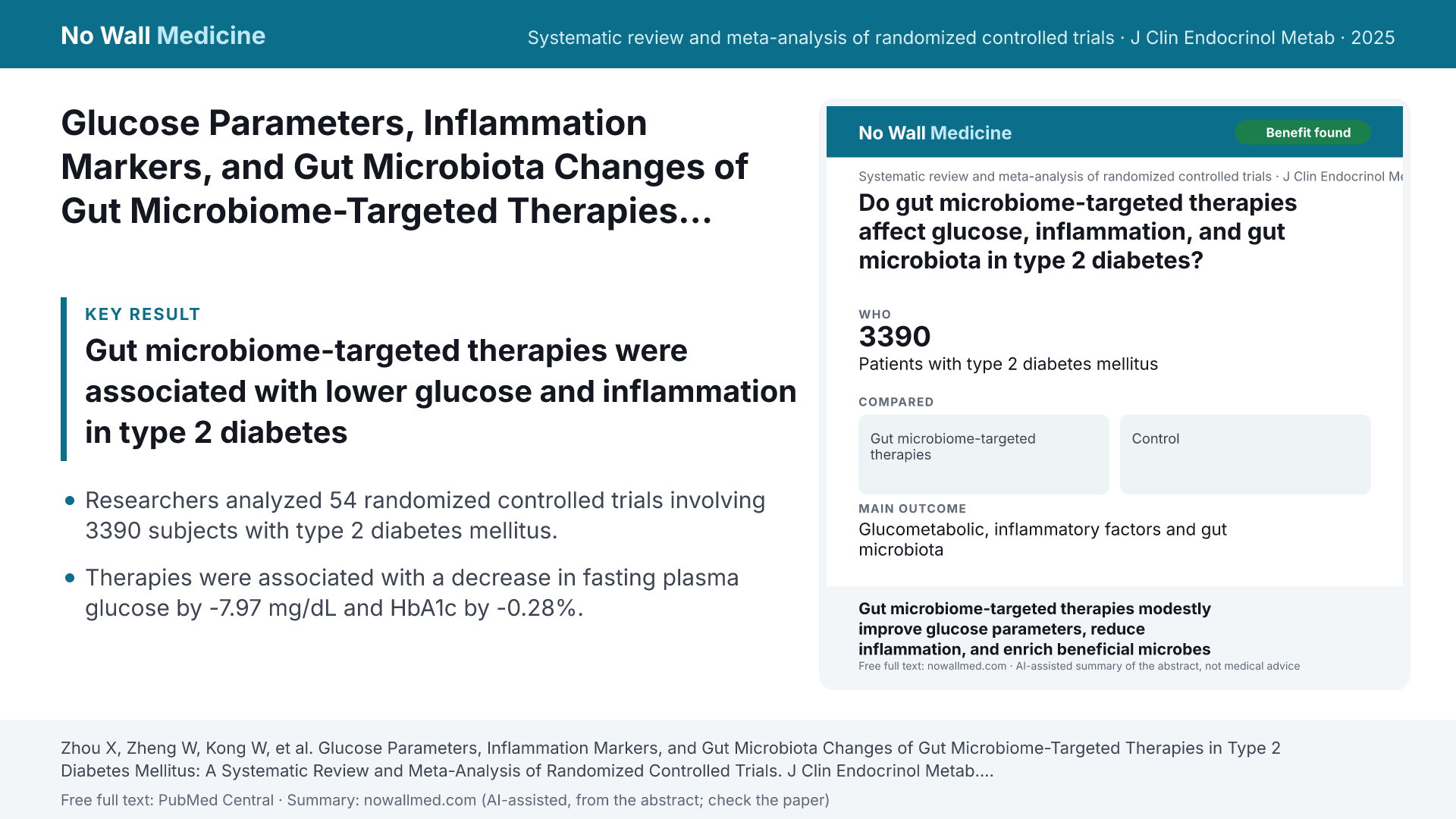
Gut microbiome-targeted therapies were associated with lower glucose and inflammation in type 2 diabetes
Glucose Parameters, Inflammation Markers, and Gut Microbiota Changes of Gut Microbiome-Targeted Therapies in Type 2 Diabetes Mellitus: A Systematic Review and Meta-Analysis of Randomized Controlled Trials
Systematic review and meta-analysis of randomized controlled trialsBenefit found
Do gut microbiome-targeted therapies affect glucose, inflammation, and gut microbiota in type 2 diabetes?
Who
3390
Patients with type 2 diabetes mellitus
Compared
Gut microbiome-targeted therapies
Control
Main outcome
Glucometabolic, inflammatory factors and gut microbiota
Result: HbA1c MD -0.28% (95% CI -0.39, -0.17)
Bottom line: Gut microbiome-targeted therapies modestly improve glucose parameters, reduce inflammation, and enrich beneficial microbes in type 2 diabetes patients.
Limitation: Heterogeneity and limited long-term data
J Clin Endocrinol Metab · 2025-06-09Download image

Clinical question: Do gut microbiome-targeted therapies affect glucose, inflammation, and gut microbiota in type 2 diabetes?
Why it matters: The effects of gut microbiome-targeted therapies on glucose, inflammation, and gut bacteria in people with type 2 diabetes mellitus needed to be summarized.
Key points
- Researchers analyzed 54 randomized controlled trials involving 3390 subjects with type 2 diabetes mellitus.
- Therapies were associated with a decrease in fasting plasma glucose by -7.97 mg/dL and HbA1c by -0.28%.
- Interventions were linked to lower levels of inflammation markers and increased levels of beneficial gut bacteria like Lactobacillus.
Limitation the authors note: The authors noted heterogeneity and limited long-term data in the included studies.
Headline and key points written with AI from the paper’s abstract, with every number checked against it. Read the paper before relying on them.
Was this summary helpful?
Subject terms
Cite this article
Zhou X, Zheng W, Kong W, Zhang J, Liao Y, Min J. Glucose Parameters, Inflammation Markers, and Gut Microbiota Changes of Gut Microbiome-Targeted Therapies in Type 2 Diabetes Mellitus: A Systematic Review and Meta-Analysis of Randomized Controlled Trials. J Clin Endocrinol Metab. 2025. doi:10.1210/clinem/dgaf340
Spotted a mistake? Suggest a correction